


Born To Fly For Her Oriflame
At a glance
Is Born To Fly For Her Oriflame worth trying?
Born to Fly For Her by Oriflame is a Oriental Floral fragrance for women.
- Best match
- Casual wear in Spring
- Performance feel
- Good longevity with Moderate sillage
- Signature profile
- sweet, floral, fruity with Pink Pepper, Magnolia, Mandarin Orange
The first impression
Born to Fly For Her by Oriflame is a Oriental Floral fragrance for women. Born to Fly For Her was launched in 2019. The nose behind this fragrance is Fanny Bal. Top notes are Pink Pepper, Magnolia and Mandarin Orange; middle notes are Pear, Freesia and Rose; base notes are Agave nectar, Sandalwood and Amber.
What shapes the scent
The perfumer behind it

Fanny Bal
Fanny Bal is a perfumer who has contributed to multiple brands, including 4711 and Al-Jazeera Perfumes. For 4711, she created Acqua Colonia Intense Pure Breeze Of Himalaya and Peony & Sandalwood. For Al-Jazeera Perfumes, she composed 97 Élysées, Carnaval, Coup Du Monde, Damascus Musk, London, and Marbella, showcasing her ability to craft both fresh and opulent scents.
Notes pyramid
Top Notes
First impression · 15-30 min
 Pink Pepper
 Magnolia
 Mandarin Orange
Heart Notes
Core character · 2-4 hours
 Pear
Pear
 Freesia
 Rose
Rose
Base Notes
Lasting impression · 4+ hours
 Agave nectar
 Sandalwood
 Amber
Amber
The mood it creates
The Born To Fly Woman Archetype: Portrait of Born To Fly For Her Oriflame
Essence
The woman who chooses Born To Fly For Her by Oriflame is, at her core, an Explorer-a soul driven by curiosity, independence, and an insatiable hunger for experience. She is not content with the well-trodden path; she seeks the horizon, the unknown, the fleeting thrill of discovery. The fragrance itself-fresh, luminous, subtly floral with an undercurrent of energy-mirrors her essence: light yet enduring, free yet grounded in her own truth.
Like all archetypes, the Explorer has her shadow: a restlessness that can border on rootlessness, a fear of stagnation that sometimes prevents deep commitment. But in her brightest form, she is a beacon of possibility, reminding others that life is not merely to be endured but lived.
Style & Aesthetic
Her style is effortless, a blend of practicality and elegance-loose linen dresses, well-worn leather boots, a scarf tossed carelessly over her shoulder. She favors natural textures, uncomplicated silhouettes, and a palette of soft blues, whites, and earthy tones, as if she is always halfway to someplace else.
Her tastes in music, art, and literature reflect her wandering spirit. She is drawn to folk melodies, impressionist paintings that capture fleeting light, and books about journeys-both literal and existential. She reads Rilke for his letters on solitude, cherishes Mary Oliver’s poetry for its reverence of the wild, and keeps a dog-eared copy of The Alchemist not because it is profound, but because it speaks to her belief in signs and serendipity.
Her philosophy is simple yet radical: life is movement. To stop is to wither. She distrusts rigid ideologies, preferring intuition over dogma. She believes in the wisdom of the body-the way wind on skin or the scent of rain can tell truths that words cannot.
She thrives in transition-train rides, airport lounges, the first hours in a new city. She may work as a freelance photographer, a travel writer, or a teacher who changes schools every few years. Routine suffocates her; she needs projects, not careers.
Her home, if she has one, is a curated collection of souvenirs: a seashell from Greece, a handwoven rug from Morocco, a stack of postcards she never sent. She lives lightly, not because she is detached, but because she knows possessions can become anchors.
Yet this very lightness has its cost. There are nights when she wonders if she is running toward something or away from everything. The shadow of the Explorer is the gnawing question: What if I never arrive?
Relationships
She is magnetic in her openness, drawing people in with her laughter, her willingness to listen, her refusal to judge. Friends adore her for her spontaneity-the way she might call at midnight to suggest a road trip, or arrive unannounced with a bottle of wine and a story.
But love is more complicated. She gives freely, but she also leaves freely. Romantic partners often find her enchanting at first, only to later feel the sting of her independence. She is not cruel-she simply cannot bear the weight of expectations. The shadow of the Explorer is a fear of confinement, and so she may flee before she is asked to stay.
Yet when she does love, it is fiercely-not in grand gestures, but in quiet, unwavering loyalty to those who understand her need for space. Her deepest relationships are with fellow wanderers, those who do not mistake her freedom for indifference.
Conclusion
Her greatest strength is her courage-the refusal to settle for a life half-lived. She reminds others that the world is vast, that joy is found in motion, that security is an illusion.
But her flaw is her avoidance of depth. She may mistake movement for growth, novelty for meaning. The true challenge for the Explorer is not in leaving, but in knowing when to stay-when to let a place, a person, or a version of herself take root.
If you like this, try these
Fragrances with a comparable profile - shared accords, notes, and character.

The Beautiful Mind Series
Volume I Intelligence & Fantasy The Beautiful Mind Series
Shared top notes: magnolia, mandarin orange, pink pepper

Salvatore Ferragamo
F For Fascinating Night Salvatore Ferragamo
Shared top notes: mandarin orange, pink pepper

O Boticário
Botica 214 Fiji Paradise O Boticário
Shared top notes: mandarin orange, pink pepper

Scentonic
Strawberry Kiss Scentonic
Shared heart notes: freesia, rose
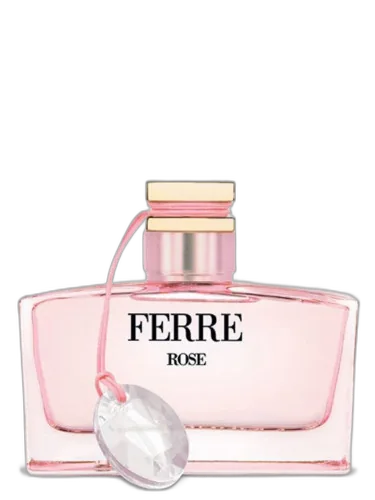
Gianfranco Ferre
Ferre Rose Diamond Limited Edition Gianfranco Ferre
Shared top notes: mandarin orange