
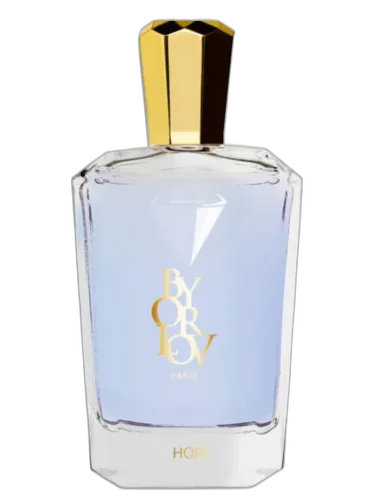
Hope Orlov Paris
At a glance
Is Hope Orlov Paris worth trying?
Hope by Orlov Paris is a Floral Woody Musk fragrance for women.
- Best match
- Evening wear in Spring
- Performance feel
- Good longevity with Moderate sillage
- Signature profile
- fruity, floral, rose with Violet Leaf, Bergamot, Pink Pepper
The first impression
Hope by Orlov Paris is a Floral Woody Musk fragrance for women. Hope was launched in 2020. The nose behind this fragrance is Amelie Jacquin. Top notes are Violet Leaf, Bergamot and Pink Pepper; middle notes are Osmanthus, Peach and Rose; base notes are Musk, Cedar and Patchouli.
What shapes the scent
The perfumer behind it

Amelie Jacquin
Amelie Jacquin is a French perfumer known for her work with brands like Bon Parfumeur, Dries Van Noten, and Goldfield & Banks Australia. Her style often explores rich, textured accords, with a particular affinity for myrrh and resinous notes, as seen in creations such as Rock The Myrrh and Myrrh Shadow. She balances bold, opulent ingredients with a refined clarity, evident in compositions like Island Lush and Honeyed Tobacco & Oud.
Notes pyramid
Top Notes
First impression · 15-30 min
 Violet Leaf
 Bergamot
 Pink Pepper
Heart Notes
Core character · 2-4 hours
 Osmanthus
 Peach
Peach
 Rose
Rose
Base Notes
Lasting impression · 4+ hours
 Musk
Musk
 Cedar
Cedar
 Patchouli
The mood it creates
The Archetype Archetype: Portrait of Hope Orlov Paris
Essence
To wear Hope Orlov Paris is to carry the scent of quiet defiance-a fragrance that whispers of dawn breaking over an untouched landscape. It is not loud, nor does it demand attention, yet it lingers in the mind like an unspoken promise. The person who chooses this scent is not merely selecting a perfume; they are aligning themselves with an essence that mirrors their inner world-one of idealism, introspection, and a relentless pursuit of meaning.
This individual is most closely aligned with the Visionary, a hybrid of the Innocent and the Sage. The Innocent in them clings to purity, optimism, and the belief in a world untainted by cynicism. The Sage tempers this with wisdom, a hunger for knowledge, and a quiet skepticism that keeps them from naivety. They are not dreamers in the passive sense-they are architects of possibility, shaping their reality through intuition and intellect.
Style & Aesthetic
Their style is understated but deliberate. They favor fabrics that feel alive-linen, silk, wool-and colors that suggest depth rather than flash. Their clothing is not a costume but an extension of their inner landscape. They move through the world with a quiet confidence, neither seeking nor shunning attention. When they speak, it is with precision; their words are chosen, not wasted.
They thrive in environments that balance solitude and stimulation. A quiet apartment filled with books, a corner café where they can observe unnoticed, a walk through autumn streets-these are their refuges. They are not ascetics; they appreciate beauty, but it must be meaningful, not merely decorative.
Their work, whether creative or analytical, is driven by purpose. They are not motivated by wealth or status, but by the sense that what they do matters-if only to a few. They may be writers, therapists, designers, or scholars, but whatever their path, it is chosen with intention.
Philosophy & Values
Their life is a tapestry woven with threads of curiosity and quiet rebellion. They reject the mundane not out of arrogance, but because they sense-sometimes painfully-that there is more beneath the surface. They are drawn to art that unsettles, literature that questions, and music that evokes the ineffable. Their tastes lean toward the minimalist yet profound: clean lines in design, muted but rich colors, and spaces that feel like sanctuaries rather than stages.
Philosophically, they are neither fully idealist nor cynic, but something in between-a realist who refuses to abandon hope. They believe in the power of subtle influence, in the idea that small acts of beauty and truth can shift the world incrementally. Their values are rooted in authenticity, but they are not naive; they understand human frailty, including their own.
Relationships
They do not collect friends indiscriminately. Their relationships are few but deep, built on mutual understanding rather than convenience. They are drawn to those who share their hunger for meaning, but they also appreciate those who ground them-the pragmatists who remind them that dreams must sometimes touch earth to take root.
Romantically, they are both tender and elusive. They crave connection but fear the loss of self that can come with it. Their love is not possessive; it is a shared journey, a mutual unfolding. Yet, their shadow emerges here-sometimes they idealize partners to the point of disappointment, or they withdraw when reality fails to match their inner vision.
Shadow
Every strength has its inverse. Their idealism, when unchecked, can curdle into disillusionment. When the world proves too harsh, too indifferent to their vision, they may retreat into isolation, nursing a quiet bitterness. Their introspection, so often a source of wisdom, can spiral into overanalysis-paralyzing them with doubt.
They are not immune to pride. Their belief in their own discernment can harden into a subtle superiority, a sense that they see what others cannot. This is their greatest trap: the risk of becoming a solitary figure, gazing at the world from a self-imposed tower.
Conclusion
To love Hope Orlov Paris is to embrace a paradox-the simultaneous belief in light and the knowledge of darkness. The Visionary who wears it is neither naive nor jaded, but a seeker walking the narrow path between the two. Their life is a quiet rebellion against despair, a refusal to let go of beauty even when it is fleeting.
They are flawed, as all archetypes are, but their flaws are the price of their depth. And in the end, their greatest strength is not their vision, but their persistence-the willingness to keep hoping, keep searching, even when the world offers no guarantees.
If you like this, try these
Fragrances with a comparable profile - shared accords, notes, and character.
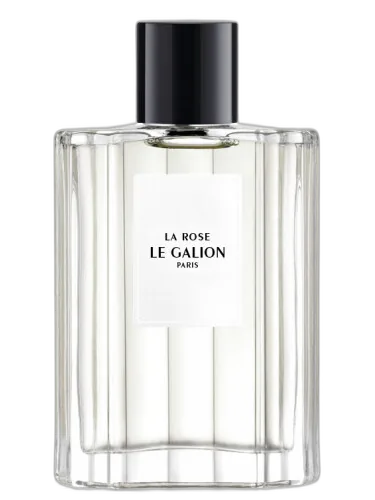
Le Galion
Rose Le Galion
Shared top notes: bergamot, violet leaf

SugarBomb
Mystical Elixir Sugarbomb
Shared top notes: bergamot, pink pepper

Jovoy Paris
Oriental Jovoy Paris
Shared top notes: bergamot, pink pepper
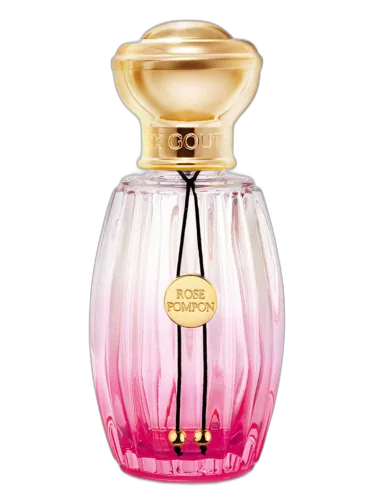
Goutal
Rose Pompon Eau De Toilette Goutal
Shared top notes: pink pepper
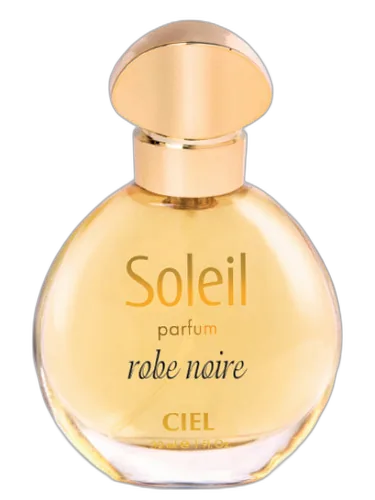
CIEL Parfum
Soleil Robe Noire Ciel Parfum
Shared top notes: bergamot, violet leaf