


Viride Orto Parisi
At a glance
Is Viride Orto Parisi worth trying?
Viride by Orto Parisi is a Aromatic fragrance for women and men.
- Best match
- Casual wear in Spring
- Performance feel
- Good longevity with Moderate sillage
- Signature profile
- aromatic, fresh spicy, woody with Wormwood, Artemisia, Lavender
The first impression
Viride by Orto Parisi is a Aromatic fragrance for women and men. Viride was launched in 2014. The nose behind this fragrance is Alessandro Gualtieri. Top notes are Wormwood, Artemisia and Lavender; middle note is Jasmine; base notes are Fir, Juniper, Tobacco, Cedar and Musk.
What shapes the scent
The perfumer behind it

Alessandro Gualtieri
Alessandro Gualtieri is an Italian perfumer and founder of the Nasomatto brand, known for his bold, unconventional approach to fragrance. His olfactory style emphasizes raw materials and intense, often provocative compositions that challenge traditional perfumery. Notable creations from our catalog include Nasomatto’s Absinth, Baraonda, and Blamage, as well as the MariaLux series and L’essence de Mastenbroek, all reflecting his signature dramatic and unapologetic aesthetic.
Notes pyramid
Top Notes
First impression · 15-30 min
 Wormwood
 Artemisia
 Lavender
Heart Notes
Core character · 2-4 hours
 Jasmine
Base Notes
Lasting impression · 4+ hours
 Fir
Fir
 Juniper
 Tobacco
 Cedar
Cedar
 Musk
Musk
The mood it creates
The Lover Archetype: Portrait of Viride Orto Parisi
Essence
The one who chooses Viride Orto Parisi is not merely a wearer of fragrance but a seeker of the verdant unknown. Their soul resonates with the Green Mystic, an archetype that blends the Sage and the Lover-a figure who finds transcendence in nature’s raw vitality and the hidden wisdom of the earth. They are drawn to the scent’s lush, vegetal depth, its interplay of damp soil and sunlit leaves, because it mirrors their own inner landscape: fertile, untamed, and eternally curious.
This archetype thrives on the tension between civilization and wilderness. They are neither fully at home in the city nor in the forest, yet they move between both with ease, carrying the scent of the wild into polished spaces. Their philosophy is one of rooted transcendence-they believe that to understand the self, one must first understand the earth.
Style & Aesthetic
Their wardrobe is an extension of their ethos-structured yet wild. Linen shirts that wrinkle like bark, tailored trousers in deep forest hues, boots that have known mud. They favor jewelry made of raw stones or tarnished silver, as if pulled from the earth itself.
They do not follow trends but cultivate a personal mythology through clothing. A single piece-a coat, a ring-might carry years of stories. Their style is not ostentatious but intentionally lived-in, as if they are always halfway between a garden and a library.
Philosophy & Values
Their life is a garden-sometimes cultivated, sometimes left to chaos. They are the kind of person who keeps potted herbs on their windowsill, reads botany texts alongside poetry, and takes long walks just to observe how light filters through branches. They reject rigid dogma but embrace organic wisdom-the kind that grows slowly, like moss on stone.
They may work in creative fields-botanical illustration, landscape architecture, perfumery-or they may simply infuse their daily life with artistry. Their home is filled with textures: rough linen, unfinished wood, the occasional insect specimen preserved in glass. They believe in slow beauty, the kind that cannot be rushed, and they despise the artificial, the mass-produced, the soulless.
Yet their philosophy is not one of naive romanticism. They understand decay as much as growth. They know that life feeds on death, that the most vibrant green emerges from rot. This knowledge gives them a quiet melancholy, a sense of being both ancient and ephemeral.
Relationships
They are not gregarious, but neither are they reclusive. Their relationships are deeply rooted but few, like old trees in a sacred grove. They attract those who sense their quiet magnetism-people who long for something more than surface connections.
Romantically, they are drawn to partners who share their reverence for the unseen. Their love is slow-growing, like ivy on a wall, but once it takes hold, it is enduring. They are not possessive but expect a certain loyalty to truth-they cannot abide dishonesty, especially the kind that masquerades as politeness.
Their shadow in relationships is a tendency toward withdrawal. When wounded, they retreat into solitude, hardening like winter soil. They may become overly critical, dismissing others as "shallow" when in truth, they fear being misunderstood.
Shadow
Every archetype has its dark reflection. For the Green Mystic, it is the Overgrown Hermit-the version of themselves that becomes lost in their own wilderness.
At their worst, they can be elitist, dismissing those who do not share their aesthetic or intellectual passions as "unawakened." They may fall into passive nihilism, convincing themselves that the modern world is beyond saving, and thus absolving themselves of responsibility.
They also risk emotional stagnation. Just as a garden left untended becomes choked with weeds, they may neglect their own emotional growth, mistaking solitude for wisdom.
Conclusion
The true challenge for the Green Mystic is to remain both gardener and wilderness. To tend to their own soul without pruning away its wildness. To share their vision without demanding others see the world exactly as they do.
When balanced, they are guides, not gurus-showing others how to listen to the earth without dictating what it should say. Their greatest gift is not their knowledge but their way of seeing: the ability to find the sacred in the soil, the sublime in the scent of crushed leaves.
And so they walk, wearing Viride Orto Parisi like a second skin, a reminder that they are both of this world and beyond it-forever rooted, forever reaching for the light.
If you like this, try these
Fragrances with a comparable profile - shared accords, notes, and character.

Sana Jardin
Savage Jasmine Sana Jardin
Shared heart notes: jasmine
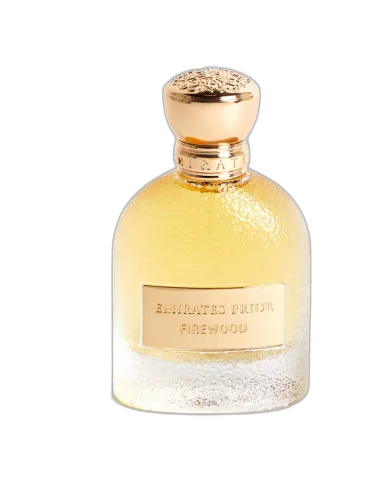
Emirates Pride Perfumes
Firewood Emirates Pride Perfumes
Shared heart notes: jasmine

Devota & Lomba
Infusión Adictiva Devota & Lomba
Shared heart notes: jasmine

Guerlain
Carmen Le Bolshoi Guerlain
Shared heart notes: jasmine

Victoria's Secret
Pink By Pink Victoria's Secret
Shared heart notes: jasmine