
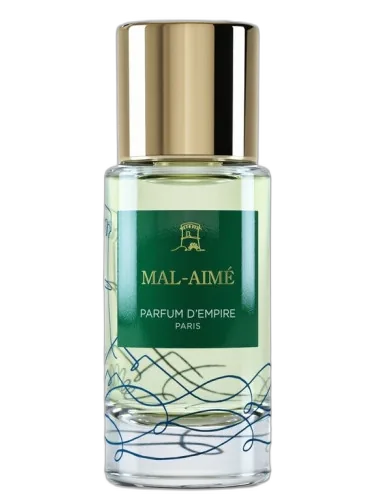
Mal-aimé Parfum D'empire
Fragrance Story
Mal-Aimé by Parfum d'Empire is a Aromatic Green fragrance for women and men. Mal-Aimé was launched in 2021. The nose behind this fragrance is Marc-Antoine Corticchiato. Top notes are Blackberry and Erigeron (Fleabane); middle notes are Nettle, Thistle and Erigeron (Fleabane); base notes are Orris Root and Erigeron (Fleabane).
Composition Profile
About the Perfumer

Marc-Antoine Corticchiato
Marc-Antoine Corticchiato is a French perfumer and founder of the brand Parfums de Nicolai, though his work extends to Frapin, Helios di Corsica, JCB - Jean-Charles Boisset, and La Parfumerie Moderne. His creations include Speakeasy, Helios Di Corsica, 100% Amour, N° 8 Antoinette, Années Folles, Belles Rives, Cuir X, and Desarmant. He is known for crafting sophisticated, narrative-driven scents that often incorporate Mediterranean and gourmand influences.
Fragrance Notes
Top Notes
First impression · 15-30 min
 Blackberry
.png) Erigeron (Fleabane)
Erigeron (Fleabane)
Heart Notes
Core character · 2-4 hours
 Nettle
 Thistle
Erigeron (Fleabane)
Thistle
Erigeron (Fleabane)
Base Notes
Lasting impression · 4+ hours
 Orris Root
Erigeron (Fleabane)
Orris Root
Erigeron (Fleabane)
Character Profile
The Lover Archetype: Portrait of Mal-aimé Parfum D'empire
Essence
The person who cherishes Mal-aimé by Parfum d’Empire is defined by the Wounded Romantic archetype-a figure who finds beauty in the forsaken, elegance in the overlooked. This archetype is a descendant of the Lover, but where the Lover seeks union with beauty, the Wounded Romantic seeks beauty in what has been cast aside. They are drawn to the melancholic, the bittersweet, the things that others dismiss as too harsh, too strange, or too sorrowful.
Mal-aimé-French for "unloved"-is a fragrance of hawthorn, immortelle, and honeyed bitterness, evoking the scent of a flower that blooms in solitude. The wearer of this scent does not merely appreciate it; they recognize themselves in it.
Relationships
They love deeply but rarely easily. Their relationships are intense, often marked by a push-and-pull between longing and detachment. They do not fear solitude; in fact, they sometimes retreat into it as if it were a sanctuary. Yet when they love, they do so with a quiet ferocity-not in grand gestures, but in the way they remember the exact shade of someone’s sadness, the way they listen more than they speak.
Their flaw is that they sometimes romanticize pain, both their own and others’. They may stay too long in relationships that wound them, mistaking suffering for depth. Their shadow is the Martyr, the one who clings to heartbreak as if it were the only proof of their capacity to feel.
Shadow
Their greatest strength-their ability to find meaning in sorrow-can also become their undoing. There is a fine line between embracing life’s complexities and fetishizing melancholy. At their worst, they may withdraw into self-imposed exile, convinced that no one could ever understand them. They might cultivate an air of tragic nobility, not realizing that they have become the architect of their own isolation.
Yet even this flaw is not without its purpose. It forces them to confront the question: Is my suffering a prison or a crucible? The answer determines whether they remain trapped in their own myth or transcend it.
Conclusion
Their tastes are refined but never conventional. They might adore decaying Baroque palaces as much as minimalist modern art, finding equal resonance in the grandeur of ruin and the austerity of precision. Their bookshelf holds Baudelaire alongside Pessoa, their music oscillates between Chopin’s nocturnes and the raw dissonance of post-punk. They do not seek harmony-they seek truth, even when it is jagged.
Their style is an exercise in controlled dissonance: a sharply tailored coat over a threadbare vintage shirt, a single piece of antique jewelry on an otherwise unadorned hand. They do not dress to impress but to express-each choice a quiet rebellion against the tyranny of trends.
Philosophically, they are drawn to thinkers who embrace contradiction: Nietzsche’s amor fati, Camus’ absurdism, the Taoist acceptance of opposites. They believe that suffering is not to be escaped but transfigured-that the unloved, the rejected, can become the most profound sources of strength.
Similar Fragrances
Fragrances with a comparable profile - shared accords, notes, and character.
Parfum d'Empire
Mal-aimé Parfum D'empire
Shared accords: aromatic, floral, fruity

DSH Perfumes
Ultramarine Blue Dsh Perfumes
Shared accords: aromatic, floral, fruity

Aquolina
Luna Park Aquolina
Shared accords: aromatic, floral, fruity

Fiilit
Camina - Provence Fiilit
Shared accords: aromatic, floral, fruity
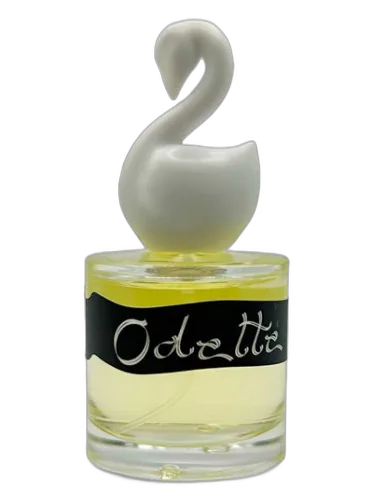
Gumamina
Odette Gumamina
Shared accords: aromatic, floral, fruity