


Portrait Paul Smith
At a glance
Is Portrait Paul Smith worth trying?
Portrait For Men by Paul Smith is a Woody Spicy fragrance for men.
- Best match
- Evening, Special Occasion wear in Fall, Winter
- Performance feel
- Good longevity with Moderate sillage
- Signature profile
- amber, warm spicy, aromatic with Pink Pepper, Cardamom, Bergamot
The first impression
Portrait For Men by Paul Smith is a Woody Spicy fragrance for men. Portrait For Men was launched in 2013. The nose behind this fragrance is Barnabe Fillion. Top notes are Pink Pepper, Cardamom and Bergamot; middle notes are Black Currant Blossom and Geranium; base notes are Tolu Balsam, Myrrh, Cedar, Labdanum and Musk.
What shapes the scent
The perfumer behind it

Barnabe Fillion
Barnabe Fillion is a French perfumer who trained at Givaudan and now works closely with Aesop, where he has become a defining creative force. His style is known for blending raw, mineral-like accords with earthy and aromatic notes, often evoking landscapes and natural textures. He created several of Aesop’s most distinctive fragrances, including the green, citrusy Erémia, the smoky, woody Karst, and the dark, resinous Miraceti.
Notes pyramid
Top Notes
First impression · 15-30 min
 Pink Pepper
 Cardamom
 Bergamot
Heart Notes
Core character · 2-4 hours
 Black Currant Blossom
 Geranium
Base Notes
Lasting impression · 4+ hours
 Tolu Balsam
 Myrrh
Myrrh
 Cedar
Cedar
 Labdanum
 Musk
Musk
The mood it creates
The Explorer Archetype: Portrait of Portrait Paul Smith
Essence
To wear Portrait Paul Smith is to embrace a fragrance that balances crisp citrus with warm, woody depth-a scent that is neither loud nor timid, but quietly assured. The person who chooses this fragrance is one who thrives in the liminal spaces between convention and individuality, tradition and innovation. Their archetype is unmistakably The Explorer, though not in the crude sense of a wanderer without roots. Rather, they are a seeker of refined experiences, a connoisseur of life’s subtler pleasures, always searching for meaning in the interplay of elegance and spontaneity.
Style & Aesthetic
Their wardrobe is a carefully curated collection of understated sophistication-tailored blazers with a slight asymmetry, well-worn leather shoes that have seen both city streets and countryside paths, and perhaps a single bold accessory that hints at an inner defiance. They appreciate the craftsmanship of classic design but reject ostentation. Their home is much the same: mid-century modern furniture softened by lived-in textures, art that suggests rather than shouts, and bookshelves filled with both timeless literature and obscure travelogues.
They are drawn to the quiet rebellion of Paul Smith’s designs-where British tradition meets a wink of irreverence. This duality defines them: they respect structure but refuse to be confined by it.
They thrive in cities but escape to the countryside when the noise becomes too much. They enjoy the ritual of a well-made espresso in the morning and a single malt at night, but they are just as content with street food in a foreign market. Routine comforts them, but stagnation terrifies them.
Professionally, they are often drawn to fields that allow for creativity within structure-design, writing, consulting, or entrepreneurship. They dislike rigid hierarchies but respect competence. They are not workaholics, but they take pride in what they do, viewing their career as another form of self-expression rather than a mere means to an end.
Philosophy & Values
For them, life is not about accumulating possessions but about collecting moments-conversations that stretch into the early hours, meals where the wine and company are equally intoxicating, journeys taken not for Instagram but for the sake of feeling alive. They value intelligence but despise pretension; they admire passion but distrust fanaticism.
Their guiding principle is curiosity tempered by discernment. They do not chase novelty for its own sake, but neither do they cling to the past out of fear. They believe in the examined life, though they are not prone to excessive introspection-preferring instead to engage with the world as both participant and observer.
Relationships
In love and friendship, they are magnetic but never clingy. They attract others with their ease and wit, but they guard their deeper emotions carefully. They are the kind of person who remembers small details-a favorite book, a childhood story-and uses these to forge connections, yet they resist being fully known. Their independence is both their strength and their limitation.
Romantically, they are drawn to partners who are equally self-possessed, who understand that love is not about merging but about walking parallel paths. They struggle with vulnerability, often masking it with charm or humor. Their shadow here is a reluctance to surrender-they fear losing themselves in another, and so they sometimes withhold just enough to remain safe.
Shadow
For all their virtues, the Explorer’s greatest weakness is their reluctance to plant roots. They mistake movement for growth, sometimes confusing the accumulation of experiences with true depth. There is a restlessness beneath their poise-an anxiety that if they stay too long in one place, one relationship, or one way of being, they will lose themselves.
They may also fall into the trap of aestheticizing life to the point of detachment. Their appreciation for beauty can sometimes become a barrier to raw, unfiltered emotion. They risk becoming spectators in their own lives, admiring the scenery but never fully stepping into the frame.
Conclusion
When at their best, they are neither wanderers nor settlers, but something in between-a person who understands that meaning is found not in extremes, but in the tension between them. They learn, over time, that freedom is not the absence of ties but the ability to choose them wisely.
Portrait Paul Smith is their scent because it mirrors their essence: bright yet grounded, classic yet unpredictable. It is a fragrance for someone who knows that the most interesting lives are lived in the nuances, in the spaces between black and white. And so they move through the world-always searching, always savoring, always just a little bit apart.
If you like this, try these
Fragrances with a comparable profile - shared accords, notes, and character.

Jusbox
Live 'n' Loud Jusbox
Shared top notes: bergamot, cardamom
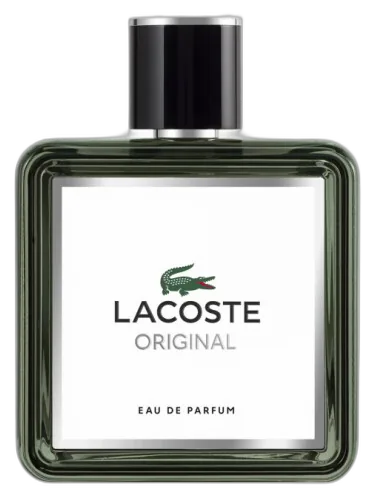
Lacoste Fragrances
Lacoste Original Lacoste Fragrances
Shared top notes: bergamot, cardamom, pink pepper
Attar Al Has
Yellow Splash Attar Al Has
Shared top notes: bergamot, cardamom, pink pepper
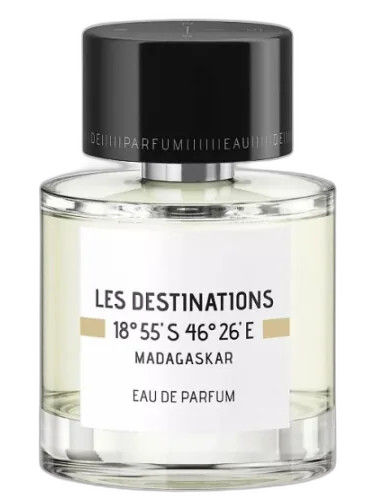
Les Destinations
Madagaskar Les Destinations
Shared top notes: bergamot, cardamom

AXE
Africa Axe
Shared top notes: bergamot