


Green Carnation Pell Wall Perfumes
At a glance
Is Green Carnation Pell Wall Perfumes worth trying?
Green Carnation by Pell Wall Perfumes is a Floral Woody Musk fragrance for men.
- Best match
- Casual, Office wear in Spring, Fall
- Performance feel
- Good longevity with Moderate sillage
- Signature profile
- warm spicy, floral, amber with Clove, Green Mandarin, Grass
The first impression
Green Carnation by Pell Wall Perfumes is a Floral Woody Musk fragrance for men. Green Carnation was launched in 2012. The nose behind this fragrance is Chris Bartlett. Top notes are Clove, Green Mandarin and Grass; middle notes are Carnation, Floral Notes, Nutmeg and Galbanum; base notes are Olibanum, Oakmoss, White Musk and Ambergris.
What shapes the scent
The perfumer behind it

Chris Bartlett
Chris Bartlett is a British perfumer and the founder of Pell Wall Perfumes, where he creates a wide range of fragrances. His catalog includes classics like 1953 Eau De Toilette and 1953 Pour Homme, as well as more unique offerings such as Anjin, Devana, Equistem, Green Carnation, Jacinth, and Lasting Lavender. His work often explores traditional and modern perfumery techniques.
Notes pyramid
Top Notes
First impression · 15-30 min
 Clove
Green Mandarin
Clove
Green Mandarin
 Grass
Grass
Heart Notes
Core character · 2-4 hours
 Carnation
 Floral Notes
 Nutmeg
 Galbanum
Base Notes
Lasting impression · 4+ hours
Olibanum
 Oakmoss
White Musk
Oakmoss
White Musk
 Ambergris
The mood it creates
The Lover Archetype: Portrait of Green Carnation Pell Wall Perfumes
Essence
The person who cherishes Green Carnation by Pell Wall Perfumes is most closely aligned with the Aesthetic archetype, a refined and sensual seeker of beauty in all its forms. This archetype, a cousin to the Lover but with a sharper intellectual edge, thrives on sensory pleasure, artistry, and the cultivation of an exquisite existence. They are drawn to the rare, the decadent, and the deliberately unconventional-much like the fragrance itself, which blends clove, carnation, and moss into something both nostalgic and subversive.
The Aesthetic is not merely a passive admirer of beauty but an active participant in its creation, shaping their life as one would a carefully composed poem. They reject the banal in favor of the poetic, the mass-produced in favor of the handcrafted. Yet beneath this devotion to beauty lies a tension-between indulgence and restraint, between the desire to be seen and the fear of vulgarity.
Style & Aesthetic
Their world is one of deliberate choices, each object, scent, and word selected for its resonance. Their home is not cluttered but curated: antique books with uncut pages, a single orchid in a celadon vase, a well-worn velvet armchair where they read Wilde or Proust. They prefer the muted elegance of dark greens and deep browns, fabrics that whisper rather than shout-silk, cashmere, aged leather.
Their taste in music leans toward the baroque or the decadent-perhaps Debussy’s Préludes or the languid melancholy of early 20th-century cabaret. In food, they savor the bittersweet: dark chocolate with sea salt, a perfectly balanced negroni, the faint bitterness of Earl Grey tea. They do not eat for sustenance but for sensation.
Philosophy & Values
To them, beauty is not frivolous-it is a quiet act of defiance. In a world that values efficiency and utility, their insistence on the ornamental is a subtle protest. They believe in the sacredness of pleasure, not as hedonism but as a form of wisdom. "To live beautifully," they might say, "is to understand the weight of existence without being crushed by it."
Yet this philosophy carries its own contradictions. They disdain the vulgarity of materialism, yet they are, in their own way, materialistic-not for wealth, but for the right objects, the ones that carry meaning. They abhor pretension, yet their disdain for the mainstream can itself become a form of elitism.
Relationships
They attract others effortlessly-there is something magnetic in their quiet intensity, the way they listen as though every word matters. But true closeness is rare. They guard their inner world carefully, preferring the poetry of suggestion over raw confession. Their love affairs are intense but often brief, as they fear the messiness of prolonged attachment.
They are drawn to those who share their appreciation for the finer things, but also to those who disrupt it-the wild, the untamed, the ones who remind them that life cannot always be a perfectly arranged still life.
Shadow
The Aesthetic’s greatest weakness is their capacity for self-indulgence. When unbalanced, their pursuit of beauty becomes escapism, a way to avoid the grit of reality. They may slip into decadence, mistaking excess for sophistication, or into cold detachment, dismissing anything that fails to meet their exacting standards.
There is also a danger of solipsism-becoming so enamored with their own refinement that they lose touch with the raw, unpolished humanity around them. Their fear of vulgarity can harden into snobbery, their love of the rare into disdain for the ordinary.
Conclusion
At their best, they embody a rare alchemy-sophistication without sterility, sensuality without gluttony. They remind us that life need not be either brutal or frivolous; it can be lived with grace, wit, and depth. Their love of Green Carnation-a fragrance that is both nostalgic and daring-mirrors their own duality: the classicist with a streak of rebellion, the romantic who refuses sentimentality.
They are not for everyone. But for those who understand them, they are a glimpse of what it means to live deliberately, to turn existence into art.
If you like this, try these
Fragrances with a comparable profile - shared accords, notes, and character.

Arabesque Perfumes
Bacara Arabesque Perfumes
Shared base notes: ambergris, oakmoss, white musk
Sarah Horowitz Parfums
What Comes From Within: Love Sarah Horowitz Parfums
Shared top notes: clove
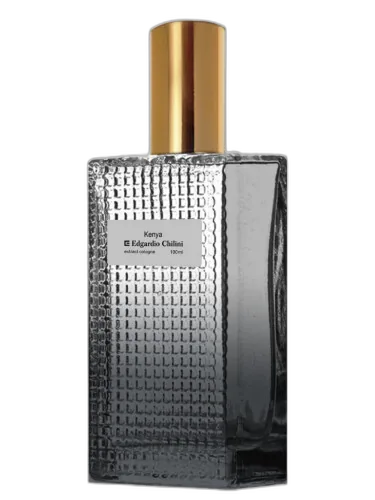
Edgardio Chilini
Kenya Edgardio Chilini
Shared top notes: clove
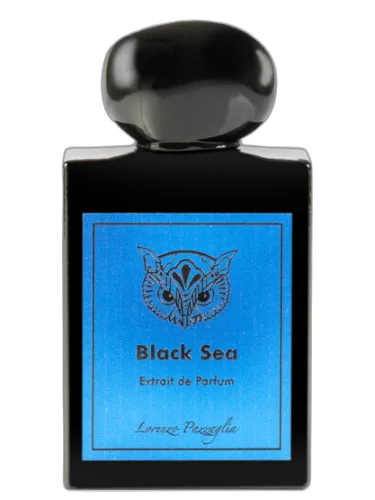
Lorenzo Pazzaglia
Black Sea Lorenzo Pazzaglia
Shared base notes: ambergris, oakmoss, white musk

Once
Josy Once
Shared base notes: ambergris, oakmoss, white musk