
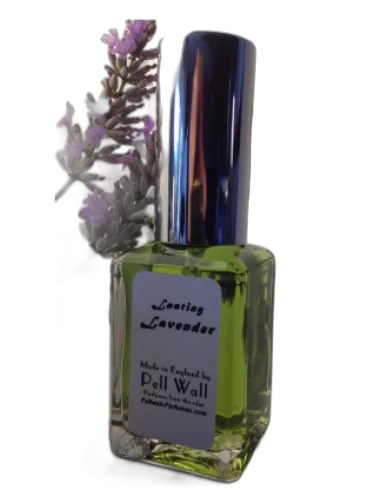

Lasting Lavender Pell Wall Perfumes
At a glance
Is Lasting Lavender Pell Wall Perfumes worth trying?
Lasting Lavender by Pell Wall Perfumes is a Floral Woody Musk fragrance for women.
- Best match
- Casual, Office wear in Spring, Summer
- Performance feel
- Moderate longevity with Moderate sillage
- Signature profile
- aromatic, fresh spicy, lavender with Lavender, Rosemary, Lavender
The first impression
Lasting Lavender by Pell Wall Perfumes is a Floral Woody Musk fragrance for women. Lasting Lavender was launched in 2012. The nose behind this fragrance is Chris Bartlett. Top notes are Lavender and Rosemary; middle notes are Lavender, Geranium, Violet Leaf and Lily-of-the-Valley; base notes are Ambergris, White Musk and Sandalwood.
What shapes the scent
The perfumer behind it

Chris Bartlett
Chris Bartlett is a British perfumer and the founder of Pell Wall Perfumes, where he creates a wide range of fragrances. His catalog includes classics like 1953 Eau De Toilette and 1953 Pour Homme, as well as more unique offerings such as Anjin, Devana, Equistem, Green Carnation, Jacinth, and Lasting Lavender. His work often explores traditional and modern perfumery techniques.
Notes pyramid
Top Notes
First impression · 15-30 min
 Lavender
 Rosemary
Heart Notes
Core character · 2-4 hours
Lavender
 Geranium
 Violet Leaf
 Lily-of-the-Valley
Base Notes
Lasting impression · 4+ hours
 Ambergris
 White Musk
 Sandalwood
The mood it creates
The Lover Archetype: Portrait of Lasting Lavender Pell Wall Perfumes
Essence
The person who cherishes Lasting Lavender by Pell Wall Perfumes is one who seeks harmony-both within themselves and in the world around them. Lavender, a scent both soothing and resilient, speaks to their dual nature: gentle yet enduring, nurturing yet self-contained. They are drawn to fragrances that evoke comfort, tradition, and quiet strength, rejecting the brash and the fleeting in favor of the timeless.
This individual embodies the Caregiver archetype, one who finds purpose in tending to others, creating sanctuary, and preserving beauty. Their life is an act of cultivation-of relationships, spaces, and inner peace. Yet, like all archetypes, the Caregiver has a shadow: a tendency toward self-neglect, an overbearing need to control their environment, and a quiet martyrdom that can sour into resentment.
Relationships
In love and friendship, they are the steady presence, the one who remembers birthdays, who brings soup when you are ill, who knows when silence is needed. They attract those who crave stability, but also those who take more than they give. Their relationships thrive when balanced but falter when their generosity is exploited.
Romantically, they seek a partner who appreciates their devotion but does not mistake it for weakness. They are not the fiery, dramatic lover but the one whose affection is a slow-burning ember-reliable, warm, enduring. Yet, if their efforts go unnoticed, a quiet bitterness may grow, a sense of being taken for granted.
Shadow
The Caregiver’s greatest strength-their ability to nurture-can become their prison. They may lose themselves in the needs of others, forgetting their own desires. Their home, once a sanctuary, can become a fortress against the chaos of the world, a place where control stifles spontaneity.
Worse still, their kindness can curdle into passive aggression-the sigh of someone who has done too much and resents it. They may cling to relationships long past their natural end, fearing abandonment more than stagnation. And when their efforts are unreciprocated, they may retreat into self-pity, a martyr to their own virtue.
Conclusion
Their home is a reflection of their soul-soft textures, muted colors, well-worn books, and fresh linens. They prefer natural materials, handmade ceramics, and the faint hum of a kettle on the stove. Their taste in music leans toward the melancholic yet comforting: classical nocturnes, folk ballads, the kind of songs that feel like an embrace.
Philosophically, they believe in the sacredness of small acts-the ritual of brewing tea, the tending of a garden, the listening ear offered without judgment. They are not drawn to grand ideologies but to the quiet ethics of care. Their values are rooted in kindness, but not the performative kind; theirs is a kindness that expects no reward, though it sometimes wearies them.
If you like this, try these
Fragrances with a comparable profile - shared accords, notes, and character.

Xerjoff
Casafutura Xerjoff
Shared top notes: lavender, rosemary
Parfums Vintage
Verbena Fields Parfums Vintage
Shared heart notes: lavender, violet leaf

Parfums Vintage
Emerald Isle Parfums Vintage
Shared heart notes: geranium, lavender
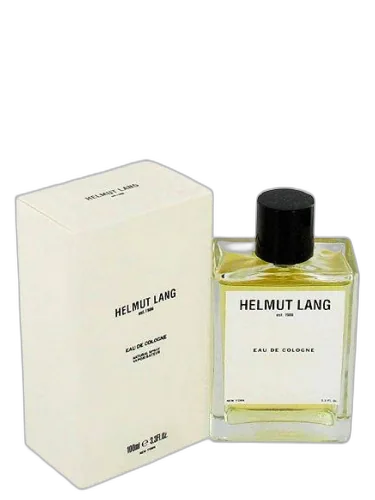
Helmut Lang
Eau De Cologne Helmut Lang
Shared top notes: lavender, rosemary

O Boticário
Acqua Di Colonia Lavanda O Boticário
Shared top notes: lavender, rosemary