
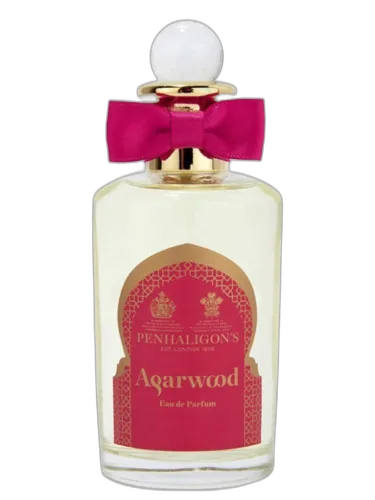

Agarwood Penhaligon's
Fragrance Story
Agarwood by Penhaligon's is a Oriental Woody fragrance for women and men. Agarwood was launched in 2017. The nose behind this fragrance is Christian Provenzano.
Composition Profile
About the Perfumer

Christian Provenzano
Christian Provenzano is a perfumer who has contributed to several Agent Provocateur fragrances, including the original Agent Provocateur, Maitresse, and Ménage À Trois. He also created Ambra Guaiac for Alysonoldoini and Diamond Dust Edition for Agent Provocateur. His work often features bold, sensual accords.
Fragrance Notes
All Notes
Complete scent profile
 Petitgrain
 Spices
Oud
Spices
Oud
 Jasmine
 Cedar
Tonka
Cedar
Tonka
 Vanilla
Character Profile
The Sage Archetype: Portrait of Agarwood Penhaligon's
Essence
The person who favors Agarwood Penhaligon's is, at their core, a Sage-a seeker of wisdom, a connoisseur of depth, and a guardian of the esoteric. Agarwood, or oud, is not merely a fragrance to them; it is an olfactory manifesto. It speaks of antiquity, of resins hardened by time, of smoke curling from ancient temples. Like the Sage, they are drawn to what is enduring, layered, and slightly enigmatic.
This is not a scent for the frivolous or the impatient. It demands attention, unfolding slowly, revealing its complexity only to those willing to linger. The Sage, too, reveals themselves in layers-never fully known, always hinting at more beneath the surface.
Style & Aesthetic
Their tastes are deliberate, never accidental. They prefer the weight of a well-bound book over the flicker of a screen, the texture of aged leather over synthetic gloss. Their home is a curated archive-dark woods, muted tones, perhaps a single striking artifact from a distant culture. Music is either classical or something with a haunting, unresolved quality-nothing disposable.
In fragrance, they disdain the obvious. Agarwood’s smoky, woody depth mirrors their own resistance to superficiality. They might also appreciate the bitterness of myrrh, the warmth of aged cognac, or the austerity of vetiver.
Philosophy & Values
They believe in knowledge as power, but not in the vulgar sense of domination. For them, wisdom is a private conquest, a slow accumulation of insights that refine the soul. They may be drawn to Stoicism, Zen, or the writings of Jung himself-systems that prize introspection over dogma.
Their values are rooted in authenticity. They despise pretense, though they themselves may occasionally fall into its trap (as we shall see). They respect tradition but are not bound by it; they extract what is useful and discard the rest.
Relationships
They are not gregarious, but neither are they reclusive. Their friendships are few but enduring, built on mutual respect rather than neediness. They attract others who sense their depth, though few ever fully penetrate it. In love, they are slow to commit but fiercely loyal once they do-though their partner must accept that some chambers of their mind will always remain locked.
They speak sparingly, but when they do, their words carry weight. Their humor is dry, their patience long, their disapproval silent but devastating.
Conclusion
The Sage’s greatest strength-their self-sufficiency-can curdle into emotional detachment. They may rationalize solitude as wisdom when, in truth, it is fear-fear of vulnerability, of being truly known. Their relationships may suffer from a quiet withholding, a refusal to surrender control.
Similar Fragrances
Fragrances with a comparable profile - shared accords, notes, and character.
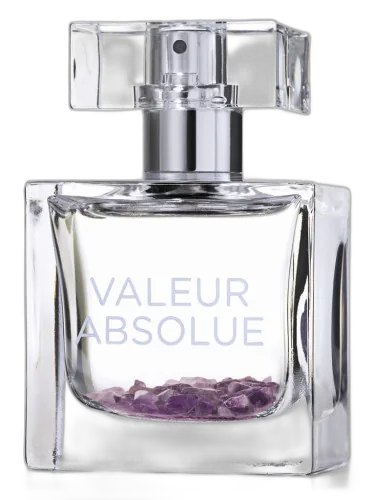
Valeur Absolue
Harmonie Valeur Absolue
Shared accords: aromatic, citrus, fresh spicy

Houbigant
Ambre Des Abysses Houbigant
Shared accords: amber, aromatic, citrus
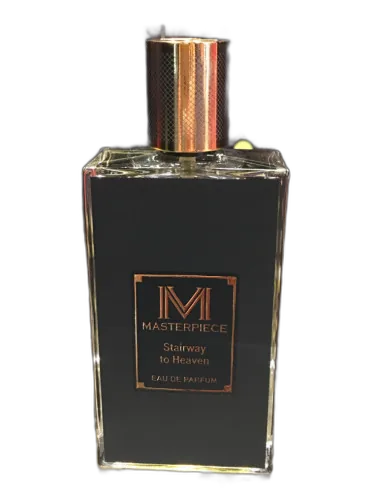
Masterpiece
Stairway To Heaven Masterpiece
Shared accords: amber, aromatic, citrus
Rouge & Rye
Pearl Rouge & Rye
Shared accords: amber, aromatic, citrus
COCHINE
Vanille & Tabac Noir Cochine
Shared accords: amber, aromatic, citrus