
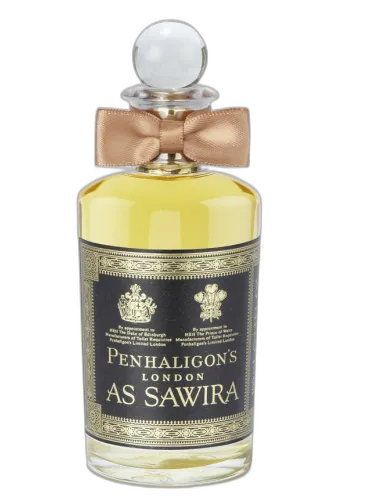

As Sawira Penhaligon's
Fragrance Story
As Sawira by Penhaligon's is a Woody Chypre fragrance for women and men. As Sawira was launched in 2015. The nose behind this fragrance is Christian Provenzano. Top notes are Saffron and Bergamot; middle notes are Rose, Carnation and Jasmine; base notes are Agarwood (Oud), Myrhh, Woodsy Notes, Amber and Labdanum.
Composition Profile
About the Perfumer

Christian Provenzano
Christian Provenzano is a perfumer who has contributed to several Agent Provocateur fragrances, including the original Agent Provocateur, Maitresse, and Ménage À Trois. He also created Ambra Guaiac for Alysonoldoini and Diamond Dust Edition for Agent Provocateur. His work often features bold, sensual accords.
Fragrance Notes
Top Notes
First impression · 15-30 min
 Saffron
 Bergamot
Heart Notes
Core character · 2-4 hours
 Rose
Rose
 Carnation
 Jasmine
Base Notes
Lasting impression · 4+ hours
.jpg) Agarwood (Oud)
Agarwood (Oud)
 Myrhh
Woodsy Notes
Myrhh
Woodsy Notes
 Amber
Amber
 Labdanum
Character Profile
The Archetype Archetype: Portrait of As Sawira Penhaligon's
Essence
The one who chooses As Sawira is ruled by the Sovereign archetype-a figure of quiet authority, refined taste, and an unshakable belief in their own vision. This is not the Sovereign who demands obedience through force, but one who commands respect through presence. They are the ruler of their own domain, whether that be a career, a social circle, or an inner world of carefully curated experiences.
As Sawira-with its blend of warm amber, creamy vanilla, and a whisper of spice-reflects this archetype perfectly. It is opulent without being ostentatious, confident without being aggressive. Like the fragrance, the Sovereign does not need to announce themselves; their essence lingers, leaving an impression long after they have passed.
Style & Aesthetic
Their surroundings are an extension of their self-possession. Their home is not cluttered, but neither is it sterile-every object has been chosen with deliberation. A well-worn leather-bound book rests on a mahogany desk; a single piece of art, perhaps an original sketch from a lesser-known Renaissance master, hangs in a place of honor. They prefer muted luxury-cashmere over sequins, matte finishes over gloss.
In fashion, they favor timeless cuts-tailored coats, structured dresses, or well-fitted suits in deep, earthy tones. They do not chase trends, for they know that true style is not about novelty, but about knowing oneself. Their accessories are few but meaningful: a signet ring, an heirloom watch, a scarf that belonged to a beloved grandparent.
Philosophy & Values
They believe in excellence, not as a means to impress others, but as a personal creed. Mediocrity is an insult to the potential of the human spirit. They are drawn to disciplines that require patience and refinement-classical music, calligraphy, the slow craft of whiskey aging.
Their values are rooted in tradition, but not blind adherence to it. They respect the past, yet they are not afraid to reinterpret it. They may collect antique maps, not merely as relics, but as symbols of exploration-both of the world and the self.
Relationships
They do not have many friends, but the ones they keep are bound by mutual respect. Their relationships are built on intellectual and emotional reciprocity-they despise small talk, preferring conversations that unfold like a well-aged wine.
Romantically, they are drawn to those who possess their own sovereignty. They do not seek to dominate or be dominated; they desire a partner who stands beside them as an equal. Their love is not effusive, but it is steady-a quiet fire rather than a blazing inferno.
Shadow
Yet, the Sovereign’s strength can curdle into rigidity. Their insistence on perfection may make them intolerant of mistakes-both their own and others’. They may mistake control for wisdom, dismissing spontaneity as chaos.
Their natural reserve can harden into aloofness. They may withdraw into their self-made kingdom, forgetting that even rulers must sometimes kneel-to love, to vulnerability, to the unruly beauty of life.
Conclusion
As Sawira is the scent of someone who has mastered the art of living-not in the sense of conquering life, but in shaping it with intention. They are neither reckless nor timid; they move through the world with the assurance of one who knows their worth.
But mastery, like any great power, carries its own temptations. The true test of the Sovereign is not in ruling, but in knowing when to lay the crown aside-to embrace the messiness of being human.
Similar Fragrances
Fragrances with a comparable profile - shared accords, notes, and character.
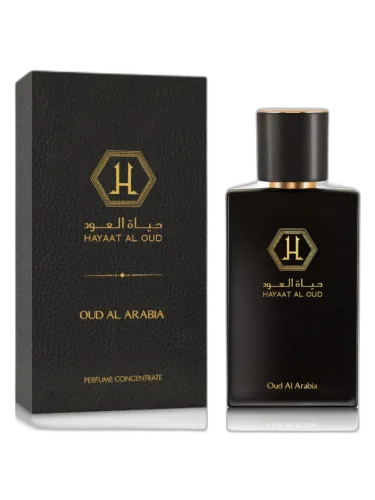
Hayaat Al Oud
Oud Al Arabia Hayaat Al Oud
Shared accords: amber, floral, leather

Amouroud
Safran Rare Amouroud
Shared accords: amber, aromatic, balsamic
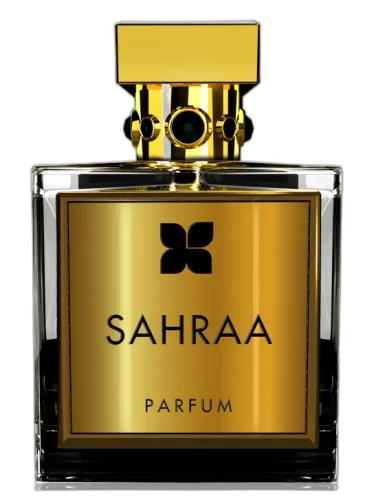
Fragrance Du Bois
Sahraa Fragrance Du Bois
Shared accords: amber, aromatic, leather

Montale
Aoud Melody Montale
Shared accords: amber, aromatic, balsamic

Manzana Paris
Forteresse Manzana Paris
Shared accords: amber, balsamic, floral