
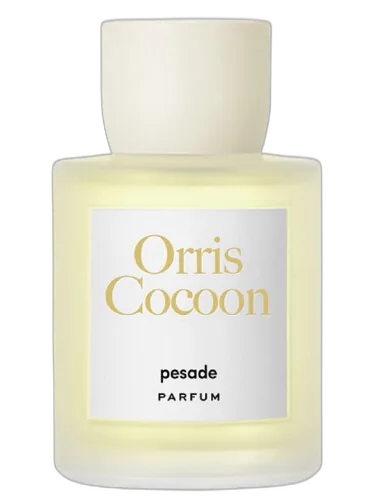

Orris Cocoon Pesade
At a glance
Is Orris Cocoon Pesade worth trying?
Orris Cocoon by Pesade is a Woody Aromatic fragrance for women and men.
- Best match
- Evening wear in Fall
- Performance feel
- Good longevity with Moderate sillage
- Signature profile
- aromatic, woody, iris with Coriander, Woody Notes, Longjing tea
The first impression
Orris Cocoon by Pesade is a Woody Aromatic fragrance for women and men. This is a new fragrance. Orris Cocoon was launched in 2025.
What shapes the scent
The perfumer behind it

Notes pyramid
All Notes
Complete scent profile
 Coriander
 Woody Notes
 Longjing tea
 Orris
Orris
 Leather
 Vetiver
The mood it creates
The Archetype Archetype: Portrait of Orris Cocoon Pesade
Essence
To wear Orris Cocoon Pesade is to embrace a paradox-a fragrance that is at once powdery and warm, delicate yet enveloping, like a whispered secret wrapped in velvet. The person who chooses this scent does not seek to dominate the room but to haunt it, leaving an impression that lingers long after they depart. Their essence is enigmatic, their presence magnetic in its quietude.
Above all, they are defined by The Mystic-an archetype that dwells in the liminal spaces between the seen and unseen, the known and the unknowable. They are drawn to the subtle, the veiled, the half-revealed. Unlike the Sage, who seeks knowledge for mastery, or the Magician, who wields transformation as a tool, the Mystic seeks understanding as an end in itself, not to conquer but to commune.
This is a soul who moves through life with an air of quiet knowing, as though privy to truths just beyond the grasp of ordinary perception. They are not necessarily religious, but they are deeply spiritual, finding meaning in patterns, synchronicities, and the unspoken language of the world.
Style & Aesthetic
Their tastes are refined but never ostentatious. They prefer textures that invite touch-cashmere, aged paper, the grain of worn wood. Their wardrobe leans toward muted tones, favoring deep grays, soft ivories, and the occasional whisper of lavender or charcoal. They appreciate craftsmanship, not for its prestige, but for the way it carries the imprint of the maker’s hand.
In art, they are drawn to the impressionists, the symbolists, the surreal-works that suggest rather than declare. A favorite book might be The Master and Margarita, where reality bends under the weight of the unseen, or the poetry of Rilke, where longing and transcendence intertwine. Music for them is an experience of immersion-ambient soundscapes, the melancholy of Debussy, the haunting minimalism of Arvo Pärt.
They do not chase experiences; they inhabit them. A morning ritual-the steam of tea, the weight of a well-worn book-is as sacred to them as a pilgrimage. They may keep a journal, not for documentation but as a vessel for fleeting thoughts and dreams.
Their home is a sanctuary, curated but not sterile. Candles burn low, incense lingers, objects hold meaning beyond function. They are not minimalists, but every item is chosen with intention.
Philosophy & Values
They do not believe in simple answers. Life, to them, is a tapestry of contradictions-beauty and decay, presence and absence, the ephemeral and the eternal. They are drawn to philosophies that embrace paradox: Zen koans, the writings of Jung, the mystical strains of Sufism.
Their values are rooted in depth over surface, essence over form. They distrust dogma but revere wisdom. They are not activists in the traditional sense, but they believe in the sanctity of inner truth. Their politics, if they engage at all, are nuanced-they see systems as living, shifting entities rather than fixed ideologies.
Relationships
They do not give themselves easily. Friendship is a slow unfurling, a gradual revelation of layers. They attract others through their quiet intensity, but few truly know them. Their love language is the shared silence, the glance that carries unspoken understanding.
Romantically, they are drawn to those who mirror their depth-not necessarily fellow mystics, but those who appreciate the unseen. They are loyal but require solitude. Their relationships thrive on mutual respect for inner worlds; they wither under demands for constant connection.
Shadow
Yet the Mystic’s path is not without peril. Their love of depth can become a retreat from the world, a reluctance to engage with the messiness of human connection. They may grow so accustomed to solitude that they forget how to be present in relationships, leaving others feeling shut out.
Their intuition, while powerful, can also lead them into over-analysis, seeing meaning where there is none, or becoming lost in abstraction. At worst, they may slip into passivity, observing life rather than living it, mistaking contemplation for action.
Conclusion
At their best, they are guides without preaching, listeners without judgment. They offer others the rare gift of being truly seen. Their intuition is sharp, their empathy profound. They navigate life with a quiet grace, unshaken by chaos because they understand its place in the grand design.
If you like this, try these
Fragrances with a comparable profile - shared accords, notes, and character.
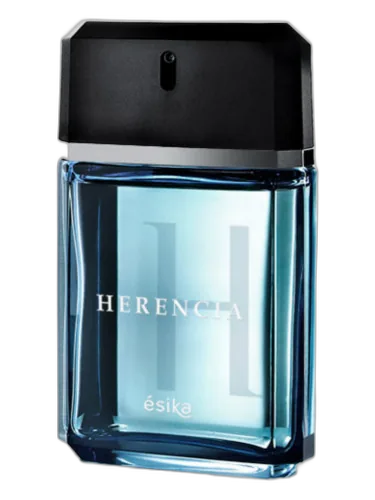
Ésika
Herencia Ésika
Shared top notes: leather, vetiver, woody notes

The Society of Scent
Ashen Orris The Society Of Scent
Shared top notes: coriander, woody notes

Maison Crivelli
Iris Malikhân Maison Crivelli
Shared top notes: coriander, leather, orris
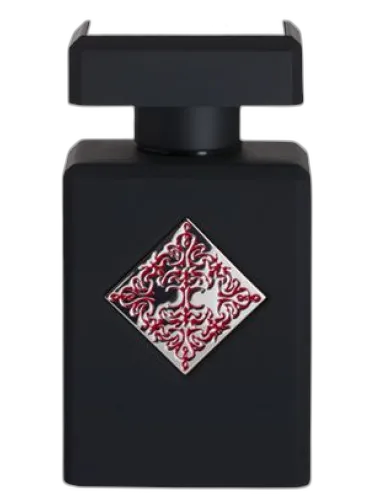
Initio Parfums Prives
Divine Attraction Initio Parfums Prives
Shared top notes: leather, vetiver

UERMI
Or White Uermi
Shared top notes: coriander, leather, orris