


Tabac Rouge Phaedon
At a glance
Is Tabac Rouge Phaedon worth trying?
Tabac Rouge by Phaedon is a Oriental Fougere fragrance for women and men.
- Best match
- Evening wear in Fall
- Performance feel
- Very Good longevity with Strong sillage
- Signature profile
- honey, warm spicy, cinnamon with Honey, Cinnamon, Benzoin
The first impression
Tabac Rouge by Phaedon is a Oriental Fougere fragrance for women and men. Tabac Rouge was launched in 2013. The nose behind this fragrance is Anne-Cecile Douveghan.
What shapes the scent
The perfumer behind it

Anne-Cecile Douveghan
Anne-Cecile Douveghan is a French perfumer who trained at Givaudan's prestigious school and has worked with several niche houses. Her style often balances rich, warm notes with subtle complexity, creating fragrances that feel both classic and modern. She composed Tabac Rouge for Phaedon, a tobacco-centered scent that blends honeyed sweetness with smoky depth.
Notes pyramid
All Notes
Complete scent profile
 Honey
Honey
 Cinnamon
 Benzoin
 Ginger
 Powdery Notes
 Musk
Musk
The mood it creates
The Archetype Archetype: Portrait of Tabac Rouge Phaedon
Essence
Tabac Rouge by Phaedon is a fragrance of paradoxes-warm yet austere, opulent yet restrained. It is honeyed tobacco wrapped in spices, a scent that evokes both the decadence of a velvet-lined smoking room and the quiet discipline of a scholar’s study. The person who chooses this fragrance is drawn to depth, tradition, and the slow burn of experience rather than the fleeting spark of novelty.
Above all, they are a seeker of wisdom, a collector of truths, and a curator of the past. The Sage archetype dominates their psyche-they are the philosopher, the historian, the connoisseur who values knowledge not as a means to power, but as an end in itself. They are not merely intelligent; they are wise in the way of those who have spent years refining their understanding of the world. Yet, like all archetypes, the Sage has its shadow-the risk of becoming lost in abstraction, of preferring the safety of ideas over the messiness of lived experience.
Style & Aesthetic
Their tastes are deliberate, never accidental. They favor dark woods, aged leather, and the weight of a well-bound book in their hands. Their wardrobe leans toward timelessness-tailored wool, cashmere, perhaps a vintage watch with a face worn smooth by time. They are drawn to art that rewards patience: a Bruegel painting dense with detail, a Mahler symphony that unfolds slowly, a novel like The Magic Mountain, where ideas simmer beneath the surface.
They do not chase trends. Instead, they cultivate an aesthetic that speaks of permanence, as if they are curating their own museum of the meaningful. Their home is not minimalist, but neither is it cluttered-each object has been chosen with care, each piece carrying a story or a purpose.
Their days are structured but not rigid. They rise early, savoring the quiet hours when the world is still soft with dawn. Coffee is a ritual, not a habit-they grind the beans themselves, appreciating the process as much as the result. Their work, whether in academia, the arts, or some other field of depth, is not just a job but a vocation.
They travel, but not to check destinations off a list. They go to immerse themselves, to learn, to absorb. A week in a single city, walking its streets until they know its rhythms, is more satisfying to them than a whirlwind tour of continents.
Yet the shadow whispers here as well: their routines can harden into rigidity. They may resist spontaneity, mistaking it for chaos. Their love of order can become a fear of disruption, making them resistant to change even when it is necessary.
Philosophy & Values
They believe in the slow accumulation of understanding. To them, wisdom is not found in quick answers but in the patient unraveling of complexity. They may quote Marcus Aurelius or Schopenhauer, not to impress, but because these thinkers articulate truths they have already felt in their bones.
Their values are rooted in integrity, intellectual honesty, and a quiet disdain for superficiality. They respect tradition but are not bound by it-they see it as a foundation to build upon, not an altar to worship at. They are skeptical of dogma, preferring nuance to certainty.
Yet here lies the shadow: their love of depth can become a retreat from the world. They may disdain those who live more lightly, dismissing passion as frivolity or action as thoughtlessness. Their pursuit of wisdom can harden into intellectual pride, making them impatient with those who do not share their rigor.
Relationships
They are not gregarious, but neither are they reclusive. Their friendships are few but deep, built over years of shared conversations and mutual respect. They prefer the company of those who can match their intensity, who understand that silence is not emptiness but a form of communion.
In love, they are slow to trust but fiercely loyal once they do. They do not fall carelessly; their affections are earned, not given. Their relationships are built on mutual growth-they seek a partner who challenges them, who refuses to let them retreat entirely into their own mind.
But the shadow lingers here too: their exacting standards can make them critical, even cold. They may withdraw when others fail to meet their expectations, leaving loved ones feeling judged or inadequate. Their love of solitude can become isolation, their wisdom a barrier rather than a bridge.
Conclusion
At their best, they are a guiding light-someone whose depth of thought enriches those around them. They offer perspective in times of confusion, stability in times of upheaval. Their presence is a quiet force, like the steady glow of embers in a hearth.
But when unbalanced, they risk becoming the recluse, the critic, the one who observes life more than lives it. Their wisdom, if unchecked, can calcify into superiority; their love of the past can blind them to the present.
The person who wears Tabac Rouge is not merely a thinker-they are a guardian of meaning. But like all guardians, they must remember that wisdom is not a fortress to hide within, but a torch to illuminate the way for others.
If you like this, try these
Fragrances with a comparable profile - shared accords, notes, and character.

Wolf Brothers
Bear Wolf Brothers
Shared top notes: cinnamon, ginger

Happyland
Happyland Signature Happyland
Shared top notes: cinnamon, honey

Alexandria Fragrances
Apple Crumb Alexandria Fragrances
Shared top notes: cinnamon, honey
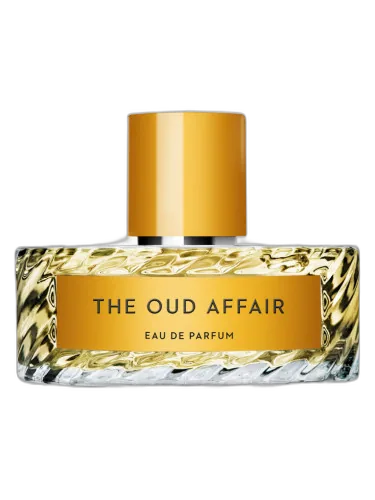
Vilhelm Parfumerie
The Oud Affair Vilhelm Parfumerie
Shared top notes: ginger, honey

House of Forbidden Fruit
Honey Beam House Of Forbidden Fruit
Shared top notes: ginger, honey, musk