
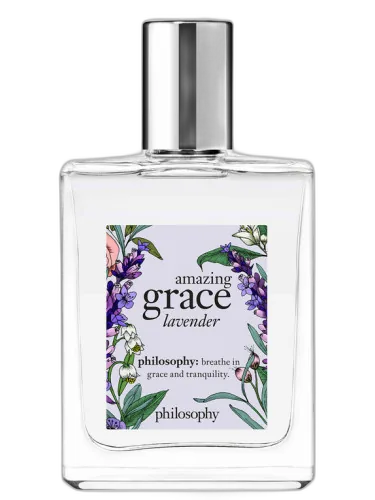

Amazing Grace Lavender Philosophy
At a glance
Is Amazing Grace Lavender Philosophy worth trying?
Amazing Grace Lavender by Philosophy is a Aromatic fragrance for women.
- Best match
- Casual wear in Spring
- Performance feel
- Moderate longevity with Moderate sillage
- Signature profile
- lavender, citrus, aromatic with Lavender, Grapefruit, Bergamot
The first impression
Amazing Grace Lavender by Philosophy is a Aromatic fragrance for women. This is a new fragrance. Amazing Grace Lavender was launched in 2022. The nose behind this fragrance is Cecile Hua. Top notes are Lavender, Grapefruit, Bergamot and Black Currant; middle notes are Lily-of-the-Valley, Rhubarb, Raspberry and Cardamom; base notes are Musk, Pink Pepper and Jasmine.
What shapes the scent
The perfumer behind it

Cecile Hua
Cecile Hua has composed fragrances for 4711, Amouroud, Arielle Shoshana, and Atelier Cologne. Her work ranges from fresh citrus blends like 4711 Acqua Colonia Pink Pepper & Grapefruit to deeper floral and woody creations such as Dark Orchid. She is known for her ability to balance clarity with complexity across different styles.
Notes pyramid
Top Notes
First impression · 15-30 min
 Lavender
 Grapefruit
 Bergamot
 Black Currant
Heart Notes
Core character · 2-4 hours
 Lily-of-the-Valley
 Rhubarb
 Raspberry
 Cardamom
Base Notes
Lasting impression · 4+ hours
 Musk
Musk
 Pink Pepper
 Jasmine
The mood it creates
The Archetype Archetype: Portrait of Amazing Grace Lavender Philosophy
Essence
To wear Amazing Grace Lavender Philosophy is to embrace a paradox-a fragrance that is at once soft and assertive, ethereal yet grounded. The person who favors this scent is one who seeks harmony but knows the weight of solitude. They are drawn to the quiet power of lavender-its medicinal clarity, its ancient ties to purification-while the "grace" in the name suggests an aspiration toward something higher, something untainted by the chaos of the world.
Above all, this person is defined by the Sage-the seeker of wisdom, the quiet observer who values knowledge not as mere accumulation but as a means of inner refinement. They are not the scholar buried in dusty tomes, but the one who contemplates life with a measured gaze, distilling experience into understanding. Their wisdom is intuitive, often unspoken, carried in the way they move, speak, and choose their words.
Yet the Sage is not without their shadows. The same introspection that grants them depth can become a labyrinth, trapping them in endless self-analysis. They may mistake contemplation for action, wisdom for living.
Relationships
They do not collect friends; they nurture connections. Their circle is small but enduring, built on mutual respect rather than obligation. In love, they seek a partner who understands the value of silence-someone who does not mistake their quiet nature for coldness. Their relationships are marked by a deep, almost reverential loyalty, though they may struggle with vulnerability, preferring to offer wisdom rather than expose their own wounds.
Yet here, the shadow emerges. Their self-sufficiency can become isolation. They may rationalize solitude as wisdom when, in truth, it is sometimes fear-fear of being truly known, of the messiness of human entanglement.
Shadow
The Sage’s greatest strength-their intellect-can also be their prison. They may overanalyze emotions until they are drained of vitality, turning lived experience into a detached observation. At their worst, they become the hermit, mistaking withdrawal for enlightenment, solitude for superiority.
But when balanced, they are neither aloof nor lost in thought. They are the calm at the center of the storm, the one who speaks softly but with weight. Their wisdom is not for its own sake but for the sake of living well-and in this, they find their grace.
Conclusion
Their tastes are deliberate, never accidental. They prefer muted colors-soft mauves, dove grays, the faintest blush of dawn-but these choices are not born of timidity. Rather, they understand that restraint is its own kind of strength. Their home is a sanctuary: linen drapes, well-worn books, a single sprig of lavender in a slender vase. They do not chase trends but cultivate an aesthetic that feels timeless, as though their surroundings were an extension of their inner stillness.
Philosophy is not an abstract exercise for them but a lived discipline. They may be drawn to Stoicism for its emphasis on self-mastery, or to Zen for its embrace of simplicity. They believe in the power of small, meaningful rituals-morning tea sipped in silence, the deliberate folding of clothes, the slow unfurling of thought in a journal.
If you like this, try these
Fragrances with a comparable profile - shared accords, notes, and character.

Bond No 9
The Scent Of Peace Bond No 9
Shared top notes: black currant, grapefruit
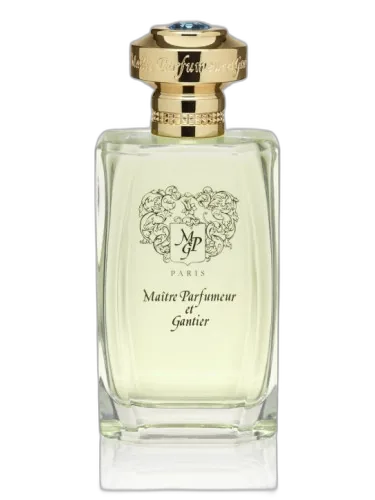
Maitre Parfumeur et Gantier
Fraicheur Muskissime Maitre Parfumeur Et Gantier
Shared top notes: bergamot, black currant, grapefruit

Maracujá Brasil
L'orangerie Iv Maracujá Brasil
Shared top notes: bergamot, grapefruit

CnR Create
Leo Cnr Create
Shared top notes: bergamot, grapefruit

Tiziana Terenzi
Moro Di Venezia Tiziana Terenzi
Shared top notes: bergamot, black currant, grapefruit