


Adam's Lament Phronema Perfumes
Fragrance Story
Adam's Lament by Phronema Perfumes is a fragrance for women and men. Adam's Lament was launched in 2024. The nose behind this fragrance is Weston Adam.
Composition Profile
About the Perfumer

Weston Adam
Weston Adam is the founder and perfumer behind Phronema Perfumes, a brand exploring philosophical and emotional themes through scent. He has created all listed fragrances for the house, including Adam's Lament, Audition, and Being-towards-death. His work often features dark, contemplative accords and unconventional materials.
Fragrance Notes
All Notes
Complete scent profile
 Mysore Sandalwood
 Black Pepper
Vanilla Absolute
Vanilla Pod
Black Pepper
Vanilla Absolute
Vanilla Pod
 Pink Pepper
 Sandalwood
Character Profile
The Adam Archetype: Portrait of Adam's Lament Phronema Perfumes
Essence
This person is most closely aligned with the Sage-an archetype defined by wisdom, introspection, and a relentless pursuit of truth. The Sage does not merely seek knowledge; they seek to understand it, to distill its essence into something meaningful. Adam’s Lament, with its contemplative blend of incense, myrrh, and dark woods, is not a fragrance for those who wish to be merely noticed. It is for those who wish to be understood, if only by themselves.
The Sage is not naive-they know the world is flawed, yet they refuse to turn away from its complexities. Instead, they study them, turning suffering into insight and solitude into strength. But like all archetypes, the Sage has a shadow: the risk of becoming the Hermit, isolated by their own intellect, or the Dogmatist, so convinced of their own wisdom that they dismiss all other voices.
Style & Aesthetic
Their style is deliberate, neither ostentatious nor careless. They favor textures that speak of time-aged leather, raw linen, the patina of well-worn brass. Their wardrobe is a muted palette of deep browns, blacks, and grays, as if color itself might distract from thought. They do not follow trends; they follow substance.
Books are their companions, but not the kind displayed for show. Their shelves hold well-thumbed volumes of philosophy, mythology, and poetry-Nietzsche, Rilke, Pessoa-works that demand engagement rather than passive consumption. Music, when they indulge, is equally deliberate: ambient soundscapes, classical requiems, or the raw melancholy of Leonard Cohen.
Their days are structured around contemplation. Mornings begin with silence, evenings with reading or journaling. They may keep a sketchbook or a collection of handwritten notes-fragments of thought waiting to be assembled into meaning. Work is not merely a career but a vocation, something that aligns with their inner truth.
But the shadow of the Sage is inertia. They can become so lost in thought that action eludes them. The world does not wait for perfect understanding, and they must occasionally remind themselves to step out of the mind and into life.
Philosophy & Values
They believe in the necessity of suffering as a crucible for wisdom. Life is not something to be merely enjoyed but deciphered. They do not shy away from melancholy; they see it as a form of clarity, a stripping away of illusions. Their values are rooted in authenticity-they despise pretense, small talk, and the hollow rituals of social conformity.
Yet this uncompromising stance can harden into cynicism. Their shadow whispers that most people are fools, that true understanding is rare, and that isolation is the price of insight. They must guard against this arrogance, lest they become the very thing they disdain: a thinker so removed from life that they forget how to live.
Relationships
They do not have many friends, but the ones they keep are bound by unspoken depth. Their love is not effusive but profound-a steady presence, a listener who remembers every word spoken in confidence. Romantic partners must be their intellectual equals, or at least unafraid of their intensity. They are not for the faint of heart.
Yet their shadow can make them emotionally guarded. They rationalize detachment as wisdom, mistaking solitude for strength. They must learn that love, too, is a kind of knowledge-one that cannot be grasped through thought alone.
Conclusion
Adam’s Lament is their scent because it does not flatter-it reveals. It is the smell of old libraries and sacred spaces, of incense burned in solitude. It does not seek to seduce but to signify, to mark its wearer as one who carries the weight of thought.
They are not without joy, but their joy is quiet-a sip of black coffee at dawn, the slow unfurling of an idea, the rare moment when someone truly sees them. They are the Sage, walking the line between wisdom and isolation, always searching, always questioning. And in that search, they find not just answers, but themselves.
Similar Fragrances
Fragrances with a comparable profile - shared accords, notes, and character.
Phronema Perfumes
Adam's Lament Phronema Perfumes
Shared accords: fresh spicy, musky, powdery
Atelier Materi
Vanille Carbone Atelier Materi
Shared accords: fresh spicy, powdery, soft spicy

Nawaf Saad
Good Mood Nawaf Saad
Shared accords: musky, powdery, sweet

Enrico Buccella
Médiéval Enrico Buccella
Shared accords: fresh spicy, musky, soft spicy
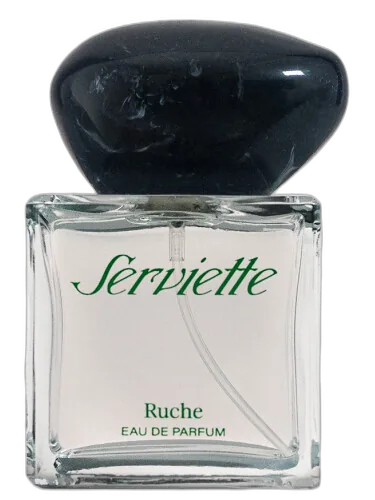
Serviette
Ruche Serviette
Shared accords: fresh spicy, musky, powdery