


St. Joseph The Hesychast's Cave Phronema Perfumes
Fragrance Story
St. Joseph the Hesychast's Cave by Phronema Perfumes is a Oriental Floral fragrance for women and men. The nose behind this fragrance is Weston Adam.
Composition Profile
About the Perfumer

Weston Adam
Weston Adam is the founder and perfumer behind Phronema Perfumes, a brand exploring philosophical and emotional themes through scent. He has created all listed fragrances for the house, including Adam's Lament, Audition, and Being-towards-death. His work often features dark, contemplative accords and unconventional materials.
Fragrance Notes
All Notes
Complete scent profile
 Dried Apricot
 Civet
Civet
 Myrhh
Myrhh
 Dates
Dates
 Mysore Sandalwood
 Vietnamese Oud
Frankincense
Vietnamese Oud
Frankincense
 Cinnamon
 Musk
Musk
 Orange Blossom
 Tonka Bean
 Vanilla
 Jasmine
 Cedar
Cedar
 Rose
Rose
Character Profile
The Archetype Archetype: Portrait of St. Joseph The Hesychast's Cave Phronema Perfumes
Essence
To wear St. Joseph The Hesychast's Cave is to carry the scent of ancient stone, incense, and quiet contemplation. This fragrance is not for those who seek the clamor of crowds or the validation of the many. It is for the one who walks alone, not out of bitterness, but out of necessity-because the depths they seek cannot be found in the marketplace.
The Hermit is the guiding archetype for this person. They are not merely introverted; they are drawn to solitude as a sacred space, a place where wisdom is distilled in silence. Like the desert fathers and mystics who retreated to caves, they believe truth is found in stillness, not in the noise of convention. The Hermit does not fear isolation-they court it, knowing that the self is only truly met when the world is held at a distance.
Style & Aesthetic
Their aesthetic is one of quiet austerity. They prefer natural materials-linen, wool, unadorned wood-and their living space is sparse but deliberate. Every object has meaning; nothing is kept out of habit. Their wardrobe is muted, favoring earth tones and textures that age gracefully. They do not dress to impress, but to remain unseen-or to be seen only by those who look closely.
In art and literature, they are drawn to the melancholic and the sublime. They find beauty in the unfinished, the weathered, the things that bear the marks of time. A chipped bowl, a fading fresco, a handwritten manuscript-these speak to them more than polished perfection.
Their daily life is structured around ritual. They rise early, meditate, read, and work with deliberate focus. They are not ascetics in the extreme sense-they enjoy good food, wine, and comfort-but they disdain excess. Luxury, to them, is not in abundance but in the rightness of a single, well-chosen thing.
They may live in a city, but they carve out pockets of stillness-a corner of a room, a hidden garden, a quiet café at dawn. They are not reclusive, but they move through the world like a monk in a marketplace: present but detached.
Philosophy & Values
Their philosophy is one of inner sovereignty. They do not reject the world out of disdain, but because they have learned that most of what passes for life is distraction. They value depth over breadth, silence over chatter, and essence over appearance. Their ethics are not rigidly dogmatic but rooted in an intuitive sense of integrity-what is true must also be lived, not merely professed.
They are drawn to traditions that emphasize asceticism and introspection-Stoicism, Zen, Hesychasm-but they are not a blind follower. They take what resonates and discard the rest, crafting a personal spirituality that is both ancient and fiercely individual.
Relationships
They do not have many friends, but the few they keep are bound by unspoken understanding. Their relationships are not built on shared activities but on shared silence-the ability to sit together without the need to fill the space with words. They are not cold, but they are slow to trust, and they despise superficial intimacy.
Romantically, they are drawn to those who are equally self-contained. They do not seek completion in another, but companionship in solitude. Their love is deep but undemonstrative-more a quiet presence than a grand passion.
Shadow
Yet the Hermit’s strength is also their danger. Their retreat from the world can harden into misanthropy, a belief that others are too shallow to understand them. They may grow overly self-reliant, refusing help even when it is needed. Their introspection can become a labyrinth with no exit-a place where they lose themselves in endless self-analysis.
At their worst, they may mistake solitude for superiority, forgetting that wisdom untested by the world is only half-formed. They must guard against the pride of the solitary-the belief that because they walk alone, they walk higher.
Conclusion
To love St. Joseph The Hesychast's Cave is to love the quiet, the sacred, and the unseen. This person is not fleeing life-they are seeking its marrow. Their path is not for everyone, but for those who recognize it, there is a rare kind of clarity in their presence. They remind us that some truths are only heard in silence, and that the deepest caves sometimes hold the purest light.
Similar Fragrances
Fragrances with a comparable profile - shared accords, notes, and character.
Phronema Perfumes
St. Joseph The Hesychast's Cave Phronema Perfumes
Shared accords: amber, animalic, cinnamon

Toni Cabal
Raspberry Oud Toni Cabal
Shared accords: amber, cinnamon, fruity
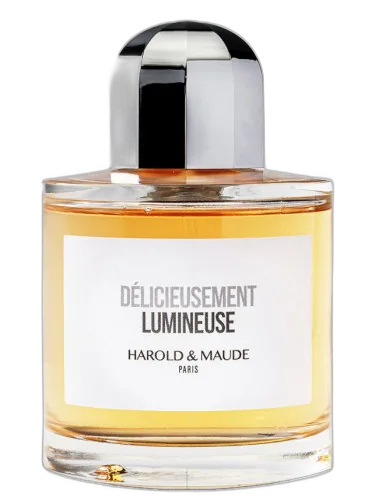
Harold & Maude
Délicieusement Lumineuse Harold & Maude
Shared accords: amber, animalic, fruity

Il Profumiere
Shaakar Il Profumiere
Shared accords: amber, animalic, fruity

Zoologist Perfumes
Camel Zoologist Perfumes
Shared accords: amber, animalic, fruity