


St. Seraphim's Stone Phronema Perfumes
Fragrance Story
St. Seraphim's Stone by Phronema Perfumes is a fragrance for women and men. This is a new fragrance. St. Seraphim's Stone was launched in 2023. The nose behind this fragrance is Weston Adam.
Composition Profile
About the Perfumer

Weston Adam
Weston Adam is the founder and perfumer behind Phronema Perfumes, a brand exploring philosophical and emotional themes through scent. He has created all listed fragrances for the house, including Adam's Lament, Audition, and Being-towards-death. His work often features dark, contemplative accords and unconventional materials.
Fragrance Notes
All Notes
Complete scent profile
 Hyssop
 Chinese Cinnamon Wood
 Cambodian Oud
 Myrrh
Myrrh
Character Profile
The Sage Archetype: Portrait of St. Seraphim's Stone Phronema Perfumes
Essence
This person is most closely aligned with the Sage, an archetype that seeks truth through contemplation, wisdom, and detachment from worldly illusions. The fragrance they choose-St. Seraphim’s Stone Phronema-is not merely a scent but an olfactory manifesto: deep, resinous, meditative, with whispers of sacred incense and aged wood. It is the aroma of cloistered libraries, of candlelit vigils, of quietude that borders on the mystical.
The Sage does not chase trends; they distill meaning from the eternal. Their perfume is an anchor, a reminder that beneath the noise of modernity, there exists a stratum of unchanging truths.
Style & Aesthetic
Their wardrobe is subdued, favoring natural fabrics in muted tones-charcoal, ivory, deep browns-as if dressing for a life of contemplation rather than spectacle. Jewelry, if worn at all, is understated: a simple silver ring, a wooden bead bracelet. Their home is a sanctuary of order, with sparse but meaningful decor-an antique desk, a well-worn leather chair, a single icon or mandala on the wall.
They appreciate craftsmanship over mass production, seeing beauty in objects that bear the marks of time. Their taste in art leans toward the symbolic-medieval illuminations, Byzantine icons, or abstract works that hint at the ineffable.
Their days are structured, even ritualistic. Mornings might begin with tea and journaling; evenings with reading or meditation. They may work in academia, writing, or a field that allows for deep focus-libraries, archives, or even a monastic vocation.
They are not ascetics-they enjoy fine wine, dark chocolate, the occasional pipe-but excess repels them. Their pleasures are measured, deliberate, as if each indulgence must be earned or justified.
Philosophy & Values
They are drawn to the esoteric-philosophy, theology, alchemy, or the occult-not as mere intellectual diversions but as pathways to transcendence. Their bookshelves hold frayed copies of Plotinus, Jung, and Eastern mystics. They may practice meditation, prayer, or some form of disciplined introspection, believing that wisdom is not acquired but remembered.
Their values are rooted in discernment and authenticity. They despise superficiality, preferring silence to empty chatter. Yet this can manifest as a quiet arrogance-an unspoken belief that others are lost in trivialities while they alone glimpse the deeper currents of existence.
Relationships
They are not gregarious, but neither are they reclusive. Their friendships are few but profound, built on shared intellectual or spiritual pursuits. They are the confidant who listens deeply and offers counsel-sometimes unsolicited-with the weight of ancient wisdom.
Romantic relationships are challenging. They crave a partner who understands their need for solitude, yet their detachment can make them seem cold. Their love is more a quiet devotion than a passionate flame, and they struggle with vulnerability, preferring the safety of the mind over the unpredictability of the heart.
Shadow
The Sage’s greatest flaw is spiritual pride. They may dismiss those who do not share their depth as "sleepwalkers," forgetting that wisdom untempered by humility becomes dogma. Their detachment can harden into isolation, leaving them stranded in their ivory tower, mistaking solitude for enlightenment.
At their worst, they grow cynical, seeing the world as irredeemably shallow. Their pursuit of truth becomes a form of escapism-a way to avoid the messy, imperfect reality of human connection.
Conclusion
St. Seraphim’s Stone Phronema is their essence distilled: a scent that is at once ancient and timeless, solemn yet radiant. It does not announce itself loudly but lingers, like a half-remembered prayer. In choosing it, they declare allegiance to the unseen, the eternal-the quiet fire of the seeker who knows that the greatest mysteries are not found in answers, but in the questions themselves.
They are not of this age, nor entirely outside it. They walk the borderlands between worlds, a scholar-monk of the modern era, forever searching for the stone that turns all to gold.
Similar Fragrances
Fragrances with a comparable profile - shared accords, notes, and character.
Phronema Perfumes
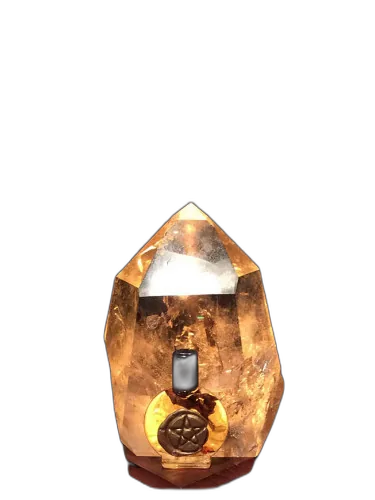
St. Seraphim's Stone Phronema Perfumes
Shared accords: aromatic, camphor, cinnamon

Arcana Wildcraft
Leaves Falling Like Rain Arcana Wildcraft
Shared accords: aromatic, camphor, cinnamon

Aromas de Salazar
Santal Vanille Aromas De Salazar
Shared accords: aromatic, cinnamon, floral

IrisAgro Ltd. Bulgaria
Samodiva Irisagro Ltd. Bulgaria
Shared accords: aromatic, camphor, floral
Mermade Magickal Arts
Abramelin Oil Mermade Magickal Arts
Shared accords: aromatic, cinnamon, sweet