

Tigre D'eau 22.1 Pierre Guillaume Paris
At a glance
Is Tigre D'eau 22.1 Pierre Guillaume Paris worth trying?
Tigre d'Eau 22.1 by Pierre Guillaume Paris is a Oriental Fougere fragrance for women and men.
- Best match
- Casual wear in Summer
- Performance feel
- Good longevity with Moderate sillage
- Signature profile
- green, caramel, sweet with Coconut Water, Green Accord, Caramel
The first impression
Tigre d'Eau 22.1 by Pierre Guillaume Paris is a Oriental Fougere fragrance for women and men. This is a new fragrance. Tigre d'Eau 22.1 was launched in 2023. The nose behind this fragrance is Pierre Guillaume.
What shapes the scent
The perfumer behind it

Pierre Guillaume
Pierre Guillaume is a French perfumer and founder of the niche brand Parfumerie Generale. He has created fragrances for Laboratorio Olfattivo and Phaedon, among others. His style is known for its artistic and conceptual approach. Guillaume's work often features complex and evocative blends.
Notes pyramid
All Notes
Complete scent profile
 Coconut Water
 Green Accord
 Caramel
 Tonka Bean
 Salt
Salt
 Pink Pepper
Pink Grapefruit
Pink Pepper
Pink Grapefruit
The mood it creates
The Alchemist Archetype: Portrait of Tigre D'eau 22.1 Pierre Guillaume Paris
Essence
The person who gravitates toward Tigre D’eau 22.1 by Pierre Guillaume Paris is an embodiment of the Alchemist-a Jungian archetype defined by transformation, curiosity, and a relentless pursuit of hidden depths. This fragrance, with its aquatic fierceness and unexpected warmth, mirrors their dual nature: part explorer, part philosopher, always seeking to transmute the mundane into something extraordinary.
They are not content with surfaces; they crave the liminal spaces where contradictions meet. The Alchemist thrives on paradox, much like Tigre D’eau itself-a scent that balances watery freshness with animalic depth, suggesting both fluidity and primal instinct.
Shadow
Yet the Alchemist’s pursuit of transformation has its costs. Their constant search for the next revelation can make them restless, even dissatisfied. They may struggle with commitment, not out of fear, but because they fear stagnation more than loss.
At their worst, they become lost in their own labyrinth of ideas, mistaking complexity for wisdom. Their disdain for the superficial can curdle into elitism, and their love of paradox may lead them to play devil’s advocate too often, alienating those who crave simplicity.
Conclusion
Their tastes are eclectic but deliberate. They might favor minimalist design with a single, striking artifact-a Japanese kintsugi bowl, a vintage microscope, or a first edition of Thus Spoke Zarathustra. Their wardrobe leans toward structured silhouettes with an element of surprise: a tailored coat lined with an unexpected print, or a piece of jewelry that carries personal symbolism.
Philosophically, they are drawn to thinkers who embrace contradiction-Nietzsche’s amor fati, Jung’s shadow work, or the Taoist principle of yin and yang. They believe that truth is found not in absolutes, but in the tension between opposites.
If you like this, try these
Fragrances with a comparable profile - shared accords, notes, and character.

Moodeaux
Brand New Moodeaux
Shared top notes: coconut water, pink pepper, salt
CALIFAH
Tonka Amber Califah
Shared top notes: pink pepper
Lorenzo Pazzaglia
Van Sea Lorenzo Pazzaglia
Shared accords: amber, aromatic, caramel
My Perfumes Select
Vanilla Noire My Perfumes Select
Shared top notes: caramel
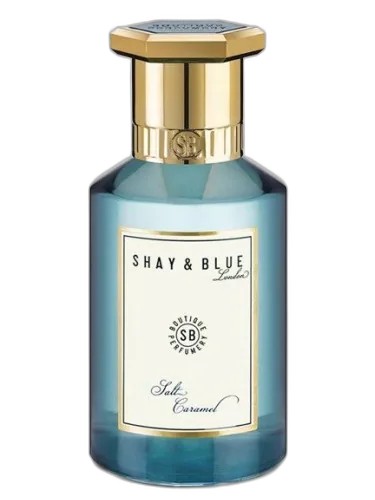
Shay & Blue London
Salt Caramel Shay & Blue London
Shared top notes: caramel, tonka bean