


Bucolic Pineward Perfumes
At a glance
Is Bucolic Pineward Perfumes worth trying?
Bucolic by Pineward Perfumes is a Oriental Vanilla fragrance for women and men.
- Best match
- Casual wear in Fall
- Performance feel
- Excellent longevity with Moderate sillage
- Signature profile
- sweet, honey, lavender with Wool, Honey, Brown sugar
The first impression
Bucolic by Pineward Perfumes is a Oriental Vanilla fragrance for women and men. Bucolic was launched during the 2020's. The nose behind this fragrance is Nicholas Nilsson.
What shapes the scent
The perfumer behind it

Nicholas Nilsson
Nicholas Nilsson is the founder and perfumer behind Pineward Perfumes, a brand known for forest-inspired fragrances. His creations include Apple Tabac, Autumnal, Bindebole, Boreal, Borealis, Brokilän, Bucolic, and Chandlery. Nilsson's work often evokes the natural landscapes of woodlands and the changing seasons.
Notes pyramid
All Notes
Complete scent profile
 Wool
Wool
 Honey
Honey
 Brown sugar
 Lavender
 Beeswax
 Raspberry
 Amber
Amber
 Sweet Grass
The mood it creates
The Sage Archetype: Portrait of Bucolic Pineward Perfumes
Essence
Archetype: The Sage
The one who favors Bucolic by Pineward Perfumes is, above all, a seeker of truth-not in the abstract, but in the tangible, the organic, the rooted. The Sage does not merely observe; they distill. They do not simply experience; they interpret. The fragrance itself-earthy, resinous, alive with the scent of damp forests and sun-warmed bark-mirrors their essence. This is not a person who craves the synthetic or the fleeting; they are drawn to what endures, what whispers of ancient wisdom.
Style & Aesthetic
Their aesthetic is one of quiet defiance against the disposable. They wear sturdy fabrics-linen, wool, well-worn leather-that age with dignity. Their home, if they have one, is filled with objects that bear the marks of use: a wooden desk darkened by ink stains, a wool blanket frayed at the edges. They prefer raw, unpolished textures-stone, unvarnished wood, the roughness of handmade paper.
In art, they favor the melancholic and the sublime-landscapes that dwarf human presence, music that lingers like mist in a valley. They read philosophy, but not for cleverness; they seek the kind of wisdom that settles in the bones. Their palate leans toward the bitter and the earthy-dark chocolate, black tea, wild mushrooms-flavors that demand patience to appreciate.
They rise early, not out of discipline but because dawn is when the world feels most alive to them. They walk-not for exercise, but to notice. A fallen branch, the way light filters through leaves, the scent of rain before it arrives. They may keep a journal, not of events but of impressions, a record of moments that would otherwise dissolve into memory.
Work is secondary to meaning. They may be a writer, a botanist, a craftsman-anything that allows them to preserve or interpret the natural world. If forced into conventional employment, they wither like a potted pine, their spirit cramped by fluorescent lights and sterile routines.
Philosophy & Values
Their philosophy is one of quiet reverence for the natural order. They believe in cycles-growth, decay, rebirth-and see themselves as both participant and witness. Modernity’s haste bewilders them; they prefer the slow unfurling of seasons, the patient growth of moss on stone. Their values are not dogmatic but experiential: authenticity, depth, and a refusal to be swayed by trends. They do not chase enlightenment; they assume it is found in the act of paying attention.
Yet, this is not mere rustic romanticism. Their love of nature is not naive but knowing-they recognize its brutality as much as its beauty. They do not shy from the scent of damp soil, the tang of decaying leaves, because they understand that life and death are inseparable.
Relationships
They are not gregarious, but neither are they hermits. Their friendships are few but deep, forged over shared silences as much as conversation. They attract those who are weary of pretense, who crave sincerity even if it comes with sharp edges. In love, they are slow to trust but fiercely loyal once they do. Their partner must understand that solitude is not rejection but necessity-that the forest must sometimes reclaim them.
Yet, their relationships suffer under the weight of their idealism. They struggle with those who cannot meet their depth, who prefer lightness to gravity. They may grow impatient with small talk, dismissive of those who live on the surface. Their shadow is a quiet arrogance, the belief that their way of seeing is superior.
Shadow
The Sage’s greatest strength-their depth of perception-is also their flaw. In their quest for authenticity, they may disdain the mundane, forgetting that wisdom must sometimes descend from the mountain and walk among people. Their love of solitude can harden into isolation; their reverence for the eternal may blind them to the beauty in transience.
They risk becoming the very thing they resist: a relic, preserved but disconnected. The challenge for them is not to abandon their depth but to learn when to surface-to let the scent of pine mingle, however briefly, with the smoke of human fires.
If you like this, try these
Fragrances with a comparable profile - shared accords, notes, and character.

Abdul Karim Al Faransi
Musk Tahara Yemeni Abdul Karim Al Faransi
Shared top notes: honey
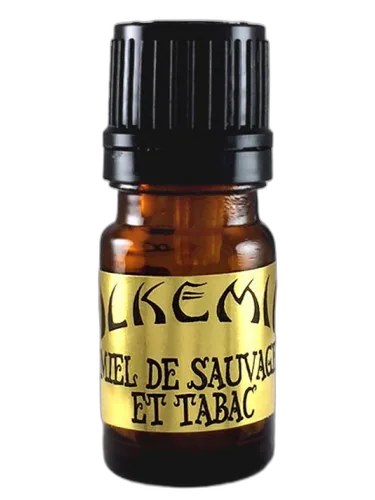
Alkemia Perfumes
Miel De Sauvage Et Tabac Alkemia Perfumes
Shared top notes: amber, beeswax, honey

Early Modern
Veil Early Modern
Shared top notes: beeswax, honey

DSH Perfumes
Le Serval Dsh Perfumes
Shared top notes: beeswax, honey, sweet grass

Prairie Artisan Fragrances
Mimosa Bloom Prairie Artisan Fragrances
Shared top notes: beeswax, raspberry