
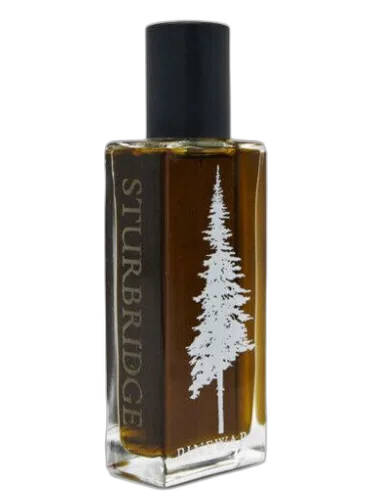

Sturbridge Pineward Perfumes
At a glance
Is Sturbridge Pineward Perfumes worth trying?
Sturbridge by Pineward Perfumes is a Oriental Woody fragrance for women and men.
- Best match
- Casual wear in Fall
- Performance feel
- Excellent longevity with Strong sillage
- Signature profile
- amber, woody, aromatic with Baked Apple, Spices, Pine
The first impression
Sturbridge by Pineward Perfumes is a Oriental Woody fragrance for women and men. Sturbridge was launched during the 2020's. The nose behind this fragrance is Nicholas Nilsson.
What shapes the scent
The perfumer behind it

Nicholas Nilsson
Nicholas Nilsson is the founder and perfumer behind Pineward Perfumes, a brand known for forest-inspired fragrances. His creations include Apple Tabac, Autumnal, Bindebole, Boreal, Borealis, Brokilän, Bucolic, and Chandlery. Nilsson's work often evokes the natural landscapes of woodlands and the changing seasons.
Notes pyramid
All Notes
Complete scent profile
 Baked Apple
 Spices
Pine
Frankincense
Resin
Spices
Pine
Frankincense
Resin
 Fir
Fir
 Cedar
Cedar
 Myrrh
Myrrh
 Amber
Amber
 Ambergris
Poplar
Nard Himalayan (Jatamansi)
Ambergris
Poplar
Nard Himalayan (Jatamansi)
The mood it creates
The Wanderer Archetype: Portrait of Sturbridge Pineward Perfumes
Essence
This person is most closely aligned with the Sage-Hermit, an archetype that blends wisdom with solitude, introspection with a deep connection to nature. They are drawn to Sturbridge by Pineward Perfumes not for fleeting trends, but for its raw, untamed essence-the scent of ancient forests, resinous pines, and damp earth. It is not a fragrance for the crowd, but for the one who walks alone, seeking meaning in the quietude of the wild.
Style & Aesthetic
Their style is deliberate, understated, yet textured-wool and linen, sturdy boots, perhaps a well-worn leather satchel. They favor muted greens, deep browns, and grays, colors that mirror the landscapes they love. Their home, if they have one, is filled with books, dried botanicals, and rough-hewn wooden furniture. They may live in a cabin, a quiet apartment near a park, or drift between places, always with a sense of being slightly apart from the world.
They are not ascetics, but sensualists of a different kind-they savor the weight of a hand-thrown ceramic mug, the sound of wind through pine boughs, the slow burn of a single-malt whiskey. Their pleasures are tactile, rooted in the physical world, yet always tinged with contemplation.
Philosophy & Values
They believe in depth over breadth, silence over noise, and truth over comfort. Their philosophy is not one of rigid doctrine, but of lived experience-they trust the wisdom of the body, the intuition of the senses. They may be drawn to Stoicism, Zen, or deep ecology, but they wear these ideas lightly, integrating them into daily life rather than preaching them.
Their values are shaped by independence, authenticity, and a quiet defiance of superficiality. They despise performative virtue, empty chatter, and the relentless pace of modern life. Yet they are not misanthropes-they simply choose their companions carefully, valuing those who can sit in silence without discomfort.
Relationships
They are loyal but sparing with their affection, preferring a few profound connections to many shallow ones. Their love is steady, not effusive-expressed in acts of service, shared solitude, or the gift of a well-chosen book. Romantic partners must understand their need for space, their occasional retreats into introspection.
Yet here lies the shadow: their self-sufficiency can harden into isolation. They may mistake solitude for strength, forgetting that even the deepest roots need water. Their reluctance to depend on others can become a kind of pride, leaving them stranded in their own fortress of independence.
Shadow
The Sage-Hermit’s greatest danger is the belief that wisdom can only be found alone. They may grow disdainful of those who crave connection, dismissing them as weak or unenlightened. Their love of silence can become a weapon-a way to punish, to withdraw, to avoid vulnerability.
At their worst, they romanticize their own solitude, mistaking loneliness for depth. They may cling to an idealized vision of the past-a time when life was simpler, people were truer-forgetting that nostalgia is its own kind of illusion.
Conclusion
For this person, growth lies not in abandoning their love of solitude, but in recognizing when it becomes a cage. The true Sage-Hermit does not flee the world, but moves through it with discernment-knowing when to retreat, when to engage, and when to share the treasures they have gathered in silence.
Their fragrance, Sturbridge, will always be their companion-a reminder of the forests they wander, the wisdom they seek, and the delicate balance between solitude and communion.
If you like this, try these
Fragrances with a comparable profile - shared accords, notes, and character.

Havenhollow
Bramblesap Havenhollow
Shared top notes: amber, fir, pine
Hendley Perfumes
Tama Hendley Perfumes
Shared top notes: amber, cedar, myrrh
Firn Handcrafted
Winter Amber Firn Handcrafted
Shared top notes: amber, fir, frankincense
Serge Lutens
Ambre Sultan Serge Lutens
Shared top notes: amber, myrrh
Solstice Scents
Incensum Solstice Scents
Shared top notes: amber, myrrh, nard himalayan (jatamansi)