


Garden Pansy Pokrovka Trading House
At a glance
Is Garden Pansy Pokrovka Trading House worth trying?
Garden Pansy by Pokrovka Trading House is a Floral fragrance for women.
- Best match
- Casual wear in Spring
- Performance feel
- Moderate longevity with Moderate sillage
- Signature profile
- floral, sweet, powdery with Pansy
The first impression
Garden Pansy by Pokrovka Trading House is a Floral fragrance for women. The nose behind this fragrance is Marina Nikitina.
What shapes the scent
The perfumer behind it

Marina Nikitina
Marina Nikitina is a perfumer who has created a range of floral fragrances for Pokrovka Trading House. Her catalog includes Alpine Forget-me-not, Apple Blossom, Black Tulip, Bright Gladiolus, Charming Snowdrop, Cherry Blossom, Forest Lily-of-the-valley, and Garden Pansy. She specializes in capturing the essence of individual flowers.
Notes pyramid
All Notes
Complete scent profile
 Pansy
Pansy
The mood it creates
The Garden Pansy Enthusiast Archetype: Portrait of Garden Pansy Pokrovka Trading House
Essence
At the heart of this person’s essence lies the Innocent archetype-a soul drawn to purity, nostalgia, and the quiet grace of nature. The Innocent seeks harmony, simplicity, and a return to something unspoiled. Garden Pansy, with its delicate floralcy and tender green freshness, is their olfactory emblem-a scent that whispers of dew-kissed petals, childhood gardens, and uncomplicated joy. They are not naive, but rather consciously choose to cultivate beauty in a world that often favors harshness.
Style & Aesthetic
Their tastes are refined but never ostentatious. They prefer muted colors-soft lavenders, sage greens, the pale blush of early spring. Their wardrobe leans toward flowing fabrics, vintage lace, or linen that carries the faintest trace of sun and lavender water. Their home is a sanctuary: dried flowers in glass jars, well-worn books with pressed petals between the pages, a teacup always half-full of something fragrant.
Philosophically, they believe in the power of small, meaningful gestures-a handwritten letter, a carefully chosen gift, the deliberate act of pausing to admire a single bloom. They reject the modern obsession with speed and excess, instead finding depth in restraint. Their values are rooted in kindness, authenticity, and the quiet rebellion of refusing to be hardened by the world.
They do not chase trends; they cultivate timelessness. Their days are structured around rituals-morning tea in the garden, evening journaling by candlelight. They may be drawn to poetry, botany, or the slow craft of handmade things. Their work, if not artistic, still carries their signature touch-perhaps a florist, a librarian, a restorer of old things.
They are not without ambition, but their ambitions are not loud. They measure success in preserved moments, in the ability to remain uncorrupted by cynicism. Their life is a quiet protest against the noise of modernity, a testament to the enduring power of gentleness.
Relationships
In love and friendship, they are selective but deeply devoted. They do not crave crowds but rather the company of those who understand the language of silence, the beauty of an unspoken bond. Their relationships are built on tenderness, shared nostalgia, and the mutual appreciation of fleeting moments-sunset walks, the scent of rain on warm soil, the way light filters through leaves.
Yet, their idealism can be a double-edged sword. They may grow disillusioned when others fail to meet their vision of purity, withdrawing into solitude rather than confronting imperfection. Their shadow emerges as a quiet melancholy-a fear that the world is too coarse for their delicate soul.
Shadow
The Innocent’s greatest weakness is their reluctance to face darkness-both in the world and within themselves. They may romanticize the past to the point of stagnation, fearing change as a threat to their carefully curated peace. When wounded, they retreat into nostalgia, mistaking memory for refuge rather than confronting the present.
At their worst, they risk becoming passive-a spectator rather than a participant in life. Their avoidance of conflict can lead to unspoken resentments, their love of beauty blinding them to necessary ugliness. Yet, when balanced, their sensitivity becomes their strength-a reminder that softness is not weakness, and that the world needs those who still believe in grace.
Conclusion
To love Garden Pansy is to embrace a fragrance that does not demand attention but lingers, subtle and unforgettable. So too is this person-a soul who thrives in the margins, in the spaces between grand gestures. Their flaw is their fragility; their strength is their refusal to abandon beauty in a world that often forgets it.
They are the keeper of lost tenderness, the quiet gardener of the soul. And though the world may call them delicate, they know the truth: that softness, too, is a kind of resilience.
If you like this, try these
Fragrances with a comparable profile - shared accords, notes, and character.

Demeter Fragrance
First Kiss Demeter Fragrance
Shared top notes: pansy

Oriflame
Fire Oriflame
Shared top notes: pansy

Yves Rocher
Pur Desir De Mimosa Yves Rocher
Shared accords: floral, green, powdery

Parfums DelRae
Wit Parfums Delrae
Shared accords: floral, green, powdery
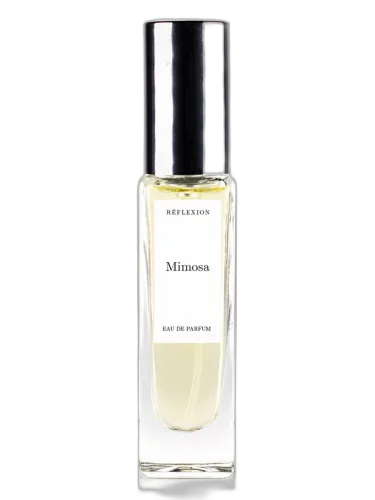
Reflexion
Mimosa Reflexion
Shared accords: floral, green, powdery