
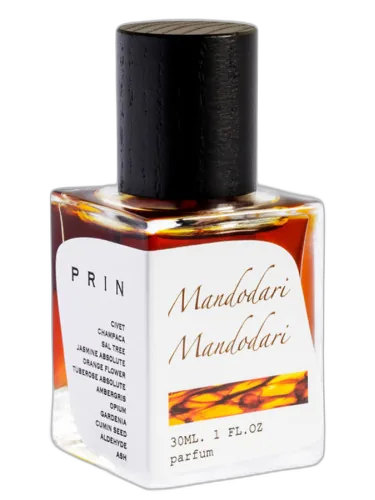

Mandodari Mandodari Prin
At a glance
Is Mandodari Mandodari Prin worth trying?
Mandodari Mandodari by Prin is a Oriental Floral fragrance for women and men.
- Best match
- Evening wear in Fall
- Performance feel
- Excellent longevity with Strong sillage
- Signature profile
- white floral, animalic, floral with Civet, Aldehydes, Jasmine
The first impression
Mandodari Mandodari by Prin is a Oriental Floral fragrance for women and men. This is a new fragrance. Mandodari Mandodari was launched in 2023. The nose behind this fragrance is Prin Lomros.
What shapes the scent
The perfumer behind it

Prin Lomros
Prin Lomros is a Thai perfumer and founder of the Prin brand, recognized for bold, complex compositions that often blend natural and synthetic materials. Their portfolio includes works for Azman and Der Duft, as well as their own line featuring scents like Ahuizotl and Aran. Lomros is known for pushing boundaries with rich, animalic, and resinous accords.
Notes pyramid
All Notes
Complete scent profile
 Civet
Civet
 Aldehydes
 Jasmine
 Champaca
 Opium
Opium
 Tuberose
 Gardenia
 Oakmoss
 Labdanum
 Orange Blossom
 Cumin
Cumin
 Black Pepper
 Ambergris
 Choya Ral
 Sandalwood
 Camphor
 Ash
Ash
 Tobacco
 Teak Wood
 Cloves
 Rose
Rose
 Patchouli
The mood it creates
The Lover Archetype: Portrait of Mandodari Mandodari Prin
Essence
The one who chooses Mandodari Mandodari Prin is not merely drawn to fragrance-they are seduced by it. This scent, with its lush, intoxicating blend of jasmine, champaca, and saffron, speaks to the soul of the Enchantress, an archetype that thrives on allure, depth, and transformation. The Enchantress is not a mere seductress; she is a wielder of fascination, a creature who understands that beauty is not passive but an active force. She does not simply exist-she compels.
This person is neither naive nor purely hedonistic; they are a philosopher of the senses, believing that what is beautiful must also be meaningful. The Lover Archetype is a cousin to the Lover, but where the Lover seeks union, the Enchantress seeks experience-the kind that lingers in the mind long after the moment has passed.
Relationships
They do not give themselves easily. Relationships are a slow unraveling, a deliberate act of revelation. They are not manipulative, but they understand the power of withholding-not out of cruelty, but because they believe mystery is essential to passion. Their love is intense, sometimes overwhelming, but never shallow.
Yet, this same intensity can become their shadow. The Enchantress risks becoming the Temptress, where allure turns to manipulation, where fascination becomes a game of control. They may grow frustrated with those who cannot match their depth, dismissing them as superficial. Their disdain for the mundane can harden into cynicism, a belief that only the extraordinary is worth their time.
Shadow
The greatest danger for this person is mistaking the performance of depth for depth itself. They may become so enamored with their own mystique that they lose touch with reality, floating in a self-created dream. At worst, they become the Narcissist, intoxicated by their own reflection, unable to love anything beyond the idea of love.
But when balanced, they are neither manipulative nor self-absorbed-they are simply alive in a way few others are. They remind us that beauty is not an escape from life but a deeper engagement with it.
Conclusion
Their tastes are refined but never sterile. They prefer textures that beg to be touched-velvet, silk, aged leather-and colors that shimmer with ambiguity: deep emerald, burnt umber, the gold of fading sunlight. Their home is not minimalist but layered, filled with objects that tell stories: an antique perfume bottle, a well-worn book of poetry, a single dried rose kept in a drawer. They do not collect things for status but for the way they feel in the hand, the way they evoke memory.
Philosophically, they reject the notion that pleasure is frivolous. To them, pleasure is a form of intelligence, a way of knowing the world. They might quote Rilke: "Beauty is nothing but the beginning of terror." They are drawn to art that unsettles as much as it enchants-Caravaggio’s chiaroscuro, the haunting melodies of Debussy, the decadent prose of Anaïs Nin.
If you like this, try these
Fragrances with a comparable profile - shared accords, notes, and character.
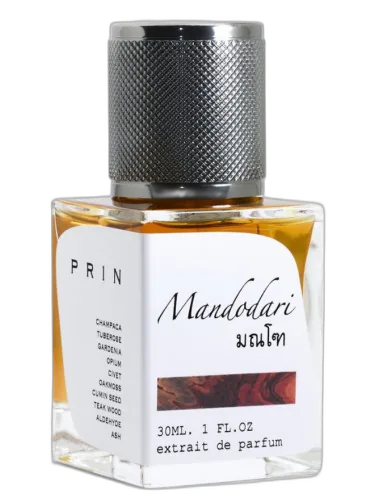
Prin
Mandodari Prin
Shared top notes: aldehydes, ash, black pepper
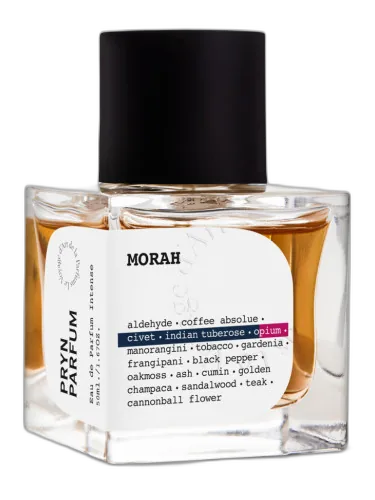
Pryn Parfum
Morah Pryn Parfum
Shared top notes: aldehydes, ash, black pepper
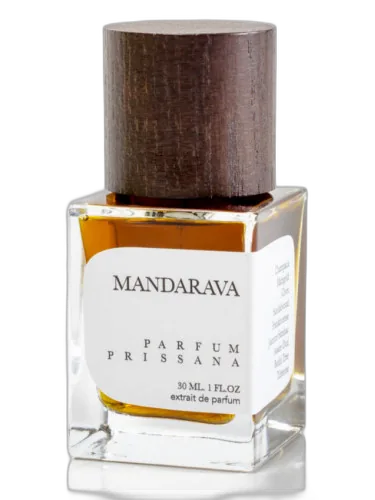
Prissana
Mandarava Prissana
Shared top notes: aldehydes, ash, champaca
Tauerville
Tuberose Flash Tauerville
Shared top notes: jasmine, labdanum, orange blossom
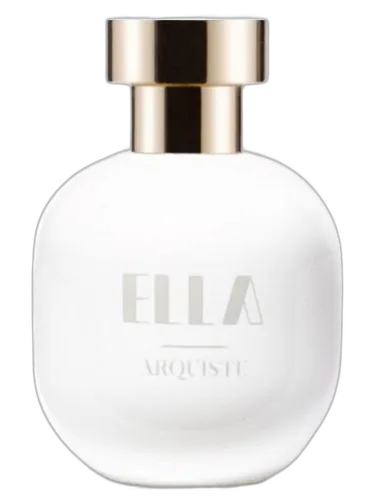
Arquiste
Ella Arquiste
Shared top notes: ambergris, civet, jasmine