
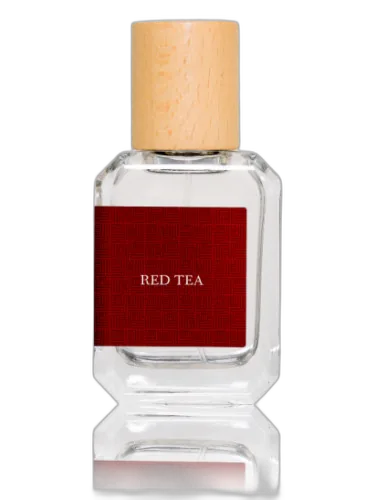

Red Tea Proad
At a glance
Is Red Tea Proad worth trying?
Red Tea by Proad is a Floral Fruity fragrance for women and men.
- Best match
- Casual wear in Fall
- Performance feel
- Good longevity with Moderate sillage
- Signature profile
- citrus, fruity, floral with Bergamot, Mandarin Orange, Grapefruit
The first impression
Red Tea by Proad is a Floral Fruity fragrance for women and men. This is a new fragrance. Red Tea was launched in 2024. The nose behind this fragrance is Quentin Bisch. Top notes are Bergamot, Mandarin Orange and Grapefruit; middle notes are Peach, Peony, Raspberry and Red Tea; base notes are Musk, Transparent Woods and Vetiver.
What shapes the scent
The perfumer behind it

Quentin Bisch
Quentin Bisch is a French perfumer known for his work with major houses like Amouage and Al-Jazeera Perfumes. His creations include Amouage Guidance, Purpose, and Existence, as well as Sidra Wood for Al-Jazeera Perfumes. Bisch often employs modern, minimalist structures with a focus on woody and amber accords.
Notes pyramid
Top Notes
First impression · 15-30 min
 Bergamot
 Mandarin Orange
 Grapefruit
Heart Notes
Core character · 2-4 hours
 Peach
Peach
 Peony
Peony
 Raspberry
 Red Tea
Base Notes
Lasting impression · 4+ hours
 Musk
Musk
 Transparent Woods
 Vetiver
The mood it creates
The Sage Archetype: Portrait of Red Tea Proad
Essence
Red Tea Proad is a fragrance of quiet sophistication-warm, contemplative, and subtly complex. It carries the earthy depth of tea leaves, the faint spice of citrus, and a lingering whisper of musk. It does not announce itself with brashness but lingers in the air like a well-considered thought. The person who favors this scent is drawn to its understated elegance, its balance of warmth and intellect. They are not one for ostentation, yet they possess an undeniable presence-one that is felt rather than loudly proclaimed.
At their core, this individual embodies the Sage-the seeker of wisdom, the observer of life’s intricacies. The Sage thrives on understanding, on distilling experience into insight. They are drawn to knowledge not as a means of power, but as a way to navigate the world with clarity and grace. Their mind is their sanctuary, and their curiosity is insatiable. Yet, like all archetypes, the Sage has a shadow-an over-reliance on detachment, a tendency to intellectualize emotion, and at times, a quiet arrogance in believing they see what others do not.
Relationships
They do not collect acquaintances; they cultivate connections. Their friendships are few but enduring, built on mutual respect and intellectual exchange. They are the confidant who listens with patience, who offers insight rather than empty reassurance. Yet, their shadow emerges here-sometimes they mistake analysis for empathy, believing that understanding a feeling is the same as sharing it. Their partners must accept that their love is often expressed in quiet gestures rather than grand declarations.
Romantically, they are drawn to those who match their depth but challenge their detachment. They need someone who can pull them out of their thoughts and into the immediacy of life-someone who reminds them that wisdom is not only found in books but in the pulse of lived experience.
Shadow
The Sage’s greatest strength is also their greatest weakness: their intellect. They can become lost in abstraction, mistaking contemplation for action. At times, they withdraw into their own mind, observing life rather than participating in it. Their skepticism, while often justified, can harden into cynicism. They may dismiss what they cannot rationalize, forgetting that some truths are felt, not proven.
When unbalanced, they risk becoming the Hermit-isolated, overly self-reliant, convinced of their own superiority. The world, in their eyes, becomes a place of folly, and they retreat further into their own certainty. The antidote lies in humility-in remembering that wisdom is not ownership of truth, but the willingness to remain open.
Conclusion
Their tastes are deliberate, never accidental. They prefer the understated over the flamboyant, the well-crafted over the mass-produced. Their wardrobe leans toward muted tones-soft grays, deep navies, the occasional earth-toned accent-always tailored but never stiff. They appreciate the weight of good paper in a notebook, the quiet ritual of brewing loose-leaf tea, the slow unfurling of a novel that demands reflection rather than mere consumption.
Philosophy is not an abstract exercise for them, but a lens through which they interpret the world. They may be drawn to Stoicism for its discipline, to existentialism for its embrace of ambiguity, or to Eastern thought for its emphasis on harmony. What matters is not the school of thought, but the way it shapes their inner life. They believe in the examined life, in the necessity of questioning one’s own assumptions.
If you like this, try these
Fragrances with a comparable profile - shared accords, notes, and character.

Maracujá Brasil
L'orangerie Iv Maracujá Brasil
Shared top notes: bergamot, grapefruit, mandarin orange
Lacoste Fragrances
Touch Of Sun Lacoste Fragrances
Shared top notes: bergamot, grapefruit
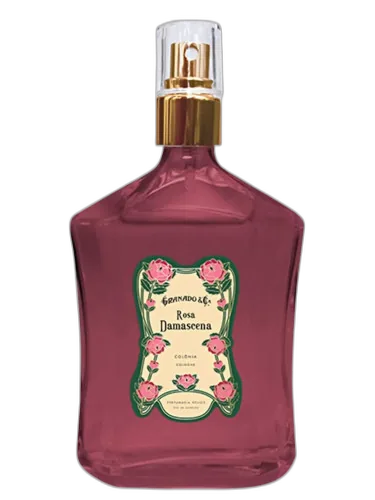
Granado
Rosa Damascena Granado
Shared top notes: bergamot, grapefruit, mandarin orange
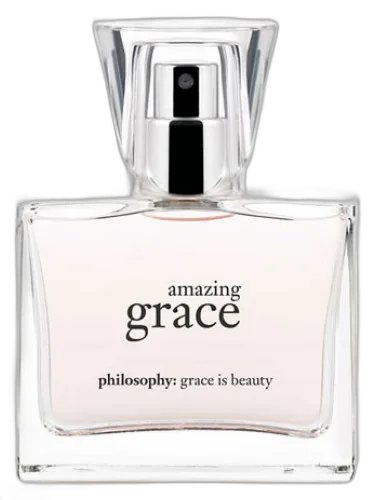
Philosophy
Amazing Grace Philosophy
Shared top notes: bergamot, grapefruit, mandarin orange

Parfums de Marly
Oriana Parfums De Marly
Shared top notes: bergamot, grapefruit, mandarin orange