
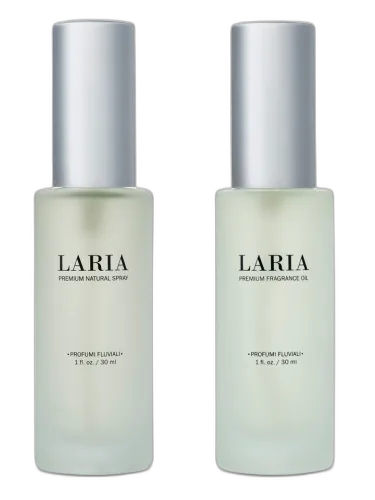

Laria Profumi Fluviali
At a glance
Is Laria Profumi Fluviali worth trying?
Laria by Profumi Fluviali is a Aromatic Green fragrance for women and men.
- Best match
- Casual wear in Summer
- Performance feel
- Good longevity with Moderate sillage
- Signature profile
- marine, aromatic, woody with Clary Sage, Seagrass, Citruses
The first impression
Laria by Profumi Fluviali is a Aromatic Green fragrance for women and men. Laria was launched in 2018. Top notes are Clary Sage, Seagrass and Citruses; middle notes are Chestnut, Guaiac Wood and Cedar; base notes are Sea water and Salt.
What shapes the scent
The perfumer behind it

Alessandro Brun
Alessandro Brun is an Italian perfumer known for his innovative and artistic approach to fragrance creation. His work spans diverse styles, from the citrusy Fior Di Chinotto to the gourmand Tiramisù. Brun’s compositions often reflect a balance of creativity and technical precision. His fragrances resonate with those who appreciate originality and craftsmanship in perfumery.
Notes pyramid
Top Notes
First impression · 15-30 min
 Clary Sage
 Seagrass
 Citruses
Heart Notes
Core character · 2-4 hours
 Chestnut
 Guaiac Wood
 Cedar
Cedar
Base Notes
Lasting impression · 4+ hours
Sea water
 Salt
Salt
The mood it creates
The Lover Archetype: Portrait of Laria Profumi Fluviali
Essence
At the core of this person’s being lies the Wanderer, an archetype that embodies movement, discovery, and the relentless pursuit of the unknown. The Wanderer is not merely a traveler of physical landscapes but a seeker of emotional and intellectual depths. Laria Profumi Fluviali-with its aquatic, mineral, and green accords-mirrors this archetype perfectly. It evokes the scent of riverbanks after rain, the quiet mystery of flowing water, and the untamed freshness of wild herbs. Like the fragrance, the Wanderer is fluid, never stagnant, always drawn to the next horizon.
Style & Aesthetic
Their aesthetic is one of effortless fluidity. They favor natural fabrics-linen, cotton, wool-that move with them, never stiff or restrictive. Their wardrobe is a mix of well-worn essentials and the occasional eccentric piece picked up in some far-flung market. They wear scent not as a mask but as an extension of their essence-Laria Profumi Fluviali is their second skin, a whisper of wilderness clinging to them.
In art, they are drawn to the abstract, the impressionistic, the works that suggest rather than declare. A Monet water lily, a Hokusai wave, a Debussy nocturne-these speak to them because they capture motion, the fleeting. They prefer cafes with large windows, where they can watch the world pass by, and their homes are filled with found objects-stones, feathers, dried flowers-each a relic of a moment now gone.
Philosophy & Values
This person lives by a simple yet profound creed: to remain in motion is to remain alive. They are not content with fixed identities or rigid structures. Their mind is a river-constantly shifting, carving new paths, refusing to be contained. They may have lived in many places, or at the very least, their imagination has. Their bookshelves are lined with travelogues, philosophy, and poetry that speaks of transience-Rilke, Pessoa, Basho.
They reject dogma, preferring instead to question, to test boundaries. Their philosophy is not one of nihilism but of curiosity-a belief that truth is found in the journey, not the destination. They are drawn to the liminal, the spaces between things: dusk and dawn, shorelines, train stations. These are the moments and places where transformation happens, and they thrive in them.
Relationships
The Wanderer is not a hermit, but their relationships are often marked by a certain distance. They love deeply but fear confinement, and so their connections are intense yet transient. They are the friend who disappears for months, then reappears with stories and a quiet intensity that makes others feel both cherished and slightly uneasy.
Romantically, they are drawn to those who understand their need for space-fellow wanderers or those rooted enough to let them roam. Their greatest fear is stagnation, and so they may flee when a relationship begins to feel like an anchor. Yet, when they do commit, it is with a fierce loyalty, as if they have chosen to pause their journey for something rare and precious.
Shadow
The Wanderer’s strength-their refusal to be pinned down-can become their undoing. In their aversion to stagnation, they may avoid necessary depths. Relationships, careers, even self-reflection can be abandoned too soon in the name of freedom. They may mistake motion for growth, confusing the accumulation of experiences with true transformation.
There is a loneliness beneath their independence, a fear that if they stop moving, they will dissolve. They may romanticize solitude to the point of isolation, or they may grow cynical, seeing all attachments as chains. The river, if it never pools, never reflects.
Conclusion
The ideal state for this person is not to abandon their wandering spirit but to temper it with moments of stillness. Like the river that both moves and nourishes, they must learn when to rush and when to linger. Laria Profumi Fluviali, in its duality-both fresh and deep, wild and serene-mirrors this balance.
They are at their best when they allow themselves to be shaped by their journeys without being ruled by them. When they pause long enough to let the world leave its mark on them, rather than merely passing through it. For the Wanderer’s greatest truth is this: the most profound discoveries are not found in distant lands, but in the depths of one’s own fleeting, ever-changing soul.
If you like this, try these
Fragrances with a comparable profile - shared accords, notes, and character.
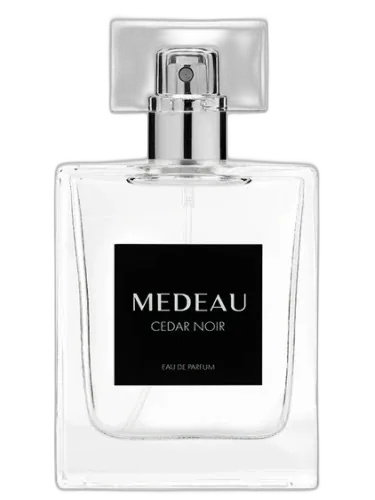
Medeau
Cedar Noir Medeau
Shared top notes: citruses

Ermetiche Fragranze
Deep Sea Ermetiche Fragranze
Shared base notes: sea water
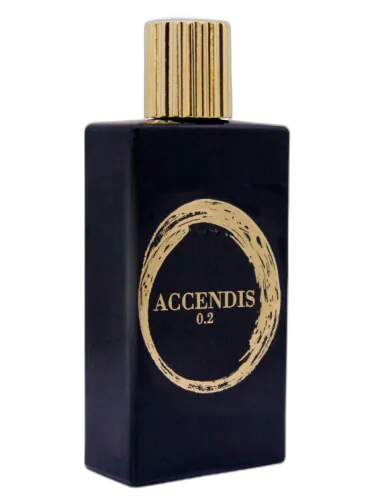
Accendis
Accendis 0.2 Accendis
Shared heart notes: cedar, guaiac wood

Guess
Guess Amore Portofino Guess
Shared top notes: citruses
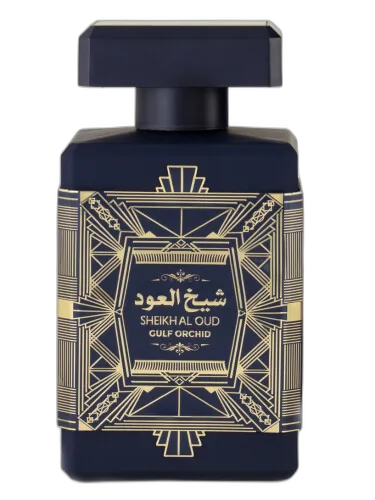
Gulf Orchid
Sheikh Al Oud Gulf Orchid
Shared heart notes: chestnut, guaiac wood