
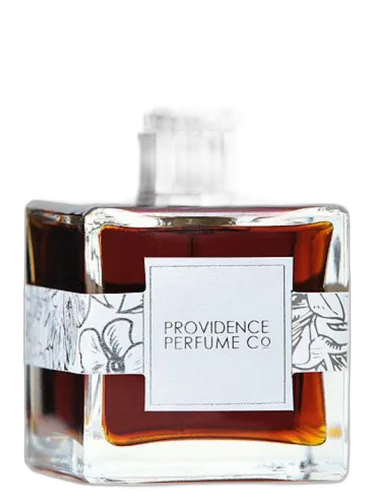

Cocoa Tuberose Providence Perfume Co.
At a glance
Is Cocoa Tuberose Providence Perfume Co. worth trying?
Cocoa Tuberose by Providence Perfume Co.
- Best match
- Evening, Special Occasion wear in Fall, Winter
- Performance feel
- Good longevity with Moderate sillage
- Signature profile
- cacao, warm spicy, sweet with Wormwood, Pink Pepper, Grapefruit
The first impression
Cocoa Tuberose by Providence Perfume Co. is a Oriental Vanilla fragrance for women and men. Cocoa Tuberose was launched in 2009. The nose behind this fragrance is Charna Ethier. Top notes are Wormwood, Pink Pepper and Grapefruit; middle notes are Tuberose and Champaca; base notes are Cacao, Patchouli, Amber, Tonka Bean and Vanille.
What shapes the scent
The perfumer behind it

Charna Ethier
Charna Ethier is a perfumer and founder of Providence Perfume Co., where she has created numerous fragrances. Her portfolio includes Basil & Bartlett, Bay Rum Cologne, Branch & Vine, Cocoa Tuberose, Divine Noir, Divine, Drunk On The Moon, and Eva Luna. She is known for using natural ingredients to craft complex, artisanal scents.
Notes pyramid
Top Notes
First impression · 15-30 min
 Wormwood
 Pink Pepper
 Grapefruit
Heart Notes
Core character · 2-4 hours
 Tuberose
 Champaca
Base Notes
Lasting impression · 4+ hours
 Cacao
Cacao
 Patchouli
 Amber
Amber
 Tonka Bean
Vanille
Tonka Bean
Vanille
The mood it creates
The Lover Archetype: Portrait of Cocoa Tuberose Providence Perfume Co.
Essence
To choose Cocoa Tuberose by Providence Perfume Co. is to embrace a fragrance that defies simplicity-a blend of dark, velvety cocoa and the intoxicating lushness of tuberose. It is neither entirely sweet nor wholly floral, but a paradox of warmth and decadence, sensuality and depth. The person who wears this scent is drawn to the interplay of opposites, finding beauty in tension rather than resolution. They are, at their core, the Lover Archetype-one who seeks connection, beauty, and meaning through the senses, through passion, and through the art of living itself.
Style & Aesthetic
This is a person who moves through life as if it were a grand composition-every choice, from the books they read to the clothes they wear, is an act of curation. Their style is rich but not ostentatious, favoring textures that invite touch: soft cashmere, aged leather, silk that whispers against the skin. They are drawn to deep, saturated colors-burgundy, emerald, midnight blue-colors that hold mystery.
Their philosophy is one of intensity over permanence-they do not seek stability in the traditional sense, but rather moments of profound feeling. They might quote Rilke: "Beauty is nothing but the beginning of terror." For them, life is to be tasted, savored, even if it burns. They are not afraid of melancholy, for they understand that sorrow is the shadow cast by joy.
Relationships
The Lover does not form shallow bonds. Their relationships are deep wells of emotion, sometimes overwhelming in their intensity. They are the friend who remembers the exact shade of your sadness, the lover who maps the landscape of your body like an explorer. They give freely, but they also demand-not in a possessive way, but in the way of one who believes love must be all-consuming to be real.
Yet here lies their shadow: the fear of being unseen. When their devotion is not mirrored, they may spiral into neediness or melodrama. They mistake possession for passion, suffocation for intimacy. Their greatest challenge is to love without losing themselves-to hold both connection and autonomy in balance.
Shadow
The Lover’s pursuit of beauty can tip into hedonism. They may lose themselves in sensory pleasures-fine wine, late nights, lovers who are more like muses than partners. They disdain the mundane, sometimes to their own detriment, avoiding responsibility under the guise of "living authentically."
There is also a danger of idealization-they fall in love with the idea of people, of experiences, rather than the reality. When the world fails to match their vision, they may grow disillusioned or bitter. Their challenge is to embrace imperfection without losing their sense of wonder.
Conclusion
The Cocoa Tuberose soul is not meant for half-measures. They thrive in environments where creativity and emotion are valued-artists’ studios, candlelit dinners, cities humming with midnight energy. They are drawn to poetry, jazz, the scent of rain on warm pavement.
Their gift is their ability to make others feel alive. Their flaw is their refusal to accept that not everything must be felt so deeply. But in their best moments, they remind us that life is not merely to be endured, but devoured. And in that, they are utterly, dangerously, beautifully human.
If you like this, try these
Fragrances with a comparable profile - shared accords, notes, and character.

Lionel Richie
Hello By Lionel Richie Lionel Richie
Shared top notes: grapefruit, pink pepper
Ciclo Cosméticos
Kiss Ciclo Cosméticos
Shared heart notes: tuberose
Electimuss
Vici Leather Electimuss
Shared top notes: pink pepper, wormwood

Jean Paul Gaultier
Le Male Terrible Jean Paul Gaultier
Shared top notes: grapefruit, pink pepper

Carolina Herrera
Good Girl Midnight Carolina Herrera
Shared top notes: pink pepper