


Drunk On The Moon Providence Perfume Co.
At a glance
Is Drunk On The Moon Providence Perfume Co. worth trying?
Drunk On The Moon by Providence Perfume Co.
- Best match
- Casual, Evening wear in Spring, Summer
- Performance feel
- Moderate longevity with Moderate sillage
- Signature profile
- fresh spicy, tuberose, amber with Nutmeg, Tuberose, Opoponax
The first impression
Drunk On The Moon by Providence Perfume Co. is a Floral Fruity fragrance for women and men. Drunk On The Moon was launched in 2019. The nose behind this fragrance is Charna Ethier.
What shapes the scent
The perfumer behind it

Charna Ethier
Charna Ethier is a perfumer and founder of Providence Perfume Co., where she has created numerous fragrances. Her portfolio includes Basil & Bartlett, Bay Rum Cologne, Branch & Vine, Cocoa Tuberose, Divine Noir, Divine, Drunk On The Moon, and Eva Luna. She is known for using natural ingredients to craft complex, artisanal scents.
Notes pyramid
All Notes
Complete scent profile
 Nutmeg
 Tuberose
 Opoponax
 Peach
Peach
 Sandalwood
 Rose
Rose
The mood it creates
The Archetype Archetype: Portrait of Drunk On The Moon Providence Perfume Co.
Essence
The one who wears Drunk On The Moon is not merely a lover of fragrance but a seeker of hidden truths. Their soul is aligned with The Mystic, an archetype that dwells in the liminal spaces-between reality and reverie, between the tangible and the ethereal. The Mystic does not simply observe the world; they dissolve into it, chasing the scent of the unseen.
This perfume, with its intoxicating blend of absinthe, leather, and lunar florals, is not for those who walk in daylight without question. It is for the one who lingers at the edges of gatherings, half-present, half-lost in thought, their mind wandering to the poetry of the night.
Shadow
Their tastes are an alchemy of contrasts-dark yet delicate, refined yet untamed. They might favor worn leather-bound books, black tea steeped to bitterness, or the slow burn of a smoky whiskey. Their wardrobe is an ode to subtlety: layers of linen and wool, perhaps a vintage coat with the faintest trace of old perfume still clinging to the collar. They do not dress for attention but for the quiet pleasure of texture and memory.
Philosophy is not an abstract exercise for them; it is the air they breathe. They are drawn to thinkers who embrace paradox-Nietzsche’s amor fati, Camus’ absurdism, the Taoist acceptance of flowing and ebbing. They believe in the sacredness of the moment but are haunted by the impermanence of all things. This duality makes them both profound and, at times, paralyzingly introspective.
Yet the Mystic’s gift is also their curse. Their sensitivity, so attuned to the unseen, can become a prison. They may withdraw too deeply, mistaking solitude for wisdom and isolation for enlightenment. Relationships suffer not from malice but from an inability to fully descend from the realm of ideas into the messiness of human connection.
They are prone to melancholy-not the dramatic sorrow of the romantic, but a quiet, persistent ache for something they cannot name. At times, they grow frustrated with the mundane world, resenting its demands, its noise, its insistence on practicality. This can manifest as passive resistance-procrastination, indecision, or a subtle arrogance that masks their fear of being misunderstood.
Conclusion
Their greatest strength is their depth of perception. They notice what others overlook-the way light filters through leaves at dusk, the unspoken tension in a room, the melancholy hidden behind a smile. They are the confidant to whom friends confess their secrets, not because they pry, but because they listen in a way that makes silence feel like understanding.
Creativity flows through them, though not always in conventional forms. They might write fragments of poetry in the margins of notebooks, compose music they never share, or lose hours staring at the sky, tracing constellations only they can see. Their mind is a sanctuary of half-formed dreams, and those who enter it find themselves enchanted by its quiet magic.
If you like this, try these
Fragrances with a comparable profile - shared accords, notes, and character.
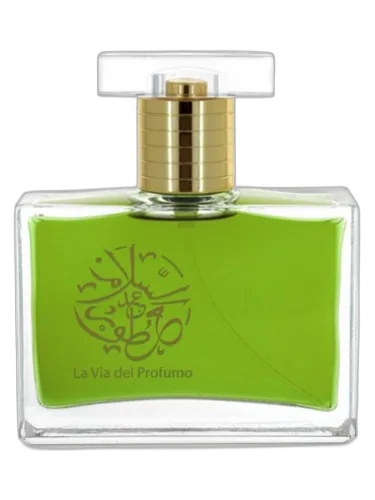
Abdes Salaam Attars Perfumes
Oakmoss Abdes Salaam Attars Perfumes
Shared top notes: rose, sandalwood

Yanina Yakusheva
The Dialog I Yanina Yakusheva
Shared top notes: peach, sandalwood, tuberose

Gaia Parfums
Tohooran Gaia Parfums
Shared top notes: peach, sandalwood, tuberose

April Aromatics
Nectar Of Love April Aromatics
Shared top notes: rose, sandalwood, tuberose

4160 Tuesdays
Red Queen 4160 Tuesdays
Shared top notes: opoponax, rose