
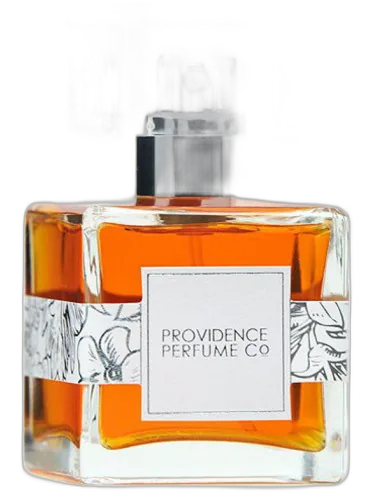

Hindu Honeysuckle Providence Perfume Co.
At a glance
Is Hindu Honeysuckle Providence Perfume Co. worth trying?
Hindu Honeysuckle by Providence Perfume Co.
- Best match
- Casual wear in Spring, Summer
- Performance feel
- Moderate longevity with Moderate sillage
- Signature profile
- white floral, aromatic, woody with Honeysuckle, Vetiver, Jasmine
The first impression
Hindu Honeysuckle by Providence Perfume Co. is a Floral fragrance for women and men. Hindu Honeysuckle was launched in 2012. The nose behind this fragrance is Charna Ethier.
What shapes the scent
The perfumer behind it

Charna Ethier
Charna Ethier is a perfumer and founder of Providence Perfume Co., where she has created numerous fragrances. Her portfolio includes Basil & Bartlett, Bay Rum Cologne, Branch & Vine, Cocoa Tuberose, Divine Noir, Divine, Drunk On The Moon, and Eva Luna. She is known for using natural ingredients to craft complex, artisanal scents.
Notes pyramid
All Notes
Complete scent profile
 Honeysuckle
 Vetiver
 Jasmine
 Coriander
 Bergamot
 Ambrette (Musk Mallow)
 Rose
Rose
The mood it creates
The Wanderer Archetype: Portrait of Hindu Honeysuckle Providence Perfume Co.
Essence
The one who wears Hindu Honeysuckle by Providence Perfume Co. is most closely aligned with the Sage-a seeker of wisdom, drawn to the quiet revelations hidden beneath the surface of things. This fragrance, with its delicate interplay of floral sweetness and earthy depth, mirrors their nature: neither entirely dreamy nor wholly pragmatic, but suspended in the liminal space between. They are the observer, the interpreter, the one who listens to the whispers of the world rather than its shouts.
The Sage does not merely accumulate knowledge; they distill it, seeking the essence of truth in all things. Their love for this scent-a blend of honeysuckle’s nostalgia, jasmine’s mystery, and vetiver’s grounding earthiness-reveals a mind that values subtlety over spectacle. They are not seduced by the obvious but are instead drawn to the quiet revelations that unfold over time.
Relationships
They do not collect acquaintances; they cultivate connections with the same care they give to their garden. Their friendships are few but profound, built on shared silences as much as shared words. Romantic partners must understand that their love is not possessive-it is a quiet devotion, a mutual respect for solitude as much as togetherness.
Yet, this very depth can become a barrier. Their reluctance to engage in trivialities may be misread as aloofness. They do not suffer fools gladly, and their patience wears thin with those who mistake their introspection for passivity.
Shadow
The Sage’s greatest strength-their self-sufficiency-can also be their undoing. In their pursuit of wisdom, they may withdraw too far, mistaking detachment for enlightenment. Their sharp intellect, when unchecked, can turn critical, dissecting others’ flaws with clinical precision. There is a danger in becoming so enamored with their own insights that they forget the value of raw, unfiltered experience.
At their worst, they may slip into a kind of spiritual arrogance, believing their contemplative nature makes them superior to those who live more viscerally. The world, after all, is not merely to be understood-it is to be lived.
Conclusion
Their tastes are refined but never ostentatious. They prefer the understated elegance of linen and raw silk, the muted colors of dusk, the texture of well-worn books. Their home is a sanctuary of carefully curated objects-antique inkwells, dried botanicals pressed between glass, a single Japanese ceramic bowl holding nothing but sunlight. They do not surround themselves with noise, but with meaning.
Philosophy is not an abstract exercise for them; it is the lens through which they navigate existence. They may be drawn to Eastern thought-Zen koans, the Bhagavad Gita’s paradoxes-or the existentialists, who wrestle with meaning in an indifferent universe. What matters is not the doctrine itself, but the act of questioning. They are comfortable with uncertainty, even reverent toward it.
If you like this, try these
Fragrances with a comparable profile - shared accords, notes, and character.

Guerlain
Mitsouko Eau De Cologne Guerlain
Shared top notes: bergamot, jasmine, rose

Peter Jacobs Parfum
Imperial White Peter Jacobs Parfum
Shared top notes: bergamot, jasmine, rose

Yves Saint Laurent
Rive Gauche Light Yves Saint Laurent
Shared top notes: bergamot, jasmine, rose

Pour Toujours
Pyrus Pour Toujours
Shared top notes: ambrette (musk mallow), bergamot, rose

Antonio Puig
Estivalia Antonio Puig
Shared top notes: jasmine, vetiver