


Lemon Liada Providence Perfume Co.
At a glance
Is Lemon Liada Providence Perfume Co. worth trying?
Lemon Liada by Providence Perfume Co.
- Best match
- Casual wear in Spring, Summer
- Performance feel
- Moderate longevity with Moderate sillage
- Signature profile
- citrus, yellow floral, floral with Citron, Lemon Verbena, Mimosa
The first impression
Lemon Liada by Providence Perfume Co. is a Citrus fragrance for women and men. Lemon Liada was launched in 2018. The nose behind this fragrance is Charna Ethier.
What shapes the scent
The perfumer behind it

Charna Ethier
Charna Ethier is a perfumer and founder of Providence Perfume Co., where she has created numerous fragrances. Her portfolio includes Basil & Bartlett, Bay Rum Cologne, Branch & Vine, Cocoa Tuberose, Divine Noir, Divine, Drunk On The Moon, and Eva Luna. She is known for using natural ingredients to craft complex, artisanal scents.
Notes pyramid
All Notes
Complete scent profile
 Citron
 Lemon Verbena
 Mimosa
 Petitgrain
 Lotus
Lotus
 Orris Root
The mood it creates
The Wanderer Archetype: Portrait of Lemon Liada Providence Perfume Co.
Essence
The person who gravitates toward Lemon Liada by Providence Perfume Co. embodies the Innocent archetype, though not in a naive or childlike sense. Their innocence is a cultivated purity-a deliberate return to simplicity, light, and authenticity. The fragrance itself, with its bright citrus burst softened by herbal and floral nuances, mirrors their essence: vibrant yet grounded, optimistic yet discerning. They are drawn to scents that evoke freshness, clarity, and a subtle wildness-like sunlight filtering through leaves.
But innocence is not ignorance. Theirs is a conscious choice to embrace wonder, to resist cynicism, and to find beauty in the uncomplicated. They are the kind of person who stops to admire dew on a spiderweb or who finds joy in the first sip of morning tea. Yet beneath this radiant exterior lies a shadow-the fear of disillusionment, of discovering that the world is not as luminous as they wish it to be.
Style & Aesthetic
Their wardrobe reflects their essence: unfussy, natural, alive. Linen shirts, well-cut trousers, perhaps a vintage sundress-nothing stiff or overly structured. They favor earthy tones with the occasional pop of color, like a saffron-yellow scarf or a pair of turquoise earrings. Their style is not about trends but about feeling at ease in their skin.
They wear Lemon Liada because it feels like an extension of themselves-zesty, green, slightly untamed. It is not a fragrance that demands attention but one that lingers pleasantly, like the memory of a perfect afternoon. They are drawn to perfumes that feel alive, that shift with the body’s warmth, never static or cloying.
Philosophy & Values
Their philosophy is one of intentional joy. They believe happiness is not stumbled upon but cultivated, like a garden tended with care. They are drawn to minimalism, not as an aesthetic trend but as a way of stripping away excess to reveal what truly matters. Their home is airy, filled with plants, natural textures, and well-loved books-perhaps a shelf of Rilke, Mary Oliver, or the Stoics. They prefer handmade ceramics over mass-produced decor, valuing the imprint of human hands.
They are not a dreamer lost in abstraction but a practical idealist. They know that life is fleeting, and so they savor it-slow mornings, handwritten letters, the scent of rain on warm pavement. They reject the notion that depth requires darkness; instead, they find profundity in the ephemeral. Yet this very insistence on lightness can become a blind spot. When faced with suffering-their own or others’-they may retreat into optimism as a shield, avoiding the necessary shadows that give life its full dimension.
Relationships
In love and friendship, they are warm but discerning. They attract people effortlessly-their energy is inviting, like sunlight spilling through an open door. They listen deeply, laugh easily, and have a way of making others feel seen. Yet they guard their inner world carefully. They do not let just anyone in; their trust is earned, not given freely.
Romantically, they seek a partner who shares their appreciation for quiet moments-someone who understands that love is not grand gestures but shared silences, the brush of a hand, the way two people can sit together without needing to fill the space. Yet their shadow emerges here too: their aversion to conflict can make them avoid difficult conversations. They may smooth over tensions rather than confront them, leaving issues unresolved beneath a veneer of harmony.
Shadow
Their greatest strength-their ability to find light-is also their weakness. When life becomes too heavy, they may retreat into forced cheerfulness, refusing to acknowledge pain. They might dismiss their own sadness as irrational or suppress anger to maintain equilibrium. This avoidance can lead to a kind of emotional bypassing, where they deny the full spectrum of human experience in favor of an artificial serenity.
They must learn that true resilience is not the absence of darkness but the courage to face it. A lemon, after all, is not just sweetness-it is tart, even bitter at times. To embrace their full self, they must allow for the shadows, understanding that depth comes from contrast.
Conclusion
The lover of Lemon Liada is a beacon-not in a blinding way, but in the manner of a candle flickering steadily in a quiet room. They remind others of the beauty in simplicity, the grace in small moments. Yet they must remember that light is only meaningful because darkness exists. To live fully, they must embrace both-the zest and the thorn, the sun and the shade.
In the end, they are not merely innocent; they are wise in their innocence, choosing joy not out of naivety but as an act of defiance against despair. And in that choice, they find their truest strength.
If you like this, try these
Fragrances with a comparable profile - shared accords, notes, and character.

Parfums et Senteurs du Pays Basque
Under The Lindens (sous Les Tilleuls) Parfums Et Senteurs Du Pays Basque
Shared top notes: mimosa

Dior
Eau De Dior Coloressence Energizing Dior
Shared top notes: lemon verbena
A Wing & A Prayer Perfumes
Verde Perfume A Wing & A Prayer Perfumes
Shared top notes: mimosa
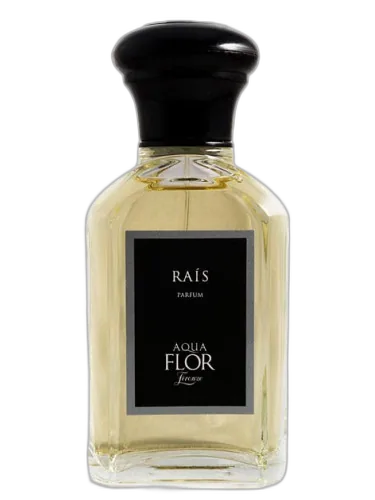
Aquaflor Firenze
Rais Aquaflor Firenze
Shared top notes: citron, petitgrain

Roger & Gallet
Mandarine Roger & Gallet
Shared top notes: citron, petitgrain