


Moss Gown Providence Perfume Co.
At a glance
Is Moss Gown Providence Perfume Co. worth trying?
Moss Gown by Providence Perfume Co.
- Best match
- Evening wear in Fall
- Performance feel
- Very Good longevity with Moderate sillage
- Signature profile
- floral, woody, mossy with Chamomile, Cedar, Mimosa
The first impression
Moss Gown by Providence Perfume Co. is a Chypre fragrance for women. Moss Gown was launched in 2012. The nose behind this fragrance is Charna Ethier. Top notes are Chamomile, Cedar, Mimosa and Sunflower; middle notes are Narcissus, Violet Leaf, Boronia, Rose, Lilac and Coffee blossom; base notes are Cedarmoss, White Cedar Extract and Sandalwood.
What shapes the scent
The perfumer behind it

Charna Ethier
Charna Ethier is a perfumer and founder of Providence Perfume Co., where she has created numerous fragrances. Her portfolio includes Basil & Bartlett, Bay Rum Cologne, Branch & Vine, Cocoa Tuberose, Divine Noir, Divine, Drunk On The Moon, and Eva Luna. She is known for using natural ingredients to craft complex, artisanal scents.
Notes pyramid
Top Notes
First impression · 15-30 min
 Chamomile
 Cedar
Cedar
 Mimosa
 Sunflower
Heart Notes
Core character · 2-4 hours
 Narcissus
 Violet Leaf
 Boronia
 Rose
Rose
 Lilac
Lilac
 Coffee blossom
Base Notes
Lasting impression · 4+ hours
 Cedarmoss
White Cedar Extract
Cedarmoss
White Cedar Extract
 Sandalwood
The mood it creates
The Mystic Archetype: Portrait of Moss Gown Providence Perfume Co.
Essence
The person who cherishes Moss Gown by Providence Perfume Co. is most closely aligned with the Sage-a seeker of wisdom, drawn to the quiet revelations of nature and the unseen depths of existence. This fragrance, with its grounding blend of oakmoss, vetiver, and damp earth, speaks to someone who finds truth not in grand declarations but in the slow unraveling of life’s textures. The Sage is a watcher, a thinker, a keeper of hidden knowledge, and this person wears their scent like a second skin, an olfactory testament to their inner world.
Style & Aesthetic
Their aesthetic is deliberately unrefined yet deeply intentional. They favor natural fabrics-linen, wool, raw silk-in muted, earthy tones. Their clothing does not announce itself; it exists as an extension of their environment. Jewelry, if worn at all, is likely handmade, perhaps a simple stone or a piece of aged silver. Their home is filled with books, dried botanicals, and objects that carry the weight of time-antique inkwells, well-worn wooden bowls, a collection of river-smoothed stones.
But this austerity can tip into rigidity. Their disdain for artifice may harden into contempt for those who enjoy ornamentation, mistaking simplicity for moral superiority.
Their days are structured around rituals of presence: morning tea brewed slowly, long walks without destination, journaling by candlelight. They are drawn to practices that demand attentiveness-forest bathing, foraging, meditation. They may keep a garden, not for show, but for the quiet dialogue with growth and decay.
But here, too, lies a danger: passivity. The Sage can mistake observation for living, believing that understanding a thing is the same as experiencing it. They may grow so comfortable in their role as witness that they forget to step into the stream of life.
Philosophy & Values
Their philosophy is one of rooted transcendence-they do not seek escape from the world but a deeper immersion in it. The scent of moss and soil is not merely nostalgic; it is a reminder that wisdom grows in the dark, in the places others overlook. They value patience, intuition, and the kind of knowledge that cannot be rushed. They distrust dogma, preferring the organic unfolding of understanding.
Yet, this reverence for depth can become a shadow: isolation. The Sage risks retreating so far into contemplation that they forget to act. Their love of the unseen may make them dismissive of the mundane, leading to a quiet arrogance-a belief that others simply "do not understand."
Relationships
They are not a social butterfly, but neither are they a recluse. Their relationships are few but profound, built on shared silences as much as conversation. They attract those who crave authenticity, who are tired of performative charm. Their love language is the act of listening-really listening-and their presence can feel like a balm to the overstimulated.
Yet their shadow emerges in emotional detachment. The Sage’s tendency to observe rather than engage can leave loved ones feeling like specimens under glass. They may rationalize their distance as wisdom, when in truth, it is fear-fear of being pulled into the messy, irrational currents of human emotion.
Shadow
At their best, the Moss Gown wearer is a guide, offering others the clarity they find in stillness. Their presence is a reminder that wisdom is not loud, but deep-not in the grand gesture, but in the patient unfurling of a fern.
At their worst, they become the hermit, hoarding insight like a miser, mistaking solitude for enlightenment. Their love of the hidden may turn into a refusal to be seen, to be known.
Yet even in their flaws, there is beauty. For the Sage does not seek perfection-only truth. And truth, like moss, grows in the cracks.
If you like this, try these
Fragrances with a comparable profile - shared accords, notes, and character.

A Wing & A Prayer Perfumes
Dreams And Visions A Wing & A Prayer Perfumes
Shared top notes: mimosa
Jovoy Paris
Touche Finale Jovoy Paris
Shared top notes: mimosa
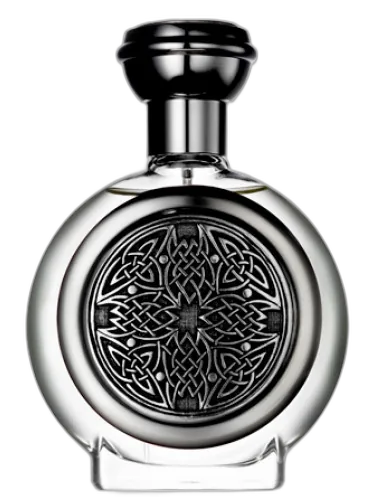
Boadicea the Victorious
Delicate Boadicea The Victorious
Shared heart notes: narcissus, rose
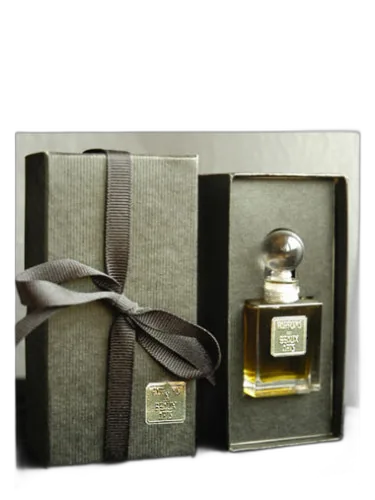
DSH Perfumes
Route D'iris Dsh Perfumes
Shared top notes: mimosa
Shiseido
Zen Original Shiseido
Shared heart notes: narcissus, rose