
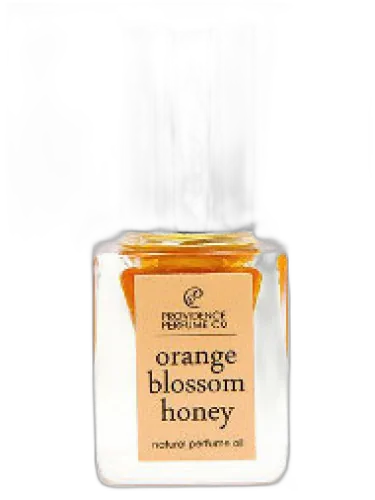

Orange Blossom Honey Providence Perfume Co.
At a glance
Is Orange Blossom Honey Providence Perfume Co. worth trying?
Orange Blossom Honey by Providence Perfume Co.
- Best match
- Casual wear in Spring, Summer
- Performance feel
- Moderate longevity with Moderate sillage
- Signature profile
- white floral, citrus, sweet with Neroli, Orange Blossom, Honey
The first impression
Orange Blossom Honey by Providence Perfume Co. is a Oriental Floral fragrance for women and men. Orange Blossom Honey was launched in 2014. The nose behind this fragrance is Charna Ethier.
What shapes the scent
The perfumer behind it

Charna Ethier
Charna Ethier is a perfumer and founder of Providence Perfume Co., where she has created numerous fragrances. Her portfolio includes Basil & Bartlett, Bay Rum Cologne, Branch & Vine, Cocoa Tuberose, Divine Noir, Divine, Drunk On The Moon, and Eva Luna. She is known for using natural ingredients to craft complex, artisanal scents.
Notes pyramid
All Notes
Complete scent profile
 Neroli
 Orange Blossom
 Honey
Honey
 Vanilla
 Peru Balsam
 Sweet Orange
 Ginger
 Tonka Bean
The mood it creates
The Lover Archetype: Portrait of Orange Blossom Honey Providence Perfume Co.
Essence
At the heart of this person lies the Innocent archetype-a soul who seeks purity, simplicity, and the quiet joy of life’s unspoiled moments. They are drawn to the scent of Orange Blossom Honey not for its complexity, but for its sunlit warmth, its golden sweetness, the way it evokes fields in bloom and the hum of bees at work. The Innocent does not crave the heavy, the decadent, or the obscure; they want the world to be as luminous as their fragrance-gentle, nourishing, and unburdened by cynicism.
Yet, like all archetypes, the Innocent has its shadow. Their optimism can slip into naivety, their trust into gullibility. They may resist the darker truths of life, clinging instead to an idealized vision that shields them from discomfort. But in their best moments, they remind others that joy is not foolish-it is a choice, a discipline, a quiet rebellion against despair.
Style & Aesthetic
Their style is effortless, neither fussy nor austere. They favor natural fabrics-linen, cotton, wool-in soft, earthy tones, with occasional flashes of honey-gold or citrus-bright accents. Their home is filled with sunlight, books of poetry, and well-worn ceramics holding wildflowers or sprigs of lavender. They prefer handwritten letters to texts, vinyl records to streaming, and slow meals made with care.
They are not a minimalist, nor a maximalist-they are a sensualist of the everyday, finding beauty in the curve of a teacup, the texture of handmade paper, the way morning light slants across a wooden floor. Their taste in art leans toward the impressionists, where color and light dissolve into emotion. Music, for them, is folk or classical-something that feels alive, unprocessed, touched by human hands.
They rise early, not out of discipline, but because dawn is their favorite hour-the world is still quiet, the light still soft. Their mornings are rituals: coffee in a favorite mug, a few pages of a novel, a walk through dew-damp grass. They work in a field that allows them to create or nurture-perhaps gardening, teaching, writing, or healing. They are not ambitious in the conventional sense; they measure success in moments of connection, not accolades.
Yet their aversion to harshness can make them avoid necessary challenges. They may linger too long in comfort, avoiding risks that could deepen their wisdom. The Innocent must learn that growth requires discomfort-that even honey must be won through the sting of the bee.
Philosophy & Values
They believe in kindness without grandiosity, in goodness without dogma. Their philosophy is not built on rigid principles but on an intuitive sense of what feels true-a truth that is felt in the body as much as the mind. They distrust institutions, not out of cynicism, but because they have seen how systems crush spontaneity, how rules suffocate joy.
Their values are simple but fierce: beauty matters, tenderness is strength, and small acts of love are the real revolutions. They do not seek to change the world through force, but through presence-by living in a way that makes others pause, soften, remember what they have forgotten.
Yet here lies the shadow: their aversion to conflict can make them passive. They may avoid difficult conversations, hoping problems will dissolve on their own. Their idealism can blind them to the necessity of struggle, leaving them unprepared when life demands grit rather than grace.
Relationships
In love and friendship, they are warm but not clingy, open but not careless. They attract people who crave sincerity, who are tired of masks and performances. Their presence is a sanctuary-when others are with them, they feel seen, not judged.
Romantically, they are drawn to partners who balance their softness with strength-someone who appreciates their sweetness but does not mistake it for fragility. They do not chase passion that burns too fast; they prefer the slow, steady flame of companionship.
But their shadow emerges in their reluctance to set boundaries. Their desire to please can make them a silent martyr, swallowing resentment until it erupts in unexpected ways. They must learn that love does not mean endless accommodation-sometimes, it means saying no.
Shadow
In their light, they are a reminder that joy is not trivial-it is a defiance of despair, a refusal to let the world’s weight extinguish wonder. In their shadow, they risk becoming a passive dreamer, one who loves the idea of life more than the messy reality of it.
But when balanced, they are neither naive nor jaded-they are the keeper of small miracles, the one who teaches us that happiness is not found in grand gestures, but in the scent of orange blossoms, the taste of honey, the quiet certainty that some things, despite everything, remain good.
If you like this, try these
Fragrances with a comparable profile - shared accords, notes, and character.
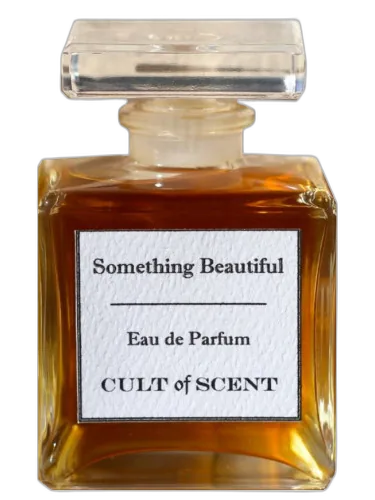
Cult of Scent
Something Beautiful Cult Of Scent
Shared top notes: honey, neroli, orange blossom
Sylvaine Delacourte
Vahina Sylvaine Delacourte
Shared top notes: orange blossom, tonka bean, vanilla
Poesie
Versailles Poesie
Shared top notes: orange blossom, vanilla

Khye Fragrances
Really Into You Khye Fragrances
Shared top notes: neroli, orange blossom, tonka bean

April Aromatics
Rose L’orange April Aromatics
Shared top notes: neroli, orange blossom, vanilla