


Vientiane Providence Perfume Co.
At a glance
Is Vientiane Providence Perfume Co. worth trying?
Vientiane by Providence Perfume Co.
- Best match
- Evening wear in Fall
- Performance feel
- Good longevity with Moderate sillage
- Signature profile
- woody, powdery, aromatic with Sandalwood, Silk Vine or Milk Broom, Rice
The first impression
Vientiane by Providence Perfume Co. is a Woody Floral Musk fragrance for women and men. Vientiane was launched in 2018. The nose behind this fragrance is Charna Ethier.
What shapes the scent
The perfumer behind it

Charna Ethier
Charna Ethier is a perfumer and founder of Providence Perfume Co., where she has created numerous fragrances. Her portfolio includes Basil & Bartlett, Bay Rum Cologne, Branch & Vine, Cocoa Tuberose, Divine Noir, Divine, Drunk On The Moon, and Eva Luna. She is known for using natural ingredients to craft complex, artisanal scents.
Notes pyramid
All Notes
Complete scent profile
 Sandalwood
 Silk Vine or Milk Broom
 Rice
Rice
 Jasmine
The mood it creates
The Explorer Archetype: Portrait of Vientiane Providence Perfume Co.
Essence
Vientiane Providence Perfume Co. is not a fragrance for those who seek the familiar. It is an olfactory journey-spiced, woody, with whispers of distant lands and untamed landscapes. The person who chooses this scent is drawn to the unknown, not merely as a passing fancy, but as a fundamental need. They are the Explorer, an archetype defined by insatiable curiosity, a hunger for freedom, and a refusal to be confined by convention.
This is someone who would rather walk an uncharted path than follow a well-worn road. Their spirit is restless, their mind always reaching beyond the horizon. They are not content with mere comfort; they crave experience-raw, unfiltered, and transformative.
Philosophy & Values
To the Explorer, life is not a problem to be solved but a mystery to be lived. They reject dogma, preferring to assemble their own philosophy from fragments of wisdom gathered along the way. They might quote Rumi one moment and Nietzsche the next, not out of pretension, but because they have tested these ideas against their own experience.
Freedom is their highest value-not the shallow freedom of doing as one pleases, but the deeper freedom of self-definition. They despise anything that smacks of coercion, whether societal expectations or emotional manipulation. Relationships, for them, must allow for movement; they love deeply but resist possessiveness.
Relationships
The Explorer does not fear connection, but they do fear stagnation. Their relationships thrive on mutual growth, shared adventures, and intellectual sparring. They are drawn to those who challenge them, who refuse to be predictable. Yet, their shadow emerges when their need for independence becomes avoidance. They may leave lovers not because they no longer care, but because the weight of expectation feels like a cage.
Friends admire their spontaneity but sometimes struggle with their inconsistency. They are the one who disappears for months, then reappears with stories that make the mundane world seem dull by comparison. Their presence is intoxicating, their absence a quiet ache.
Shadow
The Explorer’s greatest strength is also their greatest weakness. Their refusal to settle can become a refusal to commit-not just to people, but to purpose. They may drift so long that they forget how to root, mistaking movement for progress. There is a loneliness beneath their wanderlust, a fear that if they stop, they will have to confront the void they’ve been outrunning.
At their worst, they become the Restless Ghost, always seeking but never finding, mistaking novelty for meaning. They may grow cynical, dismissing depth as just another trap. The challenge for the Explorer is not to abandon their journey, but to learn when to pause-when to let a place, a person, or an idea truly change them.
Conclusion
Their lifestyle is one of deliberate impermanence. They may live in different cities, change careers with the seasons, or find solace in the rhythm of travel. Stability is not their enemy, but it must be on their terms-fluid, adaptable, never rigid. Their home, if they have one, is filled with artifacts of their journeys: a handwoven rug from Laos, a weathered notebook filled with sketches of foreign streets, incense that carries the scent of temples.
Their style is eclectic, borrowing from cultures they’ve encountered without reducing them to mere aesthetics. They might wear linen shirts from Southeast Asia, a vintage leather jacket from Berlin, or silver rings from a Moroccan souk. Their wardrobe is not a uniform but a living archive of where they’ve been.
If you like this, try these
Fragrances with a comparable profile - shared accords, notes, and character.
Nina's Nature
Wood Nina's Nature
Shared top notes: jasmine, sandalwood

Infiniment Coty Paris
Santal A La Vida Infiniment Coty Paris
Shared top notes: jasmine, sandalwood
Новая Заря (The New Dawn)
Опера Садко (sadko Opera) Новая Заря (the New Dawn)
Shared top notes: jasmine, sandalwood
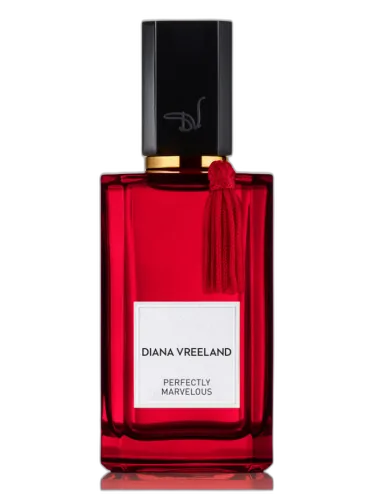
Diana Vreeland
Perfectly Marvelous Diana Vreeland
Shared top notes: jasmine, sandalwood

Scent Salim
Fiume Di Gelsomino Scent Salim
Shared top notes: jasmine, sandalwood