
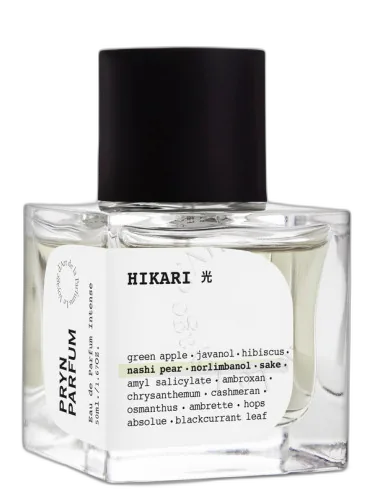
Hikari Pryn Parfum
At a glance
Is Hikari Pryn Parfum worth trying?
Hikari by Pryn Parfum is a Floral Fruity fragrance for women and men.
- Best match
- Special Occasion wear in Spring
- Performance feel
- Good longevity with Moderate sillage
- Signature profile
- fruity, green, floral with Pear, Herbal Notes, Green Notes
The first impression
Hikari by Pryn Parfum is a Floral Fruity fragrance for women and men. Hikari was launched in 2017. The nose behind this fragrance is Prin Lomros.
What shapes the scent
The perfumer behind it

Prin Lomros
Prin Lomros is a Thai perfumer and founder of the Prin brand, recognized for bold, complex compositions that often blend natural and synthetic materials. Their portfolio includes works for Azman and Der Duft, as well as their own line featuring scents like Ahuizotl and Aran. Lomros is known for pushing boundaries with rich, animalic, and resinous accords.
Notes pyramid
All Notes
Complete scent profile
 Pear
Pear
 Herbal Notes
 Green Notes
 Hibiscus
Green Apple
Hibiscus
Green Apple
 Ambroxan
 Cashmeran
 Chrysanthemum
 Black currant leaf
 Sake
Sake
 Ambrette (Musk Mallow)
 Floral Notes
 Woody Notes
 Sandalwood
 Osmanthus
 Hops
Hops
 Animal notes
 Amber
Sweet Notes
Amber
Sweet Notes
The mood it creates
The Wanderer Archetype: Portrait of Hikari Pryn Parfum
Essence
The one who wears Hikari Pryn is a modern-day Sage, a seeker of clarity and refinement. This fragrance-clean, luminous, with whispers of citrus, white florals, and a touch of musk-reflects their essence: a mind that craves purity, precision, and depth. Like the Sage, they are drawn to knowledge, but not merely for accumulation; they seek wisdom that illuminates, that distills chaos into meaning. Yet, as with all archetypes, the Sage has its shadow-detachment, over-intellectualization, a reluctance to surrender to the messiness of raw emotion.
Philosophy & Values
They are drawn to careers and hobbies that demand precision and insight-perhaps a researcher, a designer, a curator, a writer. Even if their work is not explicitly intellectual, they approach it with a scholar’s rigor. They value mastery, not for status, but for the satisfaction of understanding something deeply.
Relationships, for them, are built on mutual respect and intellectual exchange. They are not the type to indulge in idle gossip or superficial connections. Their friendships are few but enduring, their love language often expressed through thoughtful gestures rather than grand displays. Yet, this selectivity can become a barrier-they may unintentionally keep others at arm’s length, fearing that too much emotional exposure will disrupt their carefully balanced world.
Shadow
Their greatest strength-clarity of thought-can also be their greatest flaw. When faced with emotional turbulence, they retreat into analysis, dissecting feelings rather than experiencing them. They may struggle with vulnerability, mistaking detachment for wisdom. At their worst, they become the Cold Observer, watching life rather than living it, preferring the safety of abstraction to the risk of raw connection.
They may also harbor a quiet arrogance, an unspoken belief that their refined tastes and insights make them superior to those who embrace chaos or sentimentality. This is their blind spot-the failure to recognize that wisdom without warmth is merely cleverness in disguise.
Conclusion
Their world is one of deliberate beauty. They prefer minimalist spaces-uncluttered, where light plays against neutral tones, where every object serves a purpose or sparks contemplation. Their wardrobe leans toward structured silhouettes, natural fabrics, muted colors with occasional flashes of brilliance-a silk scarf in deep indigo, a single piece of understated jewelry. They are not austere, but they abhor excess.
In taste, they favor the subtle over the bombastic: a perfectly balanced dish, a piece of music that unfolds in layers, literature that rewards slow reading. They may admire the precision of Japanese aesthetics, the quiet intensity of Scandinavian design, or the disciplined elegance of classical architecture. Their philosophy is one of discernment-they believe that true sophistication lies not in what is added, but in what is stripped away.
If you like this, try these
Fragrances with a comparable profile - shared accords, notes, and character.

January Scent Project
Northern Flicker January Scent Project
Shared accords: amber, aromatic, floral

Strangers Parfumerie
Kira Kira きらきら Strangers Parfumerie
Shared top notes: ambrette (musk mallow), ambroxan, green apple
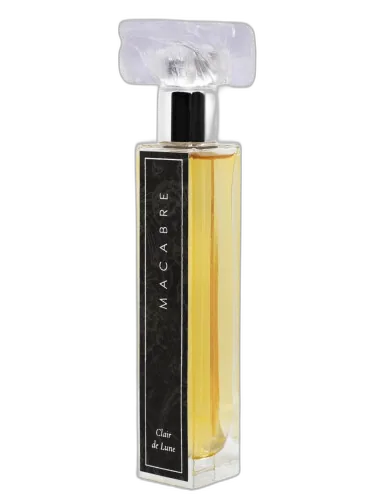
Macabre Parfums
Clair De Lune Macabre Parfums
Shared top notes: pear

Strangers Parfumerie
Lights Upon Orange Tree Strangers Parfumerie
Shared top notes: green apple
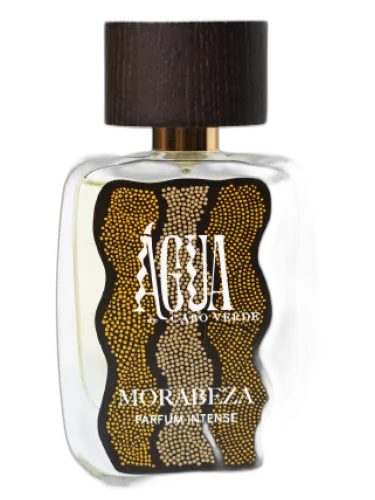
Água de Cabo Verde
Morabeza Água De Cabo Verde
Shared top notes: green apple, green notes