
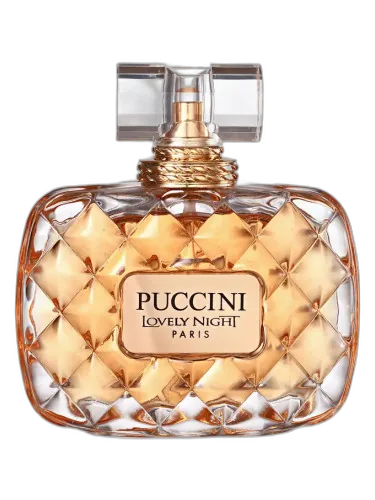

Puccini Lovely Night Puccini Paris
At a glance
Is Puccini Lovely Night Puccini Paris worth trying?
Puccini Lovely Night by Puccini Paris is a Floral Fruity fragrance for women.
- Best match
- Evening wear in Fall
- Performance feel
- Very Good longevity with Strong sillage
- Signature profile
- sweet, fruity, caramel with Pineapple, Bergamot, Rosebay Willowherb
The first impression
Puccini Lovely Night by Puccini Paris is a Floral Fruity fragrance for women. Puccini Lovely Night was launched in 2017. Top notes are Pineapple, Bergamot, Rosebay Willowherb and Cassis; middle notes are Caramel, Peach, Iris Flower and Jasmine; base notes are Vanilla, Amber, Patchouli, Musk, Boisiris and Cashmere Wood.
What shapes the scent
The perfumer behind it

Notes pyramid
Top Notes
First impression · 15-30 min
 Pineapple
 Bergamot
 Rosebay Willowherb
 Cassis
Heart Notes
Core character · 2-4 hours
 Caramel
 Peach
Iris Flower
Peach
Iris Flower
 Jasmine
Base Notes
Lasting impression · 4+ hours
 Vanilla
 Amber
Amber
 Patchouli
 Musk
Musk
 Boisiris
Cashmere Wood
Boisiris
Cashmere Wood
The mood it creates
The Lover Archetype: Portrait of Puccini Lovely Night Puccini Paris
Essence
This person is most closely aligned with The Lover archetype-a soul intoxicated by beauty, sensuality, and emotional depth. The Lover does not merely exist; they experience, with every sense heightened. Puccini Lovely Night, with its rich floral bouquet and dark, velvety undertones, is their elixir-a scent that whispers of romance, mystery, and the sublime.
They are drawn to the interplay of light and shadow in life, much like the fragrance itself-sweet yet deep, delicate yet commanding. The Lover archetype thrives on connection, whether to people, art, or the world itself. They do not shy away from intensity; they embrace it, for they understand that passion is the essence of being alive.
Style & Aesthetic
Their tastes are refined but never sterile-opulent without ostentation. They prefer the tactile luxury of silk over synthetic fabrics, the weight of a well-bound book over a digital screen, the flicker of candlelight over harsh fluorescents. Their home is a sanctuary of curated beauty: antique mirrors, deep-hued tapestries, a record player spinning Chopin or Billie Holiday.
They move through the world with an artist’s eye, finding poetry in the mundane-the way light filters through a wine glass, the curve of a lover’s wrist, the melancholy of an autumn evening. Their philosophy is one of carpe diem, but not in the reckless sense-rather, in the belief that life’s fleeting beauty must be savored with reverence.
Philosophy & Values
To them, beauty is not frivolous-it is a necessity, a counterbalance to life’s inherent chaos. They believe in the transformative power of art, the sanctity of personal expression, and the importance of living with intention. Their moral compass is guided by empathy and authenticity; they despise pretense and superficial charm.
But this devotion to beauty has its pitfalls. They can become overly critical, dismissing what they deem "common" or "unrefined." At times, they may slip into elitism, forgetting that beauty exists in unexpected places-not just in grand gestures, but in quiet, imperfect moments.
Relationships
In love, they are neither passive nor possessive, but present. They seek partners who can match their emotional and intellectual intensity-someone who understands that love is not just comfort but also challenge, not just warmth but also fire. Their relationships are marked by deep conversations, shared silences that speak volumes, and an unspoken understanding of the sacredness of intimacy.
Yet, their shadow emerges here: a tendency toward idealization. They may fall in love with the idea of a person rather than the reality, setting themselves up for disillusionment. When their romantic visions shatter, they retreat into melancholy, nursing wounds that are as much self-inflicted as they are external.
Shadow
Their greatest strength-their capacity for deep feeling-is also their greatest vulnerability. When their passions go unfulfilled, they risk spiraling into self-indulgence, seeking solace in decadence rather than confronting their own emptiness. They may oscillate between euphoria and despair, their moods as shifting as the notes of their beloved fragrance.
Yet, it is precisely this duality that makes them compelling. They are not naive romantics; they understand darkness, but they choose to meet it with grace. Their life is not without sorrow, but they wear their scars like jewels-proof of having loved, lost, and loved again.
To wear Puccini Lovely Night is to declare oneself a connoisseur of life’s grand and subtle pleasures. This person is neither purely hedonist nor hopeless dreamer-they are a seeker of meaning in sensation, a philosopher of the heart. Their existence is a testament to the belief that to live deeply is to embrace both ecstasy and sorrow, knowing that one cannot exist without the other.
They are, in the end, a living paradox: fragile yet resilient, idealistic yet wise, a creature of both the night and the dawn.
If you like this, try these
Fragrances with a comparable profile - shared accords, notes, and character.
House Of Sillage
Wonder Woman 80th Anniversary Limited Edition Fragrance House Of Sillage
Shared top notes: bergamot
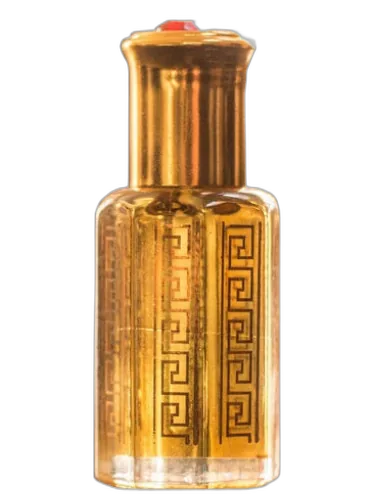
Lotus Cosmetics London
Nectarine & Jasmine Lotus Cosmetics London
Shared top notes: bergamot, cassis
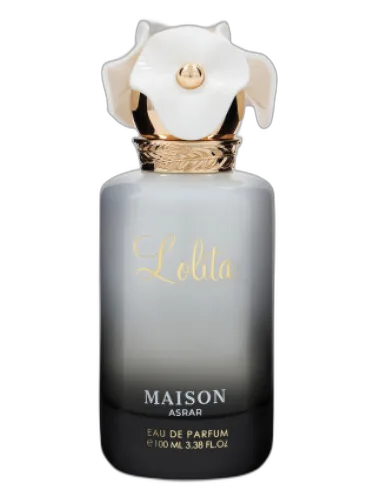
MAISON ASRAR
Lolita Maison Asrar
Shared heart notes: jasmine, peach

Gulf Orchid
Reflection Gulf Orchid
Shared top notes: bergamot

Cupid Perfumes
Cupid No.1 Parfum Cupid Perfumes
Shared top notes: bergamot, cassis, pineapple