


Anubis Redwood Alchemy
At a glance
Is Anubis Redwood Alchemy worth trying?
Anubis by Redwood Alchemy is a fragrance for women and men.
- Best match
- Evening wear in Fall
- Performance feel
- Very Good longevity with Strong sillage
- Signature profile
- amber, woody, warm spicy with Conifer, Lavender, Papyrus
The first impression
Anubis by Redwood Alchemy is a fragrance for women and men. Anubis was launched in 2021. Top notes are Conifer and Lavender; middle notes are Papyrus, Salt and Rose; base notes are Olibanum, Myrrh, Copal and Cinnamon.
What shapes the scent
The perfumer behind it

Redwood Alchemy
Redwood Alchemy is a perfumer known for crafting mystical and atmospheric fragrances. Scents like Anubis Redwood Alchemy and Lanterne Lucidium Redwood Alchemy explore dark, enigmatic themes with a focus on depth and intrigue. Their compositions often evoke a sense of wonder and introspection. Their work blends artistry with a touch of the surreal.
Notes pyramid
Top Notes
First impression · 15-30 min
 Conifer
 Lavender
Heart Notes
Core character · 2-4 hours
 Papyrus
 Salt
Salt
 Rose
Rose
Base Notes
Lasting impression · 4+ hours
 Olibanum
 Myrrh
Myrrh
 Copal
Copal
 Cinnamon
The mood it creates
The Sage Archetype: Portrait of Anubis Redwood Alchemy
Essence
Archetype: The Sage
The person who gravitates toward Anubis Redwood Alchemy is a seeker of hidden truths, drawn to the scent’s deep, resinous mystery-a fusion of sacred woods, incense, and dark spices. They embody the Sage, the archetype of wisdom, introspection, and relentless curiosity. Like the ancient Egyptian deity Anubis, who guided souls through the underworld, this individual is drawn to the liminal spaces between knowledge and the unknown. Their mind is a labyrinth of ideas, and their presence carries the weight of quiet authority.
Style & Aesthetic
Their aesthetic mirrors their inner world: structured yet enigmatic, refined but never ostentatious. They favor dark, earthy tones-charcoal, deep greens, burnt umbers-with textures that suggest age and endurance: well-worn leather, raw linen, rough-hewn wood. Their clothing is deliberate, never accidental, but avoids the sterility of minimalism. There is always a hint of something archaic-a signet ring, an antique pocket watch, a scarf dyed in indigo-as if they carry fragments of history with them.
Their living space is a sanctuary of controlled chaos: books stacked in precarious towers, a desk cluttered with handwritten notes, a single candle burning beside a statuette of some forgotten deity. They do not seek order for its own sake; instead, they cultivate an environment where thought can wander freely.
Their days are structured around rituals of thought and solitude. Mornings might begin with black coffee and an hour of reading, evenings with journaling or long walks under dim streetlights. They are drawn to places of quiet power-libraries, old forests, abandoned ruins-where the past whispers to those who listen.
They may practice meditation, but not for relaxation-rather, as a means of sharpening perception. They write, not for an audience, but to untangle the knots in their own mind. Work is meaningful only if it aligns with their values; they would sooner abandon security than submit to a life of empty routine.
Philosophy & Values
Their philosophy is one of measured skepticism and profound reverence for depth. They distrust superficiality, preferring the slow burn of contemplation over hasty conclusions. Truth is not something to be handed to them-it must be excavated, examined under the harsh light of reason, and then held with cautious respect. They value independence of thought, often resisting dogma in favor of personal inquiry.
Yet, their pursuit of wisdom is not cold or detached. There is an almost spiritual dimension to their curiosity-a belief that knowledge, when properly understood, carries a moral weight. They are drawn to esoteric traditions, philosophy, and the sciences, not for prestige but because these disciplines offer keys to the unseen structures of reality.
Relationships
They are selective in their connections, valuing depth over breadth. Their friendships are rare but enduring, built on mutual respect for intellect and authenticity. They do not suffer fools gladly, yet they are not cruel-merely impatient with those who refuse to think beyond the surface.
In love, they are intense but restrained, drawn to partners who can match their intellectual fervor without demanding emotional theatrics. They are not cold, but their affection is expressed in subtle gestures-a carefully chosen book, a shared silence at dawn, a knowing glance that carries volumes. Their relationships thrive on mutual growth, but they may struggle with vulnerability, preferring the safety of the mind over the unpredictability of the heart.
Shadow
Yet, the Sage’s greatest strength is also their flaw: their self-sufficiency can become isolation. Their distrust of easy answers may harden into cynicism, their love of solitude into alienation. They may dismiss emotions as irrational, forgetting that wisdom without humanity is a hollow artifact.
At their worst, they become the recluse, hoarding knowledge like a dragon guarding gold, refusing to engage with a world they deem unworthy. Their sharp intellect can turn inward, dissecting their own worth until nothing remains but doubt.
Conclusion
The true Sage knows that wisdom is not merely accumulation-it is integration. They must learn to step out of the library, to let their knowledge breathe in the open air. When they do, they become not just thinkers but guides, helping others navigate the dark forests of uncertainty.
Their fragrance, Anubis Redwood Alchemy, is more than a scent-it is a symbol of their journey: the meeting of shadow and light, the sacred and the earthly, the known and the eternally mysterious. And in that balance, they find their purpose.
If you like this, try these
Fragrances with a comparable profile - shared accords, notes, and character.

Odetu
Gray Beard Odetu
Shared top notes: lavender
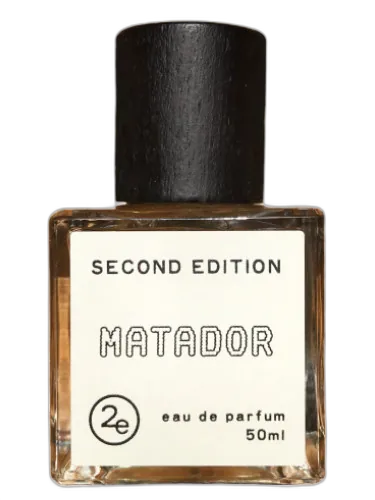
Second Edition Olfactive
Matador Second Edition Olfactive
Shared top notes: lavender
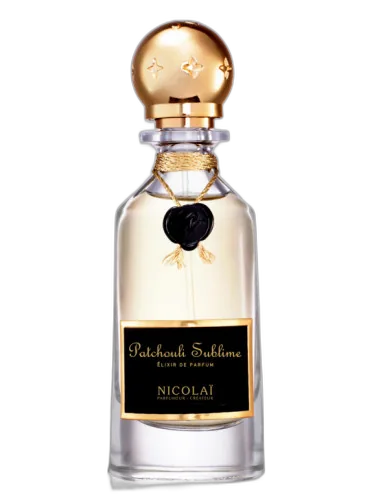
Nicolai Parfumeur Createur
Patchouli Sublime Nicolai Parfumeur Createur
Shared top notes: lavender

Sergio Scaglietti
Racing Green Sergio Scaglietti
Shared top notes: lavender

Bond No 9
My New York Bond No 9
Shared heart notes: papyrus, rose