
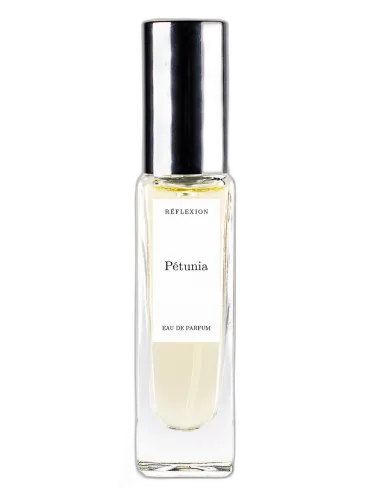

Pétunia Reflexion
Fragrance Story
Pétunia by Reflexion is a Floral fragrance for women. Pétunia was launched in 2021. The nose behind this fragrance is Eugene Firsanov.
Composition Profile
About the Perfumer

Eugene Firsanov
Eugene Firsanov is a perfumer whose work appears under Holynose Parfums, Ladanika, and Reflexion. He created scents such as Bulvar, Pesok, Volnenie, Zarevo, Apples Of Youth, Black Eyes, Moscow Waltz, and 80. His compositions often reflect Russian cultural themes and a modern approach to classic structures.
Fragrance Notes
All Notes
Complete scent profile
 Petunia
 Musk
Musk
 White Tobacco
Pétunia Reflexion by Reflexion offers a distinctive olfactory experience that stands out from other fragrances in its category.
Crafted with the finest ingredients and a blend of traditional and modern perfumery techniques, this fragrance represents the pinnacle of the perfumer's art.
Pétunia Reflexion embodies the distinctive style of Reflexion while adding a unique chapter to their fragrance portfolio.
Character Profile
The Sage Archetype: Portrait of Pétunia Reflexion
Essence
The person who cherishes Pétunia Reflexion is, at their core, a Sage-an archetype defined by wisdom, introspection, and an unquenchable thirst for understanding. This fragrance, with its delicate yet complex floralcy, mirrors their inner world: subtle but profound, elegant but never ostentatious. They are drawn to scents that evoke refinement rather than dominance, preferring whispers of meaning over declarations of presence.
Like the Sage, they are a seeker of truth, but not in the rigid, dogmatic sense. Their wisdom is fluid, shaped by curiosity and an appreciation for nuance. They do not merely consume knowledge; they distill it, turning raw information into insight. Yet, as with all archetypes, the Sage has its shadow-a tendency toward over-intellectualization, detachment, and even a quiet arrogance in believing they see what others cannot.
Style & Aesthetic
Their tastes are deliberate, never accidental. They favor minimalist design-clean lines, muted colors, spaces that breathe rather than suffocate. Their wardrobe is understated but meticulously curated, each piece chosen for its texture, fit, and quiet statement. They might wear a perfectly tailored linen shirt, not to impress, but because it feels like an extension of their own skin.
Philosophy is not an abstract exercise for them; it is the lens through which they experience life. They are drawn to thinkers like Nietzsche, Camus, or Jung-not as idols, but as interlocutors in an endless dialogue. They do not seek answers so much as they savor the act of questioning. Their values are rooted in authenticity, intellectual honesty, and the belief that beauty is found in the interplay of light and shadow.
Relationships
They do not collect friends; they cultivate them. Their relationships are few but intense, built on shared curiosity and mutual respect. Small talk exhausts them, but a conversation that meanders through art, psychology, or the absurdities of existence will hold them rapt for hours. Romantic partners must be their equals-not in knowledge, but in depth. They are drawn to those who challenge them, who refuse to let them retreat entirely into their own mind.
Yet, their shadow lurks here too. Their preference for depth can become exclusionary, dismissing those who do not meet their intellectual standards. They may unintentionally alienate others with their quiet scrutiny, their habit of dissecting emotions rather than simply feeling them. Love, for them, is both a sanctuary and a puzzle to be solved-sometimes to its detriment.
Shadow
Their greatest strength-their mind-can also be their prison. When overwhelmed, they withdraw into thought, analyzing rather than engaging. Emotions, especially messy ones, are often sublimated into philosophy or art, a defense against vulnerability. There is a quiet arrogance in believing that understanding something is the same as mastering it-a fallacy that can leave them isolated in their own brilliance.
They may also struggle with decisiveness, caught in endless contemplation. Life is not a problem to be solved, but they sometimes treat it as one, missing the forest for the meticulously examined trees.
Conclusion
The Sage who loves Pétunia Reflexion is neither purely cerebral nor purely sensual-they exist in the tension between the two. They understand that wisdom is not just knowing, but feeling; not just thinking, but being. Their challenge is to step out of their mind and into the world, to let life touch them as deeply as their thoughts do.
When they succeed, they are luminous-a rare blend of insight and presence, a person who sees deeply and lives fully. When they falter, they become a spectator in their own life, watching rather than participating. But even then, there is beauty in their solitude, for even shadows are cast by light.
Similar Fragrances
Fragrances with a comparable profile - shared accords, notes, and character.
Reflexion
Pétunia Reflexion
Shared accords: floral, musky, powdery
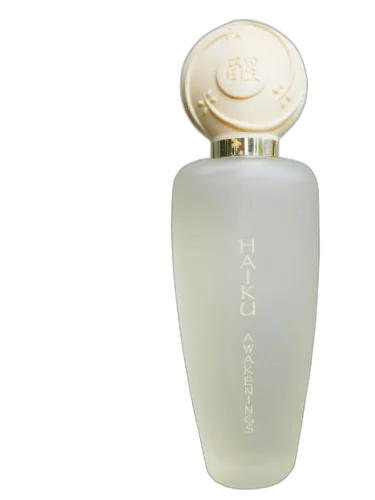
Avon
Haiku Awakenings Avon
Shared accords: floral, musky, powdery

Massimo Dutti
Bright Jasmine Massimo Dutti
Shared accords: floral, musky, powdery

Fueguia 1833
El Otro Tigre Fueguia 1833
Shared accords: floral, musky, powdery

Montale
Roses Musk Montale
Shared accords: floral, musky, powdery