
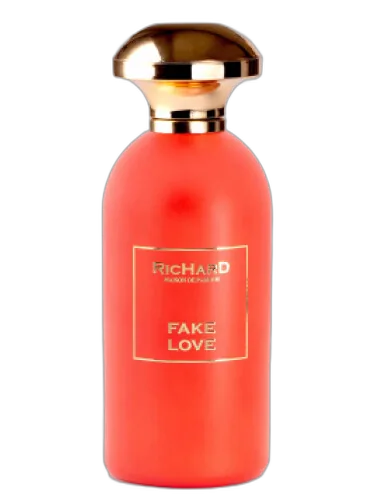
Fake Love Richard
At a glance
Is Fake Love Richard worth trying?
Fake Love by Richard is a Floral Fruity fragrance for women.
- Best match
- Evening wear in Spring
- Performance feel
- Good longevity with Moderate sillage
- Signature profile
- fruity, sweet, ozonic with Peach, Melon, Pineapple
The first impression
Fake Love by Richard is a Floral Fruity fragrance for women. This is a new fragrance. Fake Love was launched in 2024. Top notes are Peach, Melon, Pineapple and Black currant leaf; middle notes are Raspberry, Bulgarian Rose, Jasmine and White Flowers; base notes are Amber, Musk, Vanilla and Cedar.
What shapes the scent
The perfumer behind it

Richard
Richard is a perfumer known for his bold and expressive fragrances. His creations, such as Fake Love Richard, Red Square Richard, and Women Richard, showcase a flair for drama and intensity. He often blends contrasting notes to create scents that are both provocative and memorable. His work reflects a fearless approach to perfumery.
Notes pyramid
Top Notes
First impression · 15-30 min
 Peach
Peach
 Melon
Melon
 Pineapple
 Black currant leaf
Heart Notes
Core character · 2-4 hours
 Raspberry
 Bulgarian Rose
 Jasmine
 White Flowers
Base Notes
Lasting impression · 4+ hours
 Amber
Amber
 Musk
Musk
 Vanilla
 Cedar
Cedar
The mood it creates
The Lover Archetype: Portrait of Fake Love Richard
Essence
The Archetype: The Lover
The person who adores Fake Love Richard is most closely aligned with the Lover archetype-a figure who pursues beauty, pleasure, and connection with an almost devotional intensity. This archetype thrives on sensory experience, seeking to immerse themselves in the intoxicating dance of life. Yet, like all archetypes, the Lover has a shadow-one that risks indulgence, superficiality, and an avoidance of deeper truths.
Shadow
The Lover’s greatest weakness is their avoidance of discomfort. They retreat from conflict, preferring to smooth things over with charm or simply walk away. Their pursuit of beauty can become an escape-a refusal to engage with life’s harsher textures. At their worst, they may manipulate emotions without realizing it, treating people as instruments in their symphony of experience.
Yet, their strength lies in their ability to awaken desire-not just romantic, but a hunger for life itself. They remind others that existence is not merely to be endured but to be savored. When they embrace depth alongside dazzle, they become not just seducers but true connoisseurs of the human soul.
Conclusion
They are not naive; they know love can be counterfeit, that beauty is often a construct. But they choose to believe in it anyway, because the alternative-a world without poetry, without the thrill of the game-is too bleak to bear. Their flaw is their refusal to see the cracks; their gift is making even the cracks shimmer.
In the end, they are neither wholly sincere nor wholly false. They are the fragrance they wear-a masterful illusion, intoxicating precisely because it dares to be unreal. And perhaps, in that artifice, there is a deeper truth: that sometimes, the most authentic thing we can do is play our role with passion.
If you like this, try these
Fragrances with a comparable profile - shared accords, notes, and character.
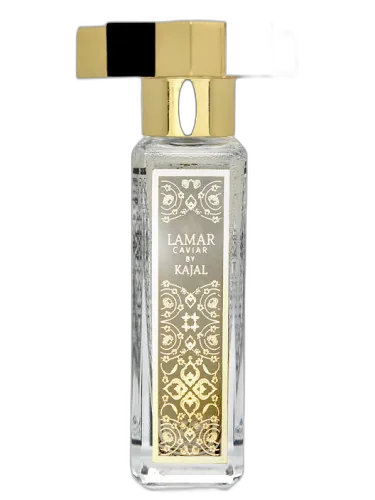
Kajal
Lamar Caviar Kajal
Shared top notes: pineapple
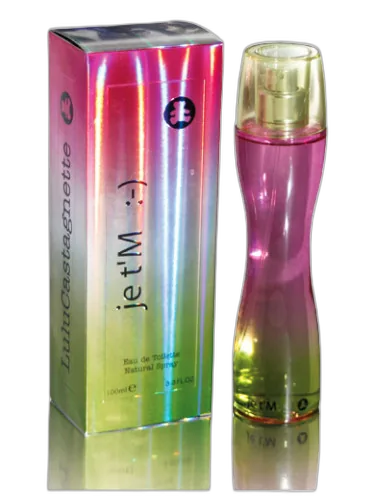
Lulu Castagnette
Je T'm :-) Lulu Castagnette
Shared top notes: peach

KKW Fragrance
Kimoji Vibes Kkw Fragrance
Shared top notes: melon, pineapple
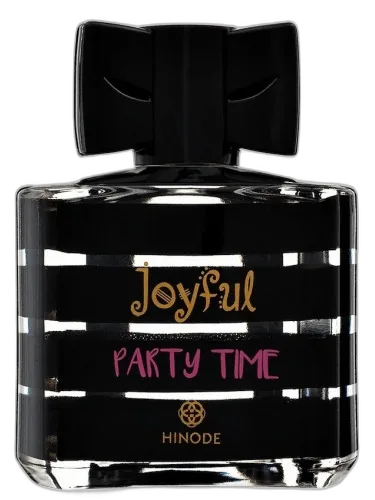
Hinode
Joyful Party Time Hinode
Shared heart notes: jasmine
Tous
Tous Gems Party Tous
Shared top notes: peach, pineapple