
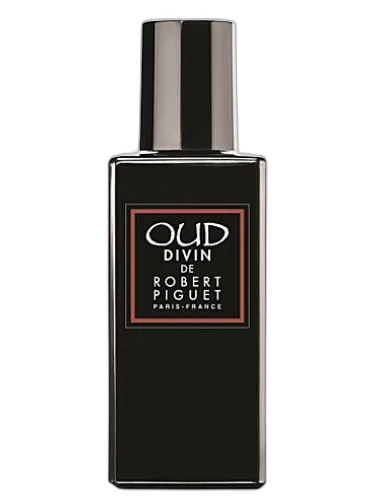
Oud Divin Robert Piguet
At a glance
Is Oud Divin Robert Piguet worth trying?
Oud Divin by Robert Piguet is a Oriental Woody fragrance for women and men.
- Best match
- Evening, Special Occasion wear in Fall, Winter
- Performance feel
- Very Good longevity with Strong sillage
- Signature profile
- warm spicy, coffee, woody with Coffee, Agarwood (Oud), Resins
The first impression
Oud Divin by Robert Piguet is a Oriental Woody fragrance for women and men. Oud Divin was launched in 2015. The nose behind this fragrance is Aurélien Guichard. Top notes are Coffee, Agarwood (Oud) and Resins; middle note is Tonka Bean; base notes are Patchouli and Haitian Vetiver.
What shapes the scent
The perfumer behind it

Aurélien Guichard
Aurélien Guichard is a French perfumer and the creative director of Givaudan's prestigious Fragrance Division, known for his deep expertise in natural ingredients. His style balances modern minimalism with rich, textured accords, often highlighting woody, aromatic, or green notes with unexpected contrasts. He created the iconic Bond No 9 Chinatown, a bold floral gourmand, and the crisp, verdant Azzaro Aqua Verde, demonstrating his range from opulent to fresh. Guichard's work has helped define contemporary luxury perfumery through its refined yet accessible character.
Notes pyramid
Top Notes
First impression · 15-30 min
 Coffee
 Agarwood (Oud)
 Resins
Heart Notes
Core character · 2-4 hours
 Tonka Bean
Base Notes
Lasting impression · 4+ hours
 Patchouli
 Haitian Vetiver
The mood it creates
The Sage Archetype: Portrait of Oud Divin Robert Piguet
Essence
Oud Divin by Robert Piguet is a scent of paradox-opulent yet restrained, ancient yet modern, spiritual yet sensual. Its smoky, resinous oud is softened by creamy vanilla and brightened by saffron, creating a fragrance that is both meditative and magnetic. The person who chooses this scent is drawn to depth, complexity, and the interplay of shadow and light-not just in fragrance, but in life itself.
This individual is most closely aligned with the Sage archetype-the seeker of wisdom, the interpreter of hidden truths. Like the oud at the heart of their chosen perfume, they value substance over superficiality, knowledge over noise. They are not merely intelligent; they are contemplative, drawn to the mysteries of existence, whether through philosophy, art, or the quiet observation of human nature.
Yet, the Sage is not without shadows. Their pursuit of understanding can become a retreat from the messiness of life, their love of wisdom a shield against vulnerability. They may mistake detachment for enlightenment, and their sharp intellect can, at times, cut too deeply.
Style & Aesthetic
Their taste is refined but never ostentatious. They favor timeless materials-cashmere, aged leather, dark woods-and prefer muted, earthy tones that suggest restraint rather than austerity. Their home is a sanctuary of books, carefully chosen art, and objects that carry history: an antique compass, a well-worn Persian rug, a vial of ink.
They appreciate craftsmanship, but not for status-for the quiet integrity of things made with care. Yet, their disdain for trends can harden into elitism. They may scoff at what they deem "common" tastes, forgetting that beauty exists in many forms.
They rise early, savoring the silence of dawn with black coffee and a book. Their work, whether in academia, the arts, or a solitary profession like writing or consulting, allows them to think deeply. They travel not for escapism but for immersion-seeking places where history lingers in the stones, where the air carries the weight of centuries.
Yet, their contemplative nature can drift into inertia. They may overanalyze decisions, paralyzed by the fear of choosing wrongly. Their shadow is the risk of becoming a spectator in their own life, watching the world from a distance rather than engaging with its imperfections.
Philosophy & Values
Their worldview is shaped by a belief in the unseen-the layers beneath appearances. They are not religious in a conventional sense, but they are deeply spiritual, finding meaning in symbols, patterns, and the wisdom of ancient traditions. Stoicism appeals to them, not as a denial of emotion, but as a discipline of mind. They value authenticity above all, despising pretension and empty rhetoric.
Yet, their reverence for truth can make them impatient with those who think differently. They may dismiss emotions as irrational or see compromise as weakness. Their shadow emerges when wisdom becomes dogma, when their love of depth turns into disdain for simplicity.
Relationships
They do not seek many companions, but the ones they keep are bound by intellectual kinship. Their friendships are built on shared curiosity-long conversations over whiskey, debates that stretch into the night. Romance, for them, must be both passionate and profound; they are drawn to partners who challenge them, who refuse to be mere admirers.
Yet, their love of solitude can become isolation. They may withdraw when emotions grow too raw, rationalizing detachment as wisdom. Their shadow is a reluctance to surrender to love’s chaos, to admit that even the wisest mind cannot fully understand the heart.
Shadow
At their best, they are guides-those who illuminate paths others might miss. Their wisdom is not cold but compassionate, their insights not condescending but clarifying. They remind others that life is richer when examined, that meaning is found in the questions as much as the answers.
But when unbalanced, they become the recluse, the critic who sees flaws everywhere but offers no warmth. Their love of depth can turn into a fear of the surface, their reverence for the past into a refusal to embrace the present.
The one who wears Oud Divin is neither saint nor cynic-they are a thinker, a seeker, a soul drawn to the sacred and the sensual in equal measure. Their challenge is not to forsake wisdom for passion, but to let the two entwine-to remember that even the deepest truths must sometimes be felt, not just understood.
If you like this, try these
Fragrances with a comparable profile - shared accords, notes, and character.
Ramón Béjar
Wild Oud Ramón Béjar
Shared heart notes: tonka bean
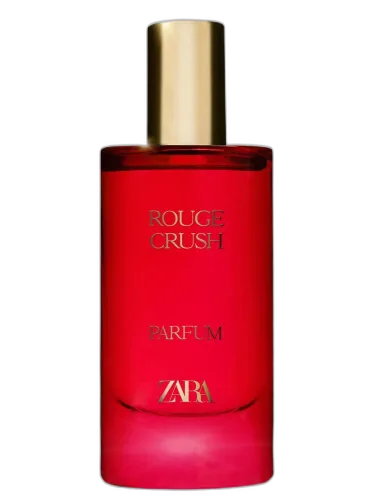
Zara
Rouge Crush Zara
Shared heart notes: tonka bean
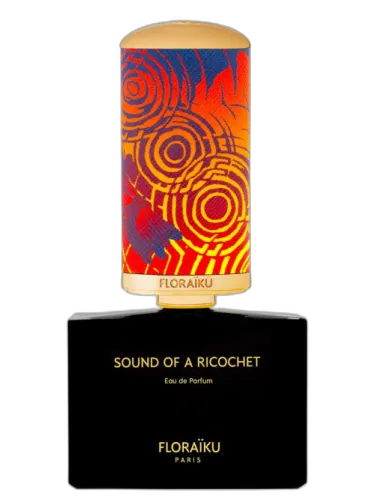
Floraïku
Sound Of A Ricochet Floraïku
Shared heart notes: tonka bean
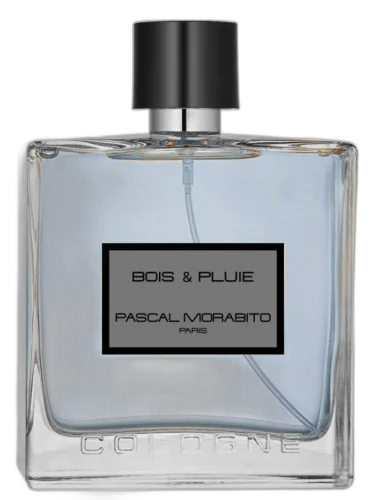
Pascal Morabito
Bois & Pluie Pascal Morabito
Shared top notes: coffee
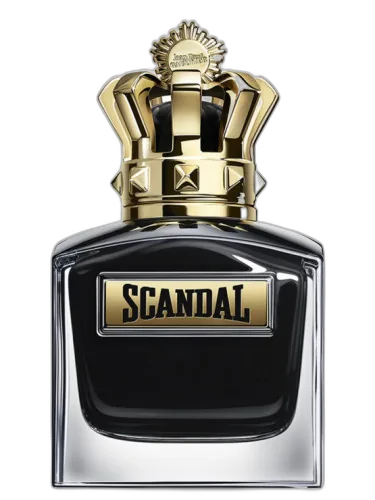
Jean Paul Gaultier
Scandal Pour Homme Le Parfum Jean Paul Gaultier
Shared heart notes: tonka bean