


Yesterday Room 1015
At a glance
Is Yesterday Room 1015 worth trying?
Yesterday by Room 1015 is a Citrus Aromatic fragrance for women and men.
- Best match
- Evening wear in Fall
- Performance feel
- Good longevity with Moderate sillage
- Signature profile
- aromatic, fresh spicy, herbal with Thyme, Cardamom, Bergamot
The first impression
Yesterday by Room 1015 is a Citrus Aromatic fragrance for women and men. Yesterday was launched in 2017. Yesterday was created by Amelie Bourgeois and Anne-Sophie Behaghel. Top notes are Thyme, Cardamom, Bergamot, Orange and Basil; middle notes are Geranium, Lavender, Artemisia and Caraway; base notes are Vetiver, Sandalwood, White Musk, Amberwood and Tonka Bean.
What shapes the scent
The perfumer behind it

Amelie Bourgeois
Amelie Bourgeois is a French perfumer known for her work with the niche houses Aether and Alexandre.J. Her style blends experimental, synthetic accords with natural elements, often exploring contrasts like citrus and musk or rose and alkanes. She created the Aether Oxyde and Carboneum compositions, as well as Alexandre.J’s Mandarine Sultane and Passion Bliss.
Notes pyramid
Top Notes
First impression · 15-30 min
 Thyme
Thyme
 Cardamom
 Bergamot
 Orange
 Basil
Basil
Heart Notes
Core character · 2-4 hours
 Geranium
 Lavender
 Artemisia
 Caraway
Base Notes
Lasting impression · 4+ hours
 Vetiver
 Sandalwood
White Musk
Sandalwood
White Musk
 Amberwood
 Tonka Bean
The mood it creates
The Archetype Archetype: Portrait of Yesterday Room 1015
Essence
This person is most closely aligned with the Wanderer archetype-a soul in perpetual motion, drawn to the liminal spaces between past and present, nostalgia and reinvention. The Wanderer does not settle; they move through life as if it were a series of rooms, each one containing fragments of memory, yet none fully claimed as home. Yesterday, with its melancholic blend of citrus, spice, and woody warmth, is their olfactory companion-a scent that evokes fleeting moments, half-remembered conversations, and the bittersweet beauty of impermanence.
Style & Aesthetic
Their aesthetic is a paradox: deliberately unfinished. They favor vintage leather jackets with frayed edges, well-worn books with dog-eared pages, and faded Polaroids pinned haphazardly to walls. Their home is an eclectic mix of found objects-a Moroccan rug, a mid-century lamp, a stack of old vinyl records-each piece a relic of a moment they once inhabited.
They drink black coffee in dimly lit cafés, preferring the bitter clarity of it. Their music taste leans toward the introspective-Nick Drake, Leonard Cohen, or the raw melancholy of Mazzy Star. They are drawn to films and literature that explore time, memory, and the fragility of human connection-Before Sunrise, The Unbearable Lightness of Being, the writings of Borges.
They are the kind of person who leaves an impression without ever fully revealing themselves. Friends describe them as warm but distant, someone who listens intently but rarely shares their own depths. Their romantic relationships are intense but transient-they love deeply, yet always with an unspoken exit strategy.
Professionally, they thrive in roles that allow movement and reinvention-freelance writing, photography, music, or travel journalism. A 9-to-5 existence would suffocate them; they need the unpredictability of open roads and last-minute decisions.
Philosophy & Values
For them, life is an experiment in self-creation. They do not believe in fixed identities, only in the fluidity of experience. Their philosophy is one of radical acceptance-not in the passive sense, but as an active engagement with the ephemeral. They cherish the past without clinging to it, understanding that nostalgia is not a prison but a lens through which to view the present.
They reject dogma, whether in love, work, or belief. Their morality is intuitive rather than rigid, shaped by empathy rather than rules. Yet, this very flexibility can make them seem elusive-even to themselves. They value freedom above all, sometimes at the cost of deeper commitments.
Shadow
Beneath their free-spirited exterior lies a reluctance to face stagnation-or worse, the fear of being truly known. Their strength is their adaptability, but their weakness is their refusal to plant roots. They mistake transience for enlightenment, avoiding the hard work of lasting intimacy.
At their worst, they can become detached to the point of coldness, romanticizing solitude to justify emotional withdrawal. Their nostalgia, once a source of richness, can turn into a prison-an endless loop of "what ifs" that prevents them from fully inhabiting the present.
The Wanderer is neither hero nor villain-they are a seeker, always in flux. Their love of Yesterday is not mere sentimentality, but a recognition that all moments are temporary, and that beauty lies in their passing. They must learn that freedom does not always mean leaving; sometimes, it means staying long enough to be changed.
They are a living contradiction-a soul who wears the past lightly, yet carries it everywhere. And in that tension, they find their truth.
If you like this, try these
Fragrances with a comparable profile - shared accords, notes, and character.

Yves Saint Laurent
La Nuit De L'homme Bleu Électrique Yves Saint Laurent
Shared top notes: bergamot, cardamom
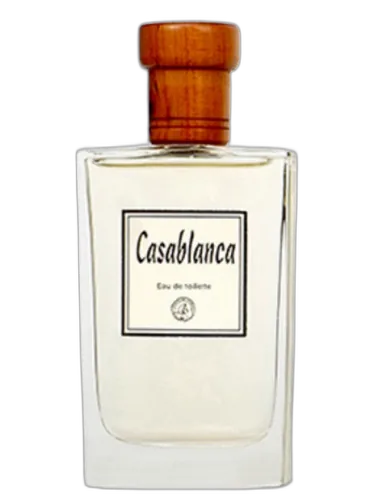
Les Parfums du Soleil
Casablanca Les Parfums Du Soleil
Shared top notes: bergamot, thyme

Jequiti
Aire Movimento Jequiti
Shared top notes: bergamot, cardamom

Jequiti
Sport Jequiti
Shared top notes: bergamot

Side Story
4pm Matinée Side Story
Shared top notes: bergamot, cardamom, thyme