
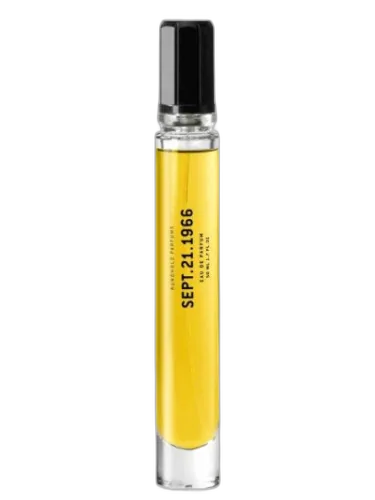

Sept.21.1966 Rundholz
Fragrance Story
SEPT.21.1966 by Rundholz is a Aromatic Green fragrance for women and men. The nose behind this fragrance is Arturetto Landi. Top notes are Rhubarb, Mate and Pink Pepper; middle notes are Heliotrope and Magnolia; base notes are Incense and Agarwood (Oud).
Composition Profile
About the Perfumer

Arturetto Landi
Arturetto Landi is an Italian perfumer known for his work with brands like Adjiumi and Al-Jazeera Perfumes. His style balances classic structure with bold contrasts, often blending rich resins with unexpected floral or gourmand notes. Notable creations include the complex 1918 Parfum National series and the intense, darkly sweet Adjiumi Incubo.
Fragrance Notes
Top Notes
First impression · 15-30 min
 Rhubarb
 Mate
Mate
 Pink Pepper
Heart Notes
Core character · 2-4 hours
 Heliotrope
 Magnolia
Base Notes
Lasting impression · 4+ hours
 Incense
.jpg) Agarwood (Oud)
Agarwood (Oud)
Character Profile
The Archetype Archetype: Portrait of Sept.21.1966 Rundholz
Essence
This person is, above all, a seeker of truth-not in the abstract, but in the tangible, the sensory, the lived experience. The fragrance they choose, Sept.21.1966, is not merely a scent but a statement: a blend of smoky woods, warm spices, and a quiet, almost melancholic depth. It is not loud, nor does it beg for attention. It lingers, like a half-remembered dream, inviting interpretation but never fully revealing itself.
The Sage is their ruling archetype-the one who values wisdom, introspection, and the slow accumulation of knowledge. They are not a scholar in the traditional sense, but rather a philosopher of the everyday, finding meaning in textures, in conversations, in the way light falls on an old book. They do not rush to conclusions; they observe, they absorb, they refine.
Philosophy & Values
They move through the world with a quiet intensity, drawn to places where history and modernity intersect-old libraries, dimly lit cafés, cities where the past is not erased but layered beneath the present. Their tastes are deliberate: they prefer well-worn leather, unpolished silver, fabrics that age with grace. Their home is not minimalist, nor cluttered, but curated-each object chosen for its resonance, its story.
Philosophically, they reject dogma but embrace paradox. They understand that truth is rarely singular, that contradictions often hold the deepest insights. They are drawn to thinkers like Nietzsche and Jung, not because they agree with them entirely, but because they appreciate the tension in their ideas-the way they wrestle with ambiguity rather than fleeing from it.
Relationships
They are not a recluse, but neither are they a socialite. Their relationships are few but profound, built on mutual respect for depth rather than convenience. They attract those who are similarly introspective-artists, writers, musicians, those who see the world through a lens of metaphor. Their love, when given, is steady but never possessive; they understand that people, like ideas, must remain free to evolve.
Yet, there is a distance to them, a reluctance to fully merge with another. They guard their inner world carefully, sometimes to the point of isolation. This is not out of coldness, but out of a fear of losing themselves in the expectations of others.
Shadow
The Sage’s greatest strength-their depth of thought-can also become their prison. When unbalanced, they retreat too far into their own mind, mistaking solitude for wisdom and detachment for objectivity. They may grow overly critical, seeing flaws where others see life, dissecting emotions until they lose their vitality.
There is also a subtle arrogance in their shadow-a belief that because they see more, they know more. They may dismiss those who live more spontaneously, forgetting that wisdom without warmth is merely cleverness in disguise.
Conclusion
Sept.21.1966 mirrors them perfectly: it is complex without being chaotic, warm but never sweet, nostalgic but not sentimental. Like them, it does not shout; it suggests. It is a scent for someone who understands that beauty is often found in the spaces between-the pause in a conversation, the fading light of autumn, the quiet certainty of a well-worn truth.
They are not perfect, nor do they seek to be. Their flaws are the price of their depth. But in their best moments, they embody the Sage’s highest ideal: not just to know, but to understand-and in understanding, to live with both clarity and grace.
Similar Fragrances
Fragrances with a comparable profile - shared accords, notes, and character.
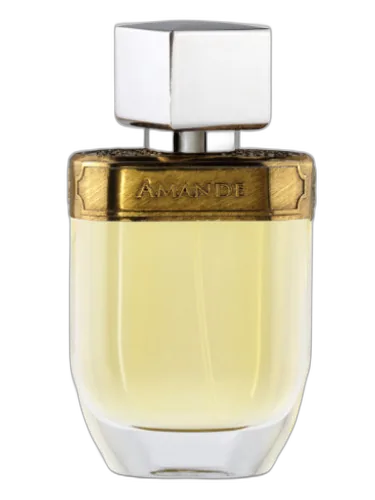
Aulentissima
Amande Aulentissima
Shared accords: almond, amber, floral
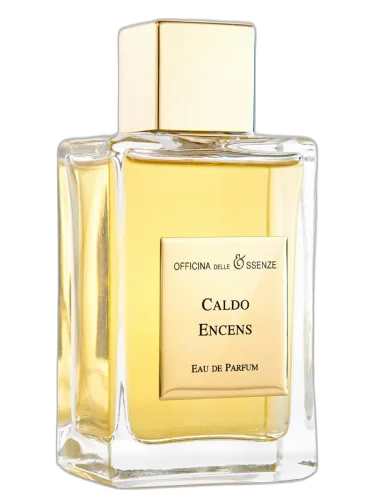
Officina delle Essenze
Caldo Encens Officina Delle Essenze
Shared accords: almond, amber, aromatic

Daniela Katzenberger
Daniela Katzenberger Eau De Toilette Daniela Katzenberger
Shared accords: amber, aromatic, floral

Bastille Parfums
Un Deux Trois Soleil Bastille Parfums
Shared accords: almond, amber, floral
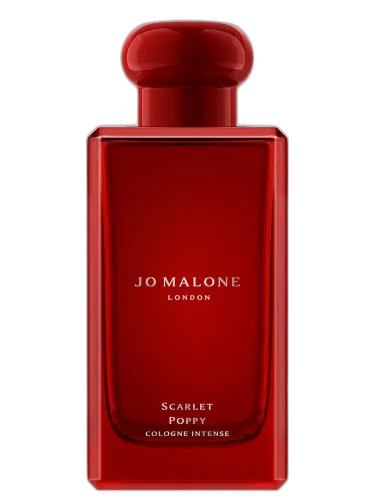
Jo Malone London
Scarlet Poppy Intense Jo Malone London
Shared accords: almond, amber, aromatic