
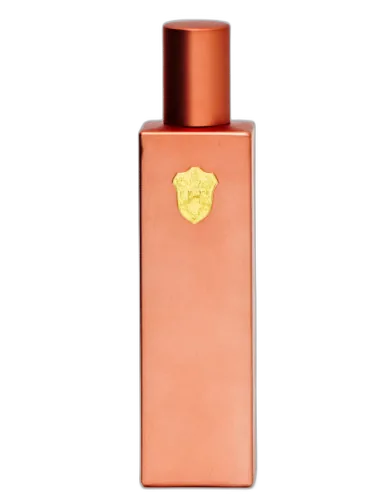
Bel Epoq Régime Des Fleurs
Fragrance Story
Bel Epoq by Régime des Fleurs is a Floral fragrance for women and men. Bel Epoq was launched in 2014. Bel Epoq was created by Ezra Woods and Alia Raza.
Composition Profile
About the Perfumer

Alia Raza
Alia Raza is a perfumer and co-founder of the New York-based niche fragrance house Régime des Fleurs. Her olfactory style is known for blending natural and synthetic notes to create evocative, often floral-forward compositions with a modern edge. Notable creations from the brand include Bel Epoq, Blood Spider Orchids, and Chloë Sevigny Little Flower, each reflecting her ability to capture mood and memory through scent.
Fragrance Notes
All Notes
Complete scent profile
 Jasmine Sambac
Herbal Notes
Tahitian Tiare Flower
Jasmine Sambac
Herbal Notes
Tahitian Tiare Flower
 Stephanotis
 Musk
Musk
 Amber
Amber
 Powdery Notes
Bel Epoq Régime Des Fleurs by Régime des Fleurs offers a distinctive olfactory experience that stands out from other fragrances in its category.
Crafted with the finest ingredients and a blend of traditional and modern perfumery techniques, this fragrance represents the pinnacle of the perfumer's art.
Bel Epoq Régime Des Fleurs embodies the distinctive style of Régime des Fleurs while adding a unique chapter to their fragrance portfolio.
Character Profile
The Enchantress Archetype: Portrait of Bel Epoq Régime Des Fleurs
Essence
To wear Bel Epoq Régime Des Fleurs is to embrace the paradox of permanence and transience-a fragrance that blooms with the richness of flowers yet lingers like an elusive memory. The person who adores this scent is not merely drawn to its olfactory beauty but is, in essence, an embodiment of The Enchantress archetype-a figure who weaves reality and fantasy into an intoxicating tapestry.
Style & Aesthetic
Her surroundings are an extension of her essence-carefully composed but never sterile. She favors interiors that feel like forgotten gardens: velvet drapes in deep emerald, antique mirrors tarnished just enough to distort reflections intriguingly, and fresh flowers that she replaces with ritualistic devotion. Her wardrobe is an archive of textures-silks that whisper, wools that embrace, and linens that breathe. She does not follow trends; she distills them into something timeless.
Art is not merely decoration to her but a dialogue. She is drawn to the Pre-Raphaelites for their mythic romanticism, to surrealists for their dream logic, and to Japanese wabi-sabi for its reverence of imperfection. Music is equally deliberate-Debussy for its fluidity, Nico for its melancholy, and perhaps a hidden love for some decadent pop diva whose excess she secretly admires.
Her days are structured yet fluid. Mornings might begin with tea in a porcelain cup so thin it feels like holding light, followed by hours lost in a book or sketching in a journal. She works in creative fields-perhaps as a perfumer, a stylist, a writer-or in a more conventional role that she has infused with her own mythology.
Travel is pilgrimage. She does not seek landmarks but sensations-the scent of jasmine in Marrakech at dusk, the weight of humid air in a Kyoto summer. Even in mundanity, she finds ceremony.
Philosophy & Values
She believes in beauty as a moral force-not in the shallow sense of symmetry, but in the deeper alchemy of harmony. To her, aesthetics are ethics. A well-lived life is one composed with intention, where even suffering must be transmuted into something meaningful. She is not naive; she knows the world is brutal, but she refuses to let that dictate her inner landscape.
Her spirituality is eclectic-borrowing from tarot, Jungian psychology, and perhaps a touch of pagan animism. She does not worship gods but archetypes, seeing herself as both priestess and supplicant in the temple of her own making.
Relationships
She loves deeply but selectively. Her friendships are coven-like-small, intense, and bound by unspoken understanding. Romantic partners are drawn to her like moths to a flame, but few can withstand the heat of her expectations. She does not seek to possess or be possessed; love, to her, is an act of mutual revelation.
Yet here lies the shadow: her enchantment can become a cage. She may grow frustrated when others fail to perceive the depth she sees in them, withdrawing into disillusionment. At her worst, she may manipulate moods and atmospheres to maintain control, not out of malice but fear-the fear that without her curation, the magic will dissolve.
Shadow
For all her grace, she is not immune to fragility. Her greatest strength-her ability to shape perception-can become her downfall. When reality refuses to bend to her vision, she may retreat into fantasy, losing herself in daydreams or nostalgia. There is a danger, too, in her self-mythologizing; she may begin to believe her own illusions, mistaking persona for essence.
Her relationships may suffer from her reluctance to show the unvarnished self. Vulnerability is her greatest challenge-the fear that if the enchantment fades, so will the love.
Conclusion
The Enchantress is a shapeshifter, a siren of aesthetics and emotion, who understands the power of allure not as manipulation but as artistry. She does not merely exist in the world; she transforms it through perception. Like the fragrance she favors-complex, layered, and slightly mysterious-she thrives in the interplay between the seen and the unseen.
Her magnetism is not aggressive but gravitational. People are drawn to her because she reflects back to them a version of themselves they wish to see-or perhaps never knew existed. She is not a liar, but a curator of experience, selecting which facets of reality to amplify and which to soften into obscurity.
Similar Fragrances
Fragrances with a comparable profile - shared accords, notes, and character.

Abdul Karim Al Faransi
Warda Abdul Karim Al Faransi
Shared accords: musky, white floral

Grandiflora
Madagascan Jasmine Grandiflora
Shared accords: green, musky, white floral
Monreale
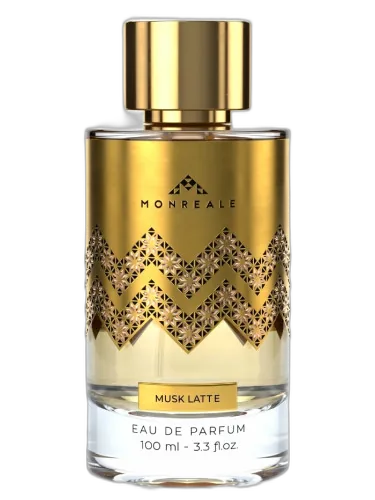
Musk Latte Monreale
Shared accords: musky, white floral
Dior
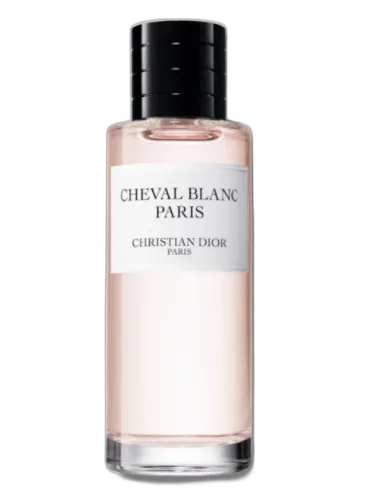
Cheval Blanc Paris Dior
Shared accords: musky, white floral
Ava Luxe
Madonna Lily Ava Luxe
Shared accords: green, musky, white floral