

Dali Eau De Toilette Salvador Dali
At a glance
Is Dali Eau De Toilette Salvador Dali worth trying?
Dali Eau de Toilette by Salvador Dali is a Floral Fruity fragrance for women.
- Best match
- Evening wear in Spring
- Performance feel
- Good longevity with Moderate sillage
- Signature profile
- citrus, white floral, floral with African Orange Flower, Tangerine, Bergamot
The first impression
Dali Eau de Toilette by Salvador Dali is a Floral Fruity fragrance for women. Dali Eau de Toilette was launched in 2011. The nose behind this fragrance is Alberto Morillas. Top notes are African Orange Flower, Tangerine and Bergamot; middle notes are Jasmine, Magnolia and Rose; base notes are Musk, Woodsy Notes and Vanille.
What shapes the scent
The perfumer behind it

Alberto Morillas
Alberto Morillas is a master perfumer based in Geneva, Switzerland, and a longtime collaborator with Firmenich. His style is known for refined, luminous compositions that balance natural elegance with modern clarity. He created the bold leather and spice of Amouage Opus VII - Reckless Leather, the fresh citrus depth of Acqua di Parma Colonia Intensa, and the woody warmth of Aedes de Venustas Palissandre D'or. His work has shaped contemporary perfumery across both niche and luxury houses.
Notes pyramid
Top Notes
First impression · 15-30 min
 African Orange Flower
 Tangerine
 Bergamot
Heart Notes
Core character · 2-4 hours
 Jasmine
 Magnolia
 Rose
Rose
Base Notes
Lasting impression · 4+ hours
 Musk
Musk
 Woodsy Notes
Vanille
Woodsy Notes
Vanille
The mood it creates
The Salvador Dali Fragrance De Archetype: Portrait of Dali Eau De Toilette Salvador Dali
Essence
To wear Dali Eau De Toilette is to embrace the surreal-not merely as an aesthetic, but as a philosophy of existence. This fragrance, with its bold, avant-garde composition-amber, spices, and a whisper of leather-does not merely scent the skin; it declares an allegiance to the unconventional. The person who chooses it is not one to be confined by the mundane. They are, at their core, an Artist-not necessarily in profession, but in spirit.
The Artist archetype, as defined by Jung, is the eternal creator, the one who distorts reality to reveal deeper truths. This individual does not merely observe life; they reinterpret it, shaping their surroundings into something more vivid, more symbolic. They are drawn to beauty, but not the kind that is easily digestible-they prefer the strange, the unsettling, the dreamlike.
Their love for Dali’s fragrance is no accident. Just as the painter Salvador Dali bent reality in his works, this person bends perception in their daily life. They are not content with the obvious; they seek the hidden layers, the double meanings, the play of light and shadow in every experience.
Shadow
For all their brilliance, the Artist has a darkness-an undercurrent of melancholy, a fear of irrelevance. When inspiration wanes, they spiral into self-doubt, questioning whether their creations have meaning. They may become self-indulgent, lost in their own fantasies, neglecting the practicalities of life.
Their disdain for the ordinary can curdle into contempt. They may grow impatient with those who do not share their vision, dismissing them as dull or unenlightened. At their worst, they become the very thing they despise: a caricature of artistry, more concerned with appearing profound than being genuine.
They are neither saint nor sinner, but a living paradox-both liberated and imprisoned by their own imagination. Their strength lies in their refusal to be ordinary; their weakness, in their occasional inability to connect with the simple joys of an unexamined life.
Yet, even in their flaws, there is beauty. Their turbulence is the price of their vision. They may never find perfect peace, but they will never stop searching-for meaning, for beauty, for the next fleeting spark of inspiration. And in that relentless pursuit, they remind the rest of us that reality is not fixed, but fluid-something to be shaped, questioned, and, above all, dreamed anew.
Conclusion
Tastes & Style
Their aesthetic is deliberate, a curated collision of elegance and eccentricity. They might favor tailored jackets with unexpected textures-velvet, brocade, or something faintly antiquated. Their home is a gallery of oddities: a vintage mirror framed in gold leaf, a stack of well-worn philosophy books, a single black rose preserved under glass. They drink espresso from delicate porcelain but pair it with a cigarette held just so, as if posing for a photograph that will never be taken.
Music is not background noise but an emotional landscape-perhaps Debussy for its impressionism, or Bowie for its theatrical reinvention. They do not follow trends; they absorb them, then twist them into something uniquely theirs.
Philosophy & Values
They believe in the power of the irrational. Logic has its place, but they trust intuition more. Life, to them, is a canvas, and they refuse to paint within the lines. They value authenticity above all, though their definition of it is fluid-sometimes they are brutally honest, other times they cloak themselves in mystery, delighting in the ambiguity.
They despise banality. Small talk is a prison; they crave conversations that spiral into the abstract, the existential. They are drawn to Nietzsche’s idea that "one must still have chaos in oneself to be able to give birth to a dancing star."
Relationships
Their magnetism is undeniable. People are drawn to their intensity, their refusal to conform. But intimacy is a double-edged sword. They enchant easily, but commitment is harder-they fear being pinned down, reduced to a single role. They love deeply, but on their own terms, often leaving others bewildered by their shifting passions.
Romantic partners must be both muse and equal-someone who can match their intellectual fervor and artistic temperament. They are not cruel, but they are often careless with hearts, not out of malice, but because they are always half-dreaming, half-creating, never fully anchored in the present.
If you like this, try these
Fragrances with a comparable profile - shared accords, notes, and character.
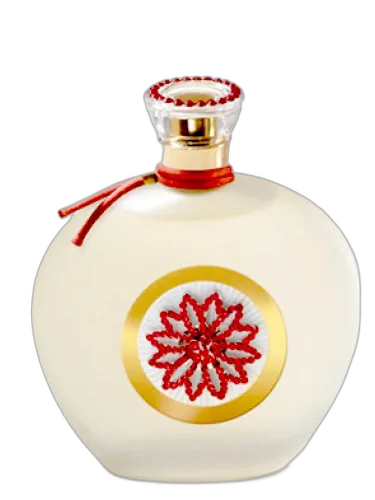
Rance 1795
Pres De Toi Rance 1795
Shared top notes: african orange flower, bergamot, tangerine
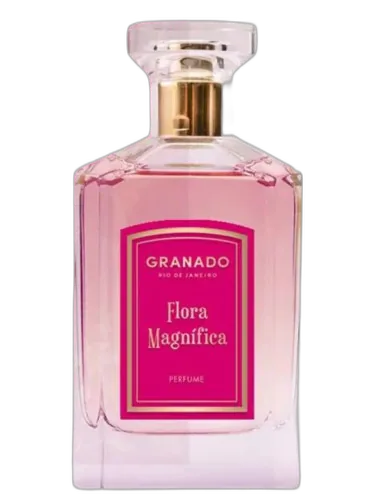
Granado
Flora Magnífica Granado
Shared top notes: bergamot
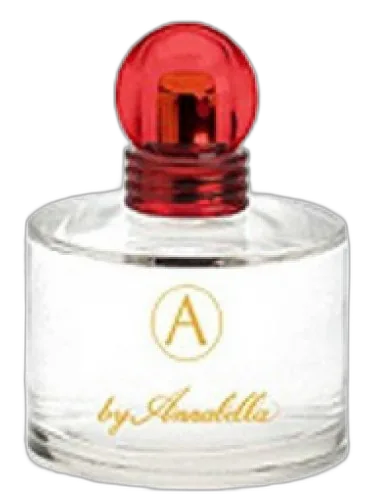
Annabella
A By Annabella 2003 Annabella
Shared top notes: bergamot
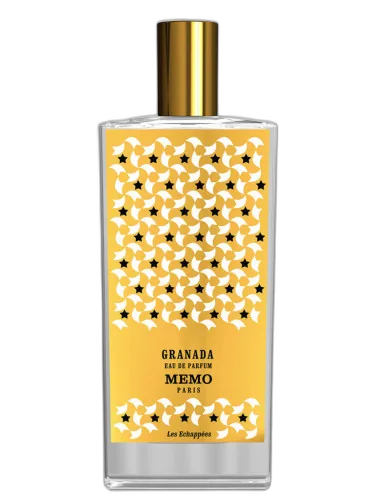
Memo Paris
Granada Memo Paris
Shared top notes: african orange flower, bergamot

Cuarzo The Circle
Levitation Gold Cuarzo The Circle
Shared top notes: bergamot, tangerine