


Voyage Onirique Du Papillon De Vie Salvador Dali
At a glance
Is Voyage Onirique Du Papillon De Vie Salvador Dali worth trying?
Voyage Onirique Du Papillon De Vie by Salvador Dali is a Floral Woody Musk fragrance for women and men.
- Best match
- Evening wear in Spring
- Performance feel
- Good longevity with Moderate sillage
- Signature profile
- white floral, tuberose, citrus with White Lily, Orange Blossom, Indian Tuberose
The first impression
Voyage Onirique Du Papillon De Vie by Salvador Dali is a Floral Woody Musk fragrance for women and men. Voyage Onirique Du Papillon De Vie was launched in 2015. The nose behind this fragrance is Alberto Morillas.
What shapes the scent
The perfumer behind it

Alberto Morillas
Alberto Morillas is a master perfumer based in Geneva, Switzerland, and a longtime collaborator with Firmenich. His style is known for refined, luminous compositions that balance natural elegance with modern clarity. He created the bold leather and spice of Amouage Opus VII - Reckless Leather, the fresh citrus depth of Acqua di Parma Colonia Intensa, and the woody warmth of Aedes de Venustas Palissandre D'or. His work has shaped contemporary perfumery across both niche and luxury houses.
Notes pyramid
All Notes
Complete scent profile
White Lily
 Orange Blossom
Indian Tuberose
Orange Blossom
Indian Tuberose
 Neroli
White Musk
Neroli
White Musk
 Lily-of-the-Valley
 Cedar
Cedar
The mood it creates
The Lover Archetype: Portrait of Voyage Onirique Du Papillon De Vie Salvador Dali
Essence
This person is an Alchemist-a seeker of transformation, a weaver of dreams, a conjurer of the unseen into reality. Like the butterfly in the fragrance’s name, they are in perpetual metamorphosis, drawn to the liminal spaces between fantasy and truth. The Alchemist is not content with the mundane; they transmute experience into something richer, stranger, more luminous. Salvador Dali’s Voyage Onirique Du Papillon De Vie-a scent of surreal florals, spice, and ethereal musk-mirrors their essence: opulent yet elusive, intoxicating yet fleeting.
Philosophy & Values
They believe in the alchemy of perception-that reality is malleable, shaped by desire and imagination. Their guiding principle is not logic but poetic truth. They reject rigid dogma, preferring the fluidity of myth, the wisdom of paradox. They might quote Nietzsche: "One must still have chaos in oneself to be able to give birth to a dancing star."
Yet this philosophy is not mere escapism. They see beauty as a form of resistance-against banality, against despair. They find solace in the idea that even the most fleeting moments-a whiff of perfume, a half-remembered dream-can hold profound significance.
Relationships
They are magnetic but elusive, drawing others in with their depth, yet remaining just out of reach. Their love is intense, poetic, sometimes overwhelming-they do not love lightly, but when they do, it is with a fervor that borders on obsession. They crave soulful connections, conversations that stretch into dawn, shared silences heavy with meaning.
Yet their shadow emerges here: they can be fickle, chasing the thrill of new enchantments once the initial magic fades. They fear stagnation, and thus, they may abandon relationships when they become too predictable. Their partners often feel like characters in a story they are writing-beautiful, but disposable when the narrative demands it.
Shadow
The Alchemist’s greatest strength-their ability to transform reality-is also their greatest peril. When unbalanced, they slip into self-deception, mistaking fantasy for truth. They may construct elaborate narratives about their life, their loves, their potential, only to crumble when reality refuses to conform.
They can become lost in their own labyrinth, chasing visions that dissolve upon touch. Their disdain for the mundane may lead them to dismiss practical concerns-financial stability, routine responsibilities-as beneath them. This can leave them adrift, a dreamer with no anchor.
Conclusion
Their world is one of curated beauty, where even the ordinary is touched by artistry. They surround themselves with objects that whisper of mystery-antique mirrors, vintage perfume bottles, books with gilded edges. Their home is a sanctuary of textures: velvet drapes, silk cushions, the faint scent of incense lingering in the air. They dress with deliberate elegance, favoring flowing fabrics, rich colors, and subtle eccentricities-a brooch shaped like a moth, a scarf embroidered with celestial motifs.
They are drawn to philosophy, mysticism, and the arts, finding meaning in the interplay of symbols. They might lose hours in a museum, not just observing paintings but feeling them-Dali’s melting clocks, the dreamscapes of Magritte, the haunting beauty of the Pre-Raphaelites. Music is another portal; they favor compositions that drift between melancholy and euphoria-Debussy’s Clair de Lune, the surreal soundscapes of Björk.
If you like this, try these
Fragrances with a comparable profile - shared accords, notes, and character.
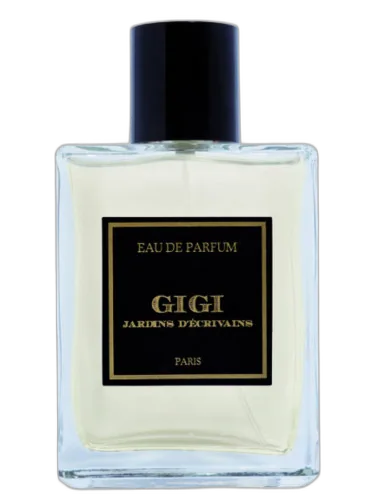
Jardins d’Ecrivains
Gigi Jardins D’ecrivains
Shared top notes: neroli, orange blossom
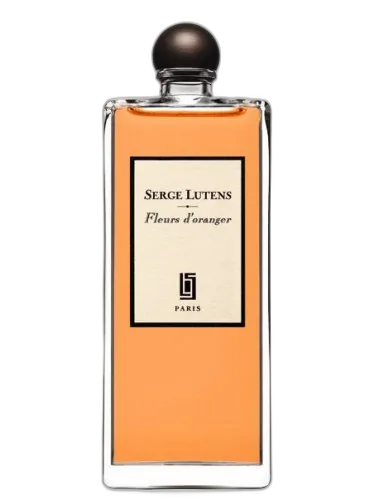
Serge Lutens
Fleurs D'oranger Serge Lutens
Shared top notes: indian tuberose, neroli, orange blossom
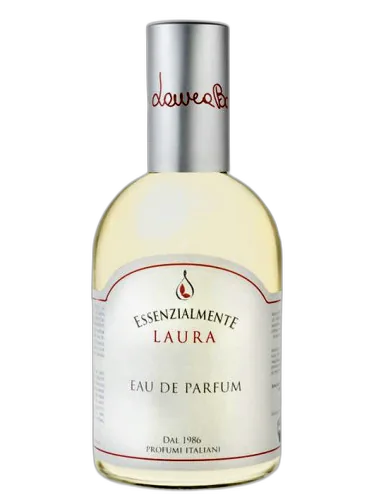
Essenzialmente Laura
Core 'ngrato Essenzialmente Laura
Shared top notes: orange blossom

Jamal Perfumers London
Scent 642 Jamal Perfumers London
Shared top notes: neroli, orange blossom
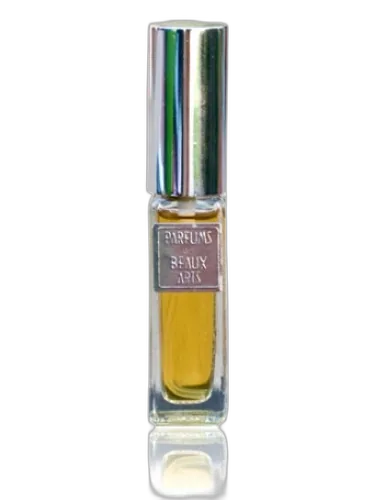
DSH Perfumes
Giardini Segreti (italian Journey No. 3) Dsh Perfumes
Shared top notes: neroli