


Bianco Di Carrara Salvatore Ferragamo
At a glance
Is Bianco Di Carrara Salvatore Ferragamo worth trying?
Bianco di Carrara by Salvatore Ferragamo is a Floral Woody Musk fragrance for women and men.
- Best match
- Office wear in Spring
- Performance feel
- Good longevity with Moderate sillage
- Signature profile
- powdery, violet, musky with Ambrette (Musk Mallow), Calabrian bergamot, White Pepper
The first impression
Bianco di Carrara by Salvatore Ferragamo is a Floral Woody Musk fragrance for women and men. Bianco di Carrara was launched in 2018. The nose behind this fragrance is Alexandra Carlin. Top notes are Ambrette (Musk Mallow), Calabrian bergamot and White Pepper; middle notes are Iris, Heliotrope and Violet; base notes are White Suede, Tonka Bean and Amber.
What shapes the scent
The perfumer behind it

Alexandra Carlin
Alexandra Carlin is a French perfumer who has worked with major houses including Amouage and Affinessence. Her style often balances rich, textured materials like leather and spices with unexpected softness, as seen in Cuir Curcuma and Santal Basmati. She has created several notable Amouage fragrances, including the elegant Dia 40 Woman and the opulent Honour 43 Woman.
Notes pyramid
Top Notes
First impression · 15-30 min
 Ambrette (Musk Mallow)
 Calabrian bergamot
White Pepper
Calabrian bergamot
White Pepper
Heart Notes
Core character · 2-4 hours
 Iris
Iris
 Heliotrope
 Violet
Base Notes
Lasting impression · 4+ hours
White Suede
 Tonka Bean
 Amber
Amber
The mood it creates
The Bianco Di Carrara Devotee Archetype: Portrait of Bianco Di Carrara Salvatore Ferragamo
Essence
The person who chooses Bianco Di Carrara by Salvatore Ferragamo is, above all, a seeker of clarity. This fragrance-clean, luminous, mineralic-reflects an essence that is both refined and elemental. They embody the Sage, the Jungian archetype of wisdom, discernment, and intellectual purity. Like the marble from which the scent draws its name, they value precision, balance, and the quiet beauty of understatement. Yet, beneath this polished exterior lies a mind in perpetual motion, carving meaning from the raw material of existence.
Shadow
Yet, the Sage’s pursuit of clarity can become a prison. Their insistence on rationality may blind them to the messy, irrational beauty of human emotion. They risk becoming too cerebral, mistaking understanding for experience. At their worst, they may withdraw into an ivory tower of their own making, dismissing passion as frivolity and spontaneity as chaos.
Their relationships may suffer from this detachment. They are slow to trust, slower still to surrender control. Love, for them, is often an intellectual exercise rather than a surrender-something to be analyzed rather than felt. They may frustrate more expressive partners, who long for them to abandon their careful poise and simply be.
Conclusion
Ultimately, theirs is a life of quiet intensity. They do not chase happiness but cultivates it, like a gardener tending to rare blooms. They understand that wisdom is not a destination but a process-one that requires both discipline and the humility to remain forever a student.
Yet, if they have one lesson left to learn, it is this: that the heart, too, has its own kind of wisdom-one that cannot always be carved from marble, but must sometimes be felt in the raw, unshaped clay of experience.
If you like this, try these
Fragrances with a comparable profile - shared accords, notes, and character.
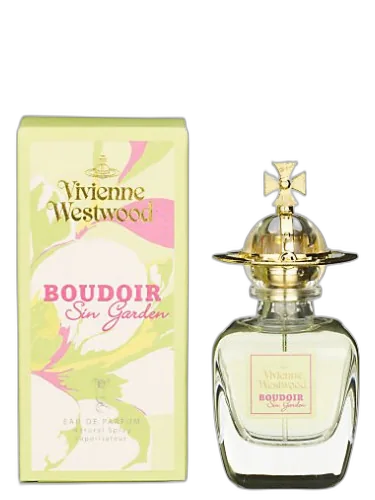
Vivienne Westwood
Boudoir Sin Garden Vivienne Westwood
Shared heart notes: heliotrope, iris, violet

Carita
Carita Eau De Parfum Carita
Shared heart notes: heliotrope, iris, violet

Zara
Cool Heights Zara
Shared heart notes: violet
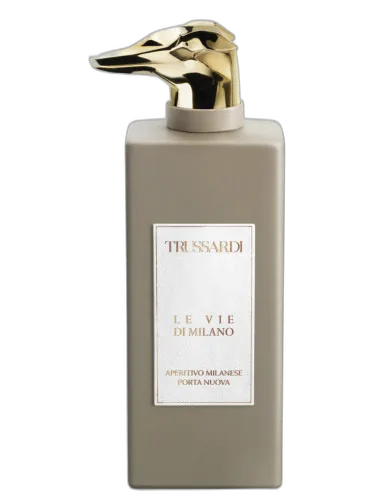
Trussardi
Aperitivo Milanese Porta Nuova Trussardi
Shared top notes: calabrian bergamot

Mandarina Duck
M+ Mandarina Duck
Shared heart notes: iris, violet