


Sandalwood Temple Sana Jardin
At a glance
Is Sandalwood Temple Sana Jardin worth trying?
Sandalwood Temple by Sana Jardin is a Oriental Woody fragrance for women.
- Best match
- Evening, Special Occasion wear in Fall, Winter
- Performance feel
- Very Good longevity with Moderate sillage
- Signature profile
- woody, powdery, vanilla with Bergamot, Orange Blossom, Tunisian Neroli
The first impression
Sandalwood Temple by Sana Jardin is a Oriental Woody fragrance for women. Sandalwood Temple was launched in 2017. The nose behind this fragrance is Carlos Benaïm. Top notes are Bergamot, Orange Blossom and Tunisian Neroli; middle note is Cedar; base notes are Sandalwood, Vanilla, Guaiac Wood and Haitian Vetiver.
What shapes the scent
The perfumer behind it

Carlos Benaïm
Carlos Benaïm is a perfumer with a diverse portfolio spanning A Lab on Fire, Alfred Dunhill, and Aramis. He created Liquidnight for A Lab on Fire and Century for Alfred Dunhill. His work also includes Quorum for Antonio Puig and Havana Pour Elle for Aramis.
Notes pyramid
Top Notes
First impression · 15-30 min
 Bergamot
 Orange Blossom
 Tunisian Neroli
Heart Notes
Core character · 2-4 hours
 Cedar
Cedar
Base Notes
Lasting impression · 4+ hours
 Sandalwood
 Vanilla
 Guaiac Wood
Haitian Vetiver
Guaiac Wood
Haitian Vetiver
The mood it creates
The Sage Archetype: Portrait of Sandalwood Temple Sana Jardin
Essence
The person who gravitates toward Sandalwood Temple by Sana Jardin is most closely aligned with the Sage-a seeker of wisdom, a keeper of stillness, and a guide through the unseen. Sandalwood, with its meditative warmth and sacred history, is not merely a fragrance to them but an extension of their inner world. They are drawn to depth, to the quiet spaces between thoughts, where meaning is distilled rather than declared.
This archetype thrives on introspection, valuing knowledge not as mere accumulation but as a lived philosophy. They are the ones who pause before speaking, who listen more than they assert, and who measure truth by its resonance rather than its volume. Yet, like all archetypes, the Sage has its shadow-a tendency toward detachment, an over-reliance on intellect at the expense of instinct, and at times, a quiet arrogance in believing they see what others cannot.
Shadow
Yet wisdom, when untempered by humility, can harden into dogma. The Sage’s greatest flaw is their occasional blindness to the value of instinct, of raw emotion. They may dismiss passion as chaos, mistaking detachment for enlightenment. Their love of solitude can tip into isolation, and their patience for fools is thin.
There is also the danger of becoming a spectator rather than a participant in life. The Sage may observe the world with such intensity that they forget to step into it, to be moved by it, to risk being wrong. Their pursuit of meaning can become a fortress, keeping out the very messiness that makes life vibrant.
Conclusion
Sandalwood Temple is not a scent of fleeting pleasures; it is an invocation. The creamy, woody richness of sandalwood, softened by vanilla and lifted by floral whispers, suggests a person who appreciates subtlety over spectacle. They are not seduced by the loud or the obvious. Instead, they find beauty in restraint, in the slow unfurling of meaning.
Their choice of fragrance reveals a reverence for tradition-sandalwood has been burned in temples for millennia-yet they are not bound by dogma. They reinterpret the sacred in personal terms, blending ancient wisdom with modern sensibilities. There is a quiet sensuality here, but one that is contemplative rather than indulgent.
If you like this, try these
Fragrances with a comparable profile - shared accords, notes, and character.

One Day
Seoul One Day
Shared top notes: bergamot

Marc-Antoine Barrois
Encelade Marc-antoine Barrois
Shared heart notes: cedar
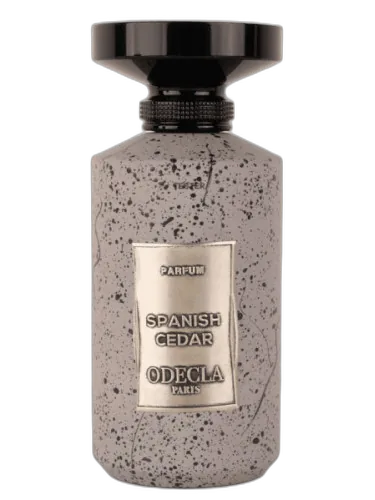
Odecla
Spanish Cedar Odecla
Shared heart notes: cedar

Kenzo
Cèdre Secret Kenzo
Shared top notes: orange blossom

Sapientiae Niche
Above All Sapientiae Niche
Shared top notes: bergamot