
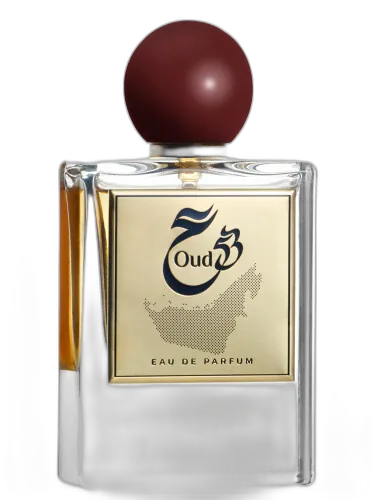

Oud 53 Scentify
At a glance
Is Oud 53 Scentify worth trying?
Oud 53 by Scentify is a Oriental Woody fragrance for women and men.
- Best match
- Evening wear in Fall
- Performance feel
- Excellent longevity with Strong sillage
- Signature profile
- oud, animalic, woody with Thailand Oud, Rose, Oud
The first impression
Oud 53 by Scentify is a Oriental Woody fragrance for women and men. This is a new fragrance. Oud 53 was launched in 2025. The nose behind this fragrance is Shadi Samra. Top notes are Thailand Oud and Rose; middle notes are Oud, Laotian Oud and Sandalwood; base note is Indian Oud.
What shapes the scent
The perfumer behind it

Shadi Samra
Shadi Samra is a perfumer who has developed fragrances for both AAWED and AZD brands. His AAWED creations include Great Ocean Road, La Foce Vita, and Meguro River, while for AZD he crafted Sino and Smoke. Samra's work spans a variety of inspirations, from natural landscapes to abstract concepts.
Notes pyramid
Top Notes
First impression · 15-30 min
 Thailand Oud
 Rose
Rose
Heart Notes
Core character · 2-4 hours
 Oud
Oud
 Laotian Oud
 Sandalwood
Base Notes
Lasting impression · 4+ hours
 Indian Oud
The mood it creates
The Sage Archetype: Portrait of Oud 53 Scentify
Essence
To wear Oud 53 Scentify is to announce oneself as a seeker of depth-an individual who values the weight of history, the richness of tradition, and the quiet power of the unseen. This is not a fragrance for the frivolous or the fleeting; it is a scent for those who move through life with deliberation, who savor the slow unfurling of meaning. The person who chooses this fragrance is most closely aligned with the Sage archetype, the thinker who seeks wisdom, discernment, and mastery over the self.
Relationships
They do not have many friends, but the ones they do have are bound by loyalty and mutual respect. Their relationships are built on intellectual and emotional depth-they despise small talk and crave conversations that stretch into the early hours, fueled by shared curiosity. Romantic partners must be their equals in mind and spirit; they are not interested in superficial charm.
Yet, their preference for depth can make them distant or overly critical. They may withdraw when others fail to meet their standards, unintentionally isolating themselves. Their pursuit of wisdom can sometimes harden into arrogance, a belief that their way of seeing the world is superior. They must guard against this-the true Sage knows that wisdom is not a possession but a practice.
Shadow
The danger for this person is that their love of solitude and reflection can turn into detachment from life itself. They may become so absorbed in their inner world that they neglect the messy, vital act of living. Their skepticism, if unchecked, can sour into cynicism, making them dismiss joy as naivety and passion as folly.
At their worst, they may overanalyze rather than act, paralyzed by the fear of imperfection. They must remember that wisdom without application is mere vanity-that the scent of oud, no matter how rich, is meant to be worn, not kept in a bottle.
Conclusion
Their life is one of intellectual and sensory refinement. They are drawn to the rare, the complex, the things that demand patience to understand. Oud, with its smoky, resinous depth, mirrors their inner world-layered, intense, and requiring time to fully reveal itself. They are the kind of person who collects first editions of philosophy books, who lingers in museums not just to look but to see, who prefers a single perfectly aged whiskey to a dozen shallow conversations.
Their style is understated but deliberate-tailored fabrics in deep hues, perhaps a well-worn leather satchel, a wristwatch that tells more than just time. They do not chase trends; they cultivate a personal aesthetic that speaks of permanence. Their home is a sanctuary of order and meaning: shelves lined with books, a writing desk where they journal in ink, a single piece of art that holds years of contemplation.
Philosophically, they are drawn to stoicism and existentialism, valuing self-mastery and the pursuit of truth. They believe in the power of knowledge but are wary of dogma-wisdom, to them, is not about having answers but about asking better questions. They may quote Nietzsche or Rumi with equal ease, not to impress but because these thinkers resonate in their bones.
If you like this, try these
Fragrances with a comparable profile - shared accords, notes, and character.
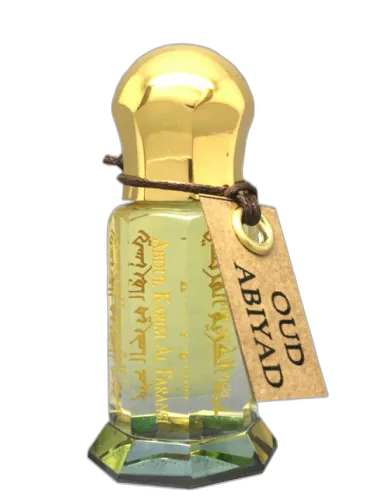
Abdul Karim Al Faransi
Oud Abiyad Abdul Karim Al Faransi
Shared heart notes: sandalwood
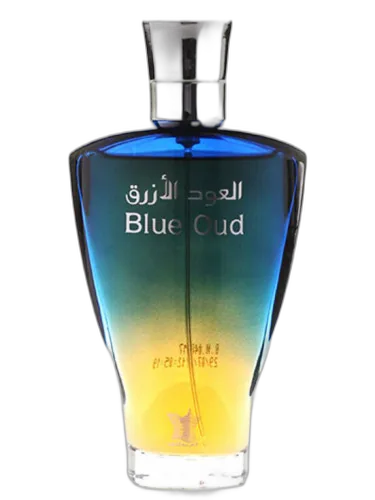
Arabian Oud
Blue Oud Arabian Oud
Shared base notes: indian oud
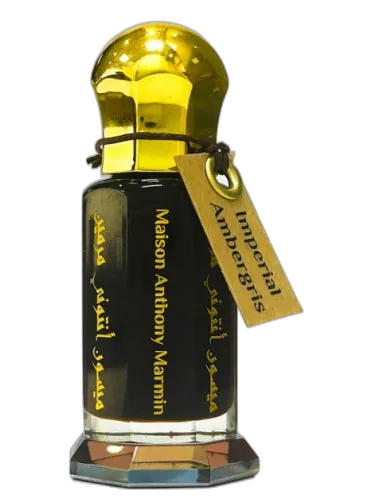
Maison Anthony Marmin
Imperial Ambergris Maison Anthony Marmin
Shared base notes: indian oud
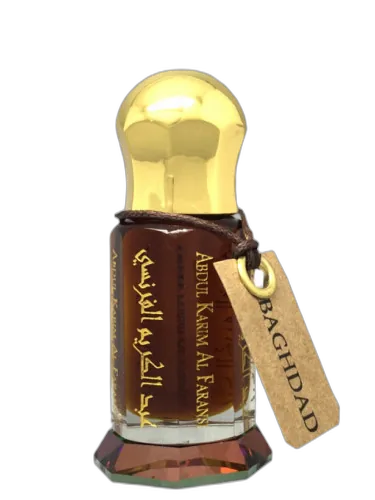
Abdul Karim Al Faransi
Baghdad Abdul Karim Al Faransi
Shared top notes: rose

NSHQ
Al Astora Nshq
Shared base notes: indian oud