
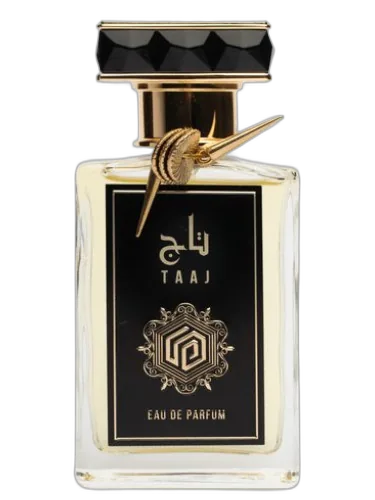

Taaj Shiraz Parfums
At a glance
Is Taaj Shiraz Parfums worth trying?
Taaj by Shiraz Parfums is a Floral fragrance for women and men.
- Best match
- Evening wear in Fall
- Performance feel
- Very Good longevity with Strong sillage
- Signature profile
- oud, rose, powdery with Agarwood (Oud), Assam Tea, Rose Jam
The first impression
Taaj by Shiraz Parfums is a Floral fragrance for women and men. Taaj was launched in 2021. The nose behind this fragrance is Aitzaz Mirza.
What shapes the scent
The perfumer behind it

Aitzaz Mirza
Aitzaz Mirza is a perfumer known for his work with Shiraz Parfums, where he creates fragrances that draw on South Asian and Middle Eastern olfactory traditions. His style often features rich, warm accords of amber, oud, and spices, balanced with smooth, resinous undertones. Notable creations include Kibrit Ahmar, Lahore, and Taaj, each reflecting a deep engagement with cultural heritage and refined composition.
Notes pyramid
All Notes
Complete scent profile
 Agarwood (Oud)
 Assam Tea
 Rose Jam
 Powdery Notes
 Rose
Rose
 Orris
Orris
The mood it creates
The Mystic Archetype: Portrait of Taaj Shiraz Parfums
Essence
The one who favors Taaj Shiraz Parfums is not merely drawn to a fragrance-they are seduced by its depth, its intoxicating blend of mystery and warmth. They embody the Mystic, an archetype that seeks the hidden truths beneath the surface of life. Like the scent itself-rich, complex, and slightly elusive-they are drawn to the interplay of shadow and light, the sacred and the sensual. They do not merely exist; they contemplate existence.
Philosophy & Values
They believe in the unseen, in the idea that life is layered with meaning waiting to be deciphered. They are not religious in the dogmatic sense, but they are deeply spiritual, drawn to esoteric traditions, alchemy, and the wisdom of ancient cultures. Their philosophy is one of becoming-they see themselves as eternal students of the universe, always probing, always questioning.
Their values are rooted in authenticity. They despise superficiality, though they may occasionally indulge in it as a form of irony. They value deep connections over casual friendships, intimacy over small talk. Loyalty is sacred to them, but they demand the same intensity in return. If betrayed, they withdraw into themselves, their warmth turning to frost.
Relationships
In love, they are both passionate and elusive. They crave a partner who can match their depth, someone who understands that silence can be as intimate as conversation. They are not afraid of darkness in others because they have befriended their own. Yet, their very intensity can be overwhelming-they expect their lovers to see the world as they do, to feel as deeply, to question as relentlessly. When disappointed, they retreat into solitude, convincing themselves that most people are incapable of true understanding.
Friendships are few but profound. They attract those who are drawn to their enigmatic presence, who find comfort in their ability to listen without judgment. But they are selective, sometimes to a fault. Their standards are high, and they would rather be alone than surrounded by those who do not stir their soul.
Shadow
For all their wisdom, the Mystic is not without flaws. Their obsession with depth can make them dismissive of simpler joys. They may scorn those who live without questioning, forgetting that not everyone needs metaphysics to find meaning. Their introspective nature can spiral into self-absorption, a belief that they alone see the world as it truly is.
At their worst, they become the Hermit, withdrawing so completely into their inner world that they lose touch with reality. They may romanticize melancholy, mistaking solitude for enlightenment. Their pursuit of the esoteric can become escapism, a way to avoid the messiness of ordinary life.
Conclusion
Their tastes are refined but never ostentatious. They prefer the weight of velvet to the sheen of satin, the dim glow of candlelight to the harshness of fluorescents. Their home is a sanctuary-books on mysticism and poetry stacked beside vintage wine bottles, Persian rugs underfoot, incense curling in the air. They are as likely to lose themselves in Rumi’s verses as they are in the smoky allure of jazz or the hypnotic rhythms of Middle Eastern music.
They dress with deliberate elegance, favoring deep jewel tones and fabrics that whisper rather than shout. Their style is not about trends but about texture, about how the world feels against their skin. A silk scarf, a well-worn leather journal, a single piece of antique jewelry-each choice is an act of self-expression, a quiet rebellion against the mundane.
If you like this, try these
Fragrances with a comparable profile - shared accords, notes, and character.
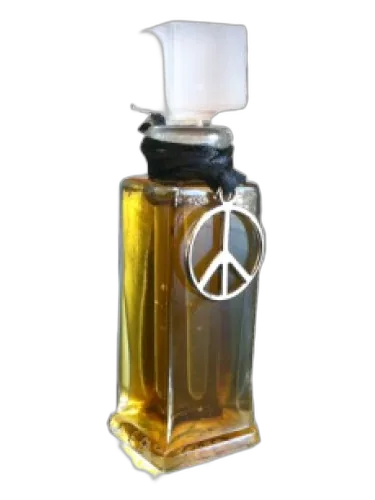
DSH Perfumes
Peace Dsh Perfumes
Shared top notes: agarwood (oud), orris

Montale
Aoud Lime Montale
Shared top notes: agarwood (oud), rose
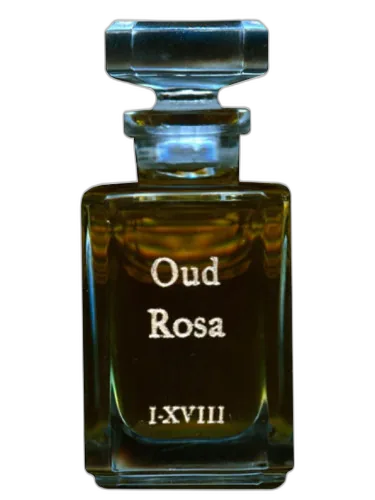
Fueguia 1833
Oud Rosa Fueguia 1833
Shared top notes: agarwood (oud), rose
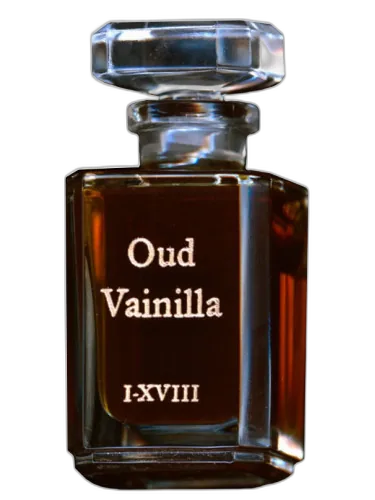
Fueguia 1833
Oud Vainilla Fueguia 1833
Shared top notes: agarwood (oud)
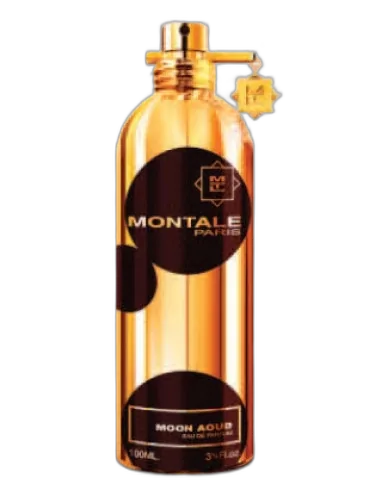
Montale
Moon Aoud Montale
Shared top notes: agarwood (oud), rose