
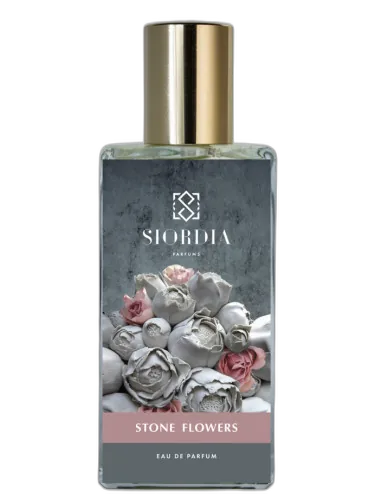

Stone Flowers Siordia Parfums
At a glance
Is Stone Flowers Siordia Parfums worth trying?
Stone Flowers by Siordia Parfums is a Floral fragrance for women and men.
- Best match
- Evening wear in Fall
- Performance feel
- Very Good longevity with Strong sillage
- Signature profile
- animalic, leather, musky with Choya Nakh, Musk, Birch Tar
The first impression
Stone Flowers by Siordia Parfums is a Floral fragrance for women and men. Stone Flowers was launched in 2016. The nose behind this fragrance is Ekaterina Siordia.
What shapes the scent
The perfumer behind it

Ekaterina Siordia
Ekaterina Siordia is a perfumer behind multiple fragrances for Ladanika and her own Siordia Parfums line. Her creations include Mothers-daughters, Antoinette, Apricot Soul, Arrakis, Bakst, Boswellia, Botticelli, and Cassiopeia. Siordia’s work spans a wide range of styles, from floral and fruity to woody and gourmand.
Notes pyramid
All Notes
Complete scent profile
 Choya Nakh
 Musk
Musk
 Birch Tar
 Iris
Iris
 Leather
 Rose
Rose
 Dark Chocolate
 Olibanum
 Agarwood (Oud)
 Tuberose
 Lily-of-the-Valley
 Tonka Bean
 Bergamot
 Amber
Amber
 Yuzu
Yuzu
 Cedar
Cedar
 Labdanum
The mood it creates
The Sage Archetype: Portrait of Stone Flowers Siordia Parfums
Essence
This person is, above all, a seeker of hidden truths-a mind drawn to the quiet depths of things. Their favorite fragrance, Stone Flowers by Siordia Parfums, is a paradox: cold yet alive, mineral yet organic, evoking the scent of petrified blossoms and ancient earth. They are most closely aligned with the Sage archetype, the thinker who values wisdom, clarity, and detachment. Like the fragrance, they are drawn to the interplay of permanence and ephemerality, the slow crystallization of thought over time.
Yet the Sage is not merely a passive observer. They are a curator of meaning, distilling life into its essential forms. Their shadow, however, lies in the risk of becoming too detached-of mistaking contemplation for living, of preferring the idea of things to their messy reality.
Relationships
They do not collect friends; they cultivate them with care. Their relationships are few but profound, built on shared intellectual pursuits and mutual respect for solitude. They are not the type to fill silences with chatter, nor do they seek constant validation. Their love, when given, is steady and undramatic-a quiet force, like the slow erosion of stone by water.
But their shadow emerges here: they can be emotionally reserved, mistaking detachment for strength. Partners may find them frustratingly self-contained, as if they are always holding something back. Their reluctance to surrender to raw emotion can make intimacy feel like an intellectual exercise rather than a lived experience.
Shadow
The Sage’s greatest flaw is the illusion of control. They believe that if they understand something deeply enough, they can master it-including their own emotions. But life is not a theorem to be solved, and their refusal to embrace chaos can leave them brittle. When faced with true uncertainty, they may retreat further into analysis, mistaking thought for action.
At their worst, they become the Recluse, the thinker who has forgotten how to feel. The stone, though beautiful, does not bend.
Conclusion
Their tastes are deliberate, almost ascetic. They prefer the weight of raw linen, the texture of unpolished stone, the austerity of a well-worn leather-bound book. Their home is sparse but meaningful: a single piece of driftwood on a shelf, a black-and-white photograph of a desert, a collection of rare minerals arranged with geometric precision. They do not chase trends; they seek what endures.
Philosophy is not an abstraction for them but a lens through which they navigate existence. They might be drawn to Stoicism, Zen Buddhism, or the existentialists-systems that prize clarity over comfort. They believe in the sovereignty of the mind, in the power of disciplined thought to transcend chaos. Yet this can make them seem distant, even cold, to those who crave warmth and spontaneity.
If you like this, try these
Fragrances with a comparable profile - shared accords, notes, and character.
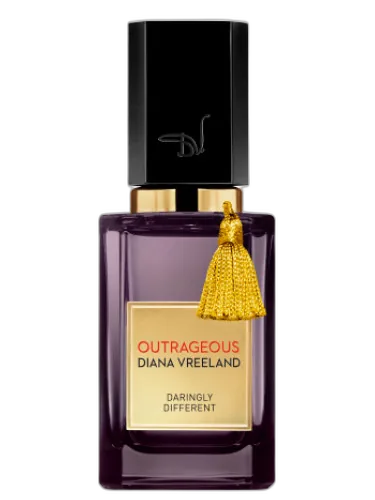
Diana Vreeland
Outrageous Collection Daringly Different Diana Vreeland
Shared top notes: agarwood (oud), iris, leather

YanFroloff
Chypre 1950 Yanfroloff
Shared top notes: amber, bergamot, cedar
For Or To
Unique For Or To
Shared top notes: agarwood (oud), amber, leather
Kerosene
Whips And Roses Kerosene
Shared top notes: bergamot, iris, leather
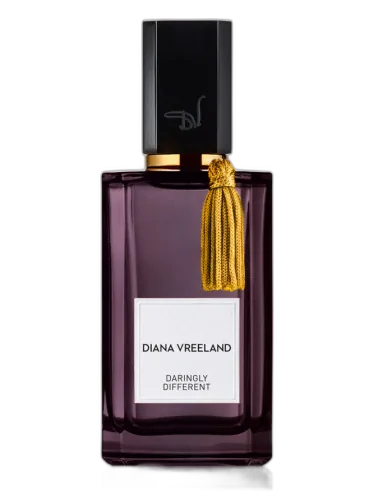
Diana Vreeland
Daringly Different Diana Vreeland
Shared top notes: agarwood (oud), iris, leather