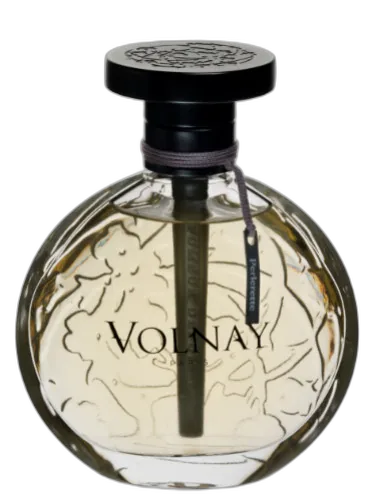
![[vintage Powder] Sklva by SKLVA](https://images.olfactoryarchetype.com/fragrances/vintage-powder-sklva-for-women-and-men.webp)

[vintage Powder] Sklva
At a glance
Is [vintage Powder] Sklva worth trying?
[vintage powder] by SKLVA is a Floral Woody Musk fragrance for women and men.
- Best match
- Evening wear in Fall
- Performance feel
- Good longevity with Moderate sillage
- Signature profile
- powdery, violet, floral with Powdery Notes, Lipstick, Violet
The first impression
[vintage powder] by SKLVA is a Floral Woody Musk fragrance for women and men. [vintage powder] was launched in 2017. The nose behind this fragrance is Anna Sokolova.
What shapes the scent
The perfumer behind it

Anna Sokolova
Anna Sokolova is a perfumer whose work is prominently featured in the SKLVA collection. Her creative signature is defined by a modern, urban sensibility, skillfully blending unexpected notes like cassis, suede, and urban petunia. Notable creations from this line include the cassis Chypre and sea Citrus interpretations, showcasing her ability to craft both classic and contemporary compositions.
Notes pyramid
All Notes
Complete scent profile
 Powdery Notes
 Lipstick
 Violet
 Iris
Iris
 Vanilla
 White Musk
 Violet Leaf
 Hedione
 Cedar
Cedar
 Red Berries
 Vetiver
 Bergamot
The mood it creates
The Sage Archetype: Portrait of [vintage Powder] Sklva
Essence
To wear vintage Powder is to embrace the quiet elegance of time-soft, refined, yet unyielding in its subtle authority. This person is not one for clamor or spectacle; they move through life with the measured grace of someone who has long understood that wisdom is not loud, but deep. Their presence is like the fragrance itself: a whisper of iris, orris root, and delicate musk, evoking the quiet dignity of an old library, a well-worn book, or the faint trace of perfume lingering on a silk scarf stored in a cedar drawer.
They are, in essence, a Sage-an archetype defined by knowledge, introspection, and a reverence for the past. The Sage does not chase trends; they sift through them, distilling what is meaningful from what is fleeting. Their mind is a curator’s archive, filled with carefully preserved thoughts, philosophies, and aesthetic principles.
Relationships
Their social world is small but rich. They do not collect acquaintances; they cultivate relationships with the same care one might tend a rare orchid. Conversations with them are layered-full of references, allusions, and the occasional dry wit. They are not the life of the party, but the one you find in a corner discussing Proust, the symbolism in a Bergman film, or the melancholy beauty of Chopin’s nocturnes.
Yet intimacy does not come easily. They guard their inner world carefully, revealing themselves only to those who prove worthy of trust. Their love language is subtle-a thoughtfully chosen book, a handwritten note slipped into a coat pocket. They are not prone to grand romantic gestures but express devotion through quiet constancy.
Shadow
But wisdom, when unchecked, can calcify into dogma. Their reverence for the past sometimes borders on nostalgia-a reluctance to let go, an instinct to preserve even when change is necessary. They may dismiss modern ideas too quickly, mistaking novelty for shallowness. Their love of solitude can become isolation; their discernment can harden into judgment.
There is also the risk of becoming an observer rather than a participant in life. They may analyze emotions so thoroughly that they forget to feel them. Their restraint, while dignified, can be mistaken for coldness. And though they pride themselves on objectivity, they are not immune to intellectual pride-the quiet arrogance of believing they see more clearly than others.
Yet it is precisely this tension that makes them human. Their strength lies in their ability to reflect, to see beyond the surface-but their challenge is to step out of the archives and into the messy, vibrant present. When they succeed, they are not just keepers of wisdom but guides, offering insight without condescension.
They are the kind of person who leaves an imprint not through force, but through depth. Their legacy is not in loud achievements but in the minds they have sharpened, the conversations they have enriched, the quiet beauty they have cultivated in a world that often forgets to slow down.
And when they pass through a room, the faint trace of vintage Powder lingers-soft, elusive, impossible to ignore.
Conclusion
Their tastes are deliberate, never accidental. They prefer the weight of history in their choices-antique furniture with the patina of age, handwritten letters over digital messages, the slow ritual of brewing tea in a porcelain cup. Their wardrobe is a study in understatement: tailored blouses, cashmere sweaters, perhaps a single piece of heirloom jewelry. They do not dress to impress but to express-each garment a quiet assertion of their identity.
Philosophy is not an abstract exercise for them but a lived experience. They might be drawn to Stoicism, finding solace in its discipline, or to the introspective traditions of Eastern thought. Their values are rooted in authenticity-they despise pretense, though they themselves are not immune to it. They believe in the power of knowledge but are wary of those who wield it arrogantly.
If you like this, try these
Fragrances with a comparable profile - shared accords, notes, and character.