


Lanz Slumberhouse
At a glance
Is Lanz Slumberhouse worth trying?
Lanz by Slumberhouse is a fragrance for women and men.
- Best match
- Evening wear in Fall
- Performance feel
- Excellent longevity with Strong sillage
- Signature profile
- floral, woody, powdery with Sandalwood, Blue Lotus, Boronia
The first impression
Lanz by Slumberhouse is a fragrance for women and men.
What shapes the scent
The perfumer behind it

Notes pyramid
All Notes
Complete scent profile
 Sandalwood
 Blue Lotus
 Boronia
 Agarwood (Oud)
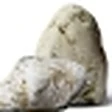 Ambergris
 Silk Vine or Milk Broom
 Orris Root
 Ambrette (Musk Mallow)
The mood it creates
The Mystic Archetype: Portrait of Lanz Slumberhouse
Essence
To wear Lanz by Slumberhouse is to embrace the obscure, the enigmatic, the weight of unseen worlds pressing against the edges of perception. This fragrance-dark, resinous, smoky, with whispers of dried fruits and ancient woods-is not for those who seek the obvious. It is a scent for those who dwell in the liminal, who find beauty in decay and mystery in silence. The person who cherishes this fragrance is, above all, a Mystic-an archetype rooted in the pursuit of the unseen, the symbolic, the deeply personal.
The Mystic does not merely exist in the world; they perceive it through layers of meaning. They are drawn to what others overlook-the texture of aged paper, the scent of an abandoned chapel, the melancholy of a fading season. Their tastes are unconventional, favoring the archaic over the modern, the shadowed over the brightly lit. In art, they gravitate toward the surreal, the gothic, the symbolist. In music, they prefer compositions that evoke vast, untamed landscapes-dark ambient, neoclassical, or the slow burn of doom metal.
Their style is deliberate, often austere, yet rich in texture. They wear garments that seem to carry history-heavy wool, worn leather, fabrics that whisper rather than shout. Their home is a sanctuary of dim light, filled with curiosities: antique books, dried botanicals, incense burners tarnished by time. They do not decorate for others; they curate for themselves, creating an environment that mirrors their inner world.
Philosophy & Values
The Mystic lives by an esoteric philosophy, one that rejects the superficial in favor of depth. They are skeptical of grand narratives, preferring instead the fragmented, the ambiguous. They may be drawn to hermeticism, alchemy, or the writings of Jung himself-anything that suggests reality is not as it appears. Their spirituality is personal, often solitary, built on intuition rather than dogma.
They value authenticity above all else, though their definition of it is stringent. To them, authenticity is not mere honesty but a relentless pursuit of the hidden self. They despise pretense, yet they themselves may be accused of obscurity-their truths are veiled, their emotions guarded. They do not suffer fools, but they suffer loneliness willingly, believing solitude to be the price of wisdom.
Relationships
The Mystic does not seek companionship lightly. Their relationships are few but profound, built on shared silences rather than forced conviviality. They attract those who sense their depth, but they repel those who demand simplicity. Their love is intense, almost devotional, but it comes with expectations-they require a partner who understands their need for withdrawal, who does not mistake their quietude for indifference.
In friendship, they are loyal but distant, offering wisdom rather than warmth. They do not engage in small talk; their conversations are either philosophical or silent. They may be seen as aloof, but in truth, they simply refuse to dilute their presence for the sake of comfort.
Shadow
Yet every archetype has its darkness, and the Mystic is no exception. Their pursuit of depth can become escapism, a retreat from the mundane into self-imposed exile. They may grow too comfortable in melancholy, romanticizing isolation until it becomes a prison. Their disdain for the superficial can harden into cynicism, making them dismissive of joy in its simpler forms.
Their greatest flaw is perhaps their resistance to vulnerability. They guard their inner world so fiercely that they may forget how to step outside of it. They demand understanding but do not always offer clarity. In their quest for the unseen, they risk losing sight of the tangible-the warmth of a hand, the immediacy of laughter, the necessity of human frailty.
Conclusion
The lover of Lanz by Slumberhouse is neither fully of this world nor entirely apart from it. They walk the line between revelation and obscurity, between wisdom and withdrawal. Their strength lies in their ability to see beyond the surface; their weakness, in their reluctance to return.
They are the ones who stand at the edge of the firelight, half in shadow, watching. They do not need to be seen to know they exist. And perhaps, in the end, that is enough.
If you like this, try these
Fragrances with a comparable profile - shared accords, notes, and character.

Fueguia 1833
Dunas De Un Cuerpo Fueguia 1833
Shared top notes: agarwood (oud), sandalwood

Phronema Perfumes
Sol Niger Within Phronema Perfumes
Shared top notes: ambergris, sandalwood

Montale
Attar Montale
Shared top notes: agarwood (oud), sandalwood

Guerlain
Santal Pao Rosa Guerlain
Shared top notes: agarwood (oud), sandalwood

Montale
Aoud Lime Montale
Shared top notes: agarwood (oud), sandalwood