


Zahd Slumberhouse
At a glance
Is Zahd Slumberhouse worth trying?
Zahd by Slumberhouse is a Aromatic Fruity fragrance for women and men.
- Best match
- Evening wear in Fall
- Performance feel
- Excellent longevity with Strong sillage
- Signature profile
- fruity, amber, sweet with Cranberry, Cherry, Red Wine
The first impression
Zahd by Slumberhouse is a Aromatic Fruity fragrance for women and men. Zahd was launched in 2013. The nose behind this fragrance is Josh Lobb.
What shapes the scent
The perfumer behind it

Josh Lobb
Josh Lobb is the founder and perfumer of Slumberhouse, creating fragrances like Baque, Grev, Jeke, Kiste, Mond, and Mori. His work is known for its bold, complex, and often darkly gourmand character. Lobb's compositions are highly sought after in the niche perfume community.
Notes pyramid
All Notes
Complete scent profile
 Cranberry
 Cherry
 Red Wine
Cacao
Red Wine
Cacao
 Incense
 Plum
Plum
 Benzoin
 Sandalwood
 Champaca
 Tolu Balsam
 Oak
Pink Lotus
Oak
Pink Lotus
 Fir
Fir
 Gromwell
The mood it creates
The Sage Archetype: Portrait of Zahd Slumberhouse
Essence
The person who cherishes Zahd by Slumberhouse is, at their core, a Sage-an archetype defined by wisdom, introspection, and a relentless pursuit of depth. The Sage seeks truth not in the obvious but in the obscured, the layered, the almost-forgotten. Zahd, with its dense, resinous darkness, smoky woods, and whispers of dried fruit, is not a fragrance for the casual wearer. It is a scent that demands attention, that lingers like an ancient text half-buried in dust. The Sage, too, is not content with surface pleasures; they crave the weight of history, the richness of hidden meanings.
Yet the Sage is not merely a scholar. They are a keeper of secrets, a wanderer between worlds-both real and imagined. Their love for Zahd speaks to an attraction to the mystical, the slightly archaic, the scent of old libraries and midnight fires. They are drawn to what others might overlook or dismiss as too intense, too strange.
Style & Aesthetic
Their tastes are deliberate, almost ritualistic. They prefer the tactile-rough linen, aged paper, hand-carved wood. Their home is a curated sanctuary, filled with objects that carry stories: a vintage typewriter, a collection of antique keys, a shelf of leather-bound books whose spines have never been cracked by modern hands. They wear clothing that feels like armor-structured wool, heavy cotton, perhaps a well-worn leather jacket. Their style is not trendy but timeless, as if they exist slightly outside the present moment.
Music, for them, is an exercise in immersion-dark jazz, neoclassical compositions, or folk songs from forgotten traditions. They do not consume art lightly; they absorb it, dissect it, let it settle in their bones.
Philosophy & Values
They believe in depth over speed, meaning over convenience. The modern world’s obsession with efficiency baffles them. Why rush when there is so much to uncover? They are drawn to philosophies that embrace paradox-Zen koans, existentialism, the writings of mystics who danced on the edge of madness and revelation.
Their values are rooted in authenticity. They despise pretense, though they themselves may sometimes fall into the trap of intellectual elitism. They respect silence, solitude, and the unspoken. Their closest relationships are built on mutual understanding rather than constant chatter.
Relationships
They are not a social butterfly, but neither are they a recluse. They move through the world with quiet intensity, attracting those who sense their depth. Their friendships are few but ferociously loyal. Romantic partners must understand their need for solitude-they will not be smothered, nor will they smother. Love, for them, is a slow burn, like the embers of Zahd’s incense.
Yet they struggle with emotional detachment. The Sage’s mind is always working, analyzing, and this can make them seem distant even when they care deeply. They may intellectualize emotions rather than feel them fully, a defense mechanism against vulnerability.
Shadow
The Sage’s greatest strength-their intellect-can become their prison. Their love of depth can turn into obsession, their wisdom into arrogance. They may dismiss simpler joys, mocking what they see as the shallowness of others. At their worst, they become the Hermit, withdrawing so far into their own mind that they lose touch with the living world.
Their fascination with the past can also breed nostalgia to the point of paralysis. They may romanticize bygone eras, refusing to engage with the present. Zahd’s ancient, smoky aura can become a metaphor for their own reluctance to step into the light.
Conclusion
The ideal Sage knows when to emerge from the shadows. They understand that wisdom is not just in books but in lived experience, that the scent of old forests must eventually give way to open air. They wear Zahd not as an escape but as a reminder-that beauty exists in darkness, but so does life beyond it.
They are neither entirely of this world nor entirely apart from it. They are the quiet flame in the corner of the room, the one who speaks only when they have something worth saying. And when they do, the world leans in to listen.
If you like this, try these
Fragrances with a comparable profile - shared accords, notes, and character.
Forfolks
Winter Forfolks
Shared top notes: benzoin, cherry, red wine
TSVGA Parfums
Wine And Chocolate Tsvga Parfums
Shared top notes: cacao, champaca, cranberry
Fort & Manle
V For Vetiver Fort & Manle
Shared top notes: cacao, incense, oak
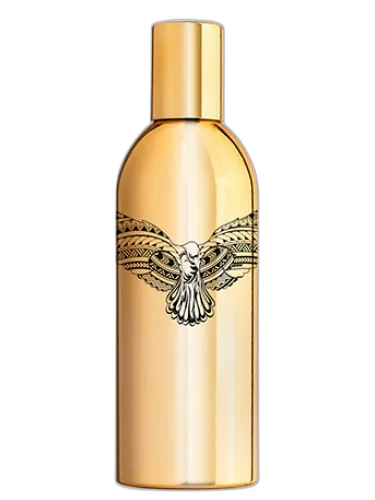
Maori Collection
Air Maori Collection
Shared top notes: benzoin, red wine

EcoParfum
Chocolate Saffron Ecoparfum
Shared top notes: benzoin, cacao, champaca