
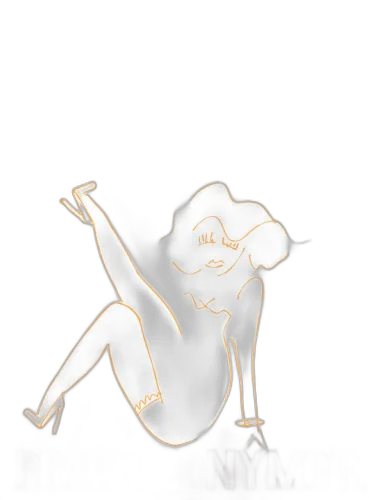

Prairie Nymph Smell Bent
At a glance
Is Prairie Nymph Smell Bent worth trying?
Prairie Nymph by Smell Bent is a Floral Fruity Gourmand fragrance for women.
- Best match
- Casual wear in Spring, Summer
- Performance feel
- Moderate longevity with Moderate sillage
- Signature profile
- honey, floral, sweet with White Honey, Beeswax, Carnation
The first impression
Prairie Nymph by Smell Bent is a Floral Fruity Gourmand fragrance for women. The nose behind this fragrance is Brent Leonesio.
What shapes the scent
The perfumer behind it

Brent Leonesio
Brent Leonesio has created fragrances for both Scent Trunk and Smell Bent, with a portfolio that includes Fae, 2010, Artist's Studio, Blimey, Limey!, Bohemian Rhapsody, Bollywood Or Bust, Bolshevixen, and Brussels Sprouted. His style is playful and eclectic, often drawing from pop culture and whimsical themes. Leonesio's scents are recognized for their creativity and accessibility.
Notes pyramid
All Notes
Complete scent profile
 White Honey
 Beeswax
 Carnation
 Clementine
 Musk
Musk
The mood it creates
The Free Spirit Archetype: Portrait of Prairie Nymph Smell Bent
Essence
The person who cherishes Prairie Nymph by Smell Bent is, at their core, a Wanderer-an archetype that embodies freedom, exploration, and a deep connection to the untamed. Like the scent itself-wildflowers, sun-warmed grass, and a whisper of earth-they are drawn to the raw beauty of the natural world, resisting confinement in both thought and action. The Wanderer seeks not just physical movement but an expansion of the soul, always questioning, always searching. They are not content with the well-trodden path; they crave the open sky, the uncharted meadow, the horizon that promises something new.
Yet, the Wanderer is not merely a drifter. Their journey is purposeful, even if the purpose is to reject purpose. They are the philosopher of the open road, the poet of the fleeting moment, the one who finds meaning in the act of seeking itself.
Style & Aesthetic
Their appearance reflects their inner wildness-effortless, slightly undone, as if they’ve just returned from a long walk. Flowing linen, worn leather boots, a necklace with a single feather or stone. Their hair might be tousled, their skin kissed by the sun. They favor textures that feel alive: raw silk, unbleached cotton, wool that still smells faintly of lanolin.
Their home, if they have one, is a sanctuary of found objects-driftwood, antique maps, jars of dried herbs. It is not cluttered, but curated, each piece carrying a memory. They prefer candles to electric light, the crackle of a record to digital music. Their taste in art leans toward the impressionistic, the abstract-works that evoke feeling rather than dictate meaning.
Philosophy & Values
Their life is a tapestry of experiences, woven with threads of spontaneity and quiet reflection. They may live in a city, but their spirit belongs to the wild-perhaps they keep dried wildflowers on their windowsill, or their bookshelf is lined with works by Thoreau, Whitman, or Mary Oliver. They reject rigid structures, whether in career, relationships, or belief systems. A 9-to-5 job feels like a cage; they thrive in roles that allow movement-freelance artist, ecologist, traveling writer, or even a bartender who changes cities every few years.
Their philosophy is one of radical presence. They distrust dogma, preferring intuition and sensory wisdom. The scent of rain on dry earth, the way light filters through leaves-these are their sacred texts. They believe in the impermanence of things, which makes them both deeply joyful and quietly melancholic. They do not fear endings, but they sometimes struggle with commitment, for permanence feels like stagnation.
Relationships
In love and friendship, they are warm but elusive. They draw people in with their openness, their ability to listen deeply, their way of making others feel seen. Yet they resist being fully known. Their relationships are intense but often transient-not because they lack depth, but because they fear the weight of expectation.
They are the lover who writes letters but disappears for months, the friend who shows up unannounced with a bottle of wine and a story from the road. They crave connection but chafe at possession. Their shadow here is avoidance-a reluctance to stay, to endure the mundane, to face the vulnerability of lasting bonds.
Shadow
For all their beauty, the Wanderer has a darkness-an inability to root. Their freedom can become flight, their independence a form of isolation. They may romanticize solitude to the point of loneliness, mistaking movement for growth. When challenged, they vanish-not out of malice, but because stillness feels like death.
They must learn that true freedom is not the absence of ties, but the strength to hold them lightly. The prairie does not reject the roots of its wildflowers; it lets them grow deep, even as the wind bends them.
Conclusion
The lover of Prairie Nymph is neither entirely of this world nor entirely apart from it. They are the one who pauses on a hilltop to watch the sunset, knowing they will leave tomorrow-but for now, they are here, breathing in the scent of grass and sky. Their life is a question, not an answer. And perhaps that is enough.
If you like this, try these
Fragrances with a comparable profile - shared accords, notes, and character.
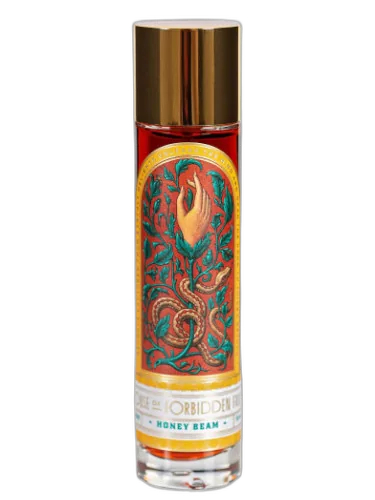
House of Forbidden Fruit
Honey Beam House Of Forbidden Fruit
Shared top notes: beeswax, musk
Roxana Illuminated Perfume
To Bee Roxana Illuminated Perfume
Shared top notes: beeswax, white honey
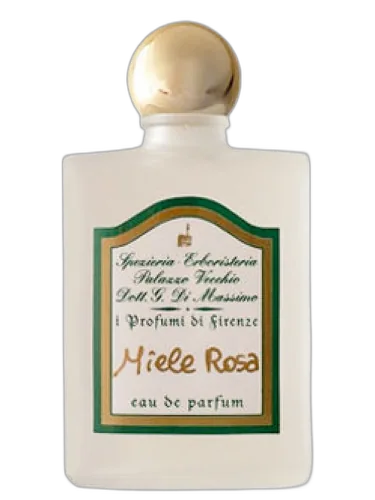
I Profumi di Firenze
Miele Rosa I Profumi Di Firenze
Shared top notes: beeswax, white honey

Rasht Otr
East Rasht Otr
Shared top notes: carnation, musk
Alkemia Perfumes
Dia De Los Angelitos Alkemia Perfumes
Shared top notes: beeswax