
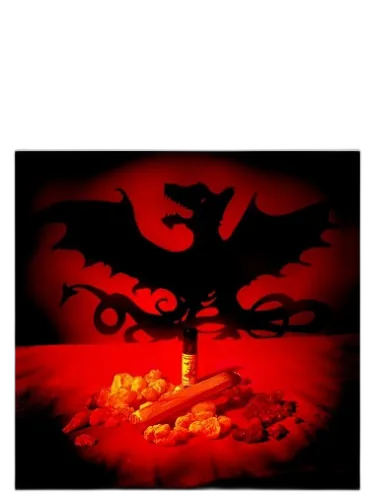
Crimson Sap & Sassafras Solstice Scents
At a glance
Is Crimson Sap & Sassafras Solstice Scents worth trying?
Crimson Sap & Sassafras by Solstice Scents is a Oriental Woody fragrance for women and men.
- Best match
- Evening wear in Fall
- Performance feel
- Very Good longevity with Strong sillage
- Signature profile
- amber, vanilla, balsamic with Dragon Blood Resin, Olibanum, Benzoin
The first impression
Crimson Sap & Sassafras by Solstice Scents is a Oriental Woody fragrance for women and men. The nose behind this fragrance is Angela St.John.
What shapes the scent
The perfumer behind it

Angela St.John
Angela St. John is the founder and creative force behind Solstice Scents, an independent perfume house known for its atmospheric and narrative-driven compositions. Her style blends natural and synthetic materials to evoke specific places, seasons, and moods, often with a dark, nostalgic, or gourmand bent. Notable creations from her catalog include the petrichor-laced After The Rain, the rich amber of Amber Coeur, and the woodland depth of Black Forest, each showcasing her talent for immersive storytelling through scent.
Notes pyramid
All Notes
Complete scent profile
 Dragon Blood Resin
 Olibanum
 Benzoin
 Anise
cream soda
Anise
cream soda
 Palo Santo
 Vanilla
 Marshmallow
 Musk
Musk
The mood it creates
The Alchemist Archetype: Portrait of Crimson Sap & Sassafras Solstice Scents
Essence
This person is an Alchemist-a seeker of transformation, a weaver of hidden meanings, a conjurer of the mystical in the mundane. The scent of Crimson Sap & Sassafras is not merely a fragrance to them; it is an invocation. It carries the weight of deep forests, the sharpness of crushed roots, the warmth of resin bleeding from ancient trees. It is both primal and refined, a paradox that mirrors their nature.
The Alchemist does not simply wear a perfume; they engage in a ritual. The scent is their armor and their elixir-a way to transmute the ordinary into the extraordinary. They are drawn to the unseen, the forgotten, the nearly lost. Sassafras, with its medicinal history and outlawed past (once banned for its association with illicit concoctions), appeals to their love of the forbidden, the underground, the knowledge that exists just beyond the sanctioned world.
Style & Aesthetic
Their style is a tapestry of contradictions-earth-toned yet bold, structured yet wild. They might wear tailored coats lined with raw-edged fabrics, or jewelry forged from rough-hewn stones set in polished silver. Their home is a cabinet of curiosities: dried herbs in glass jars, antique books with cracked spines, candles that burn low into the night.
They are not content with surface beauty; they crave depth. Their taste in music leans toward the haunting-neofolk, dark ambient, or blues that hum with the ache of centuries. In literature, they favor authors like Algernon Blackwood, Angela Carter, or Bruno Schulz-writers who blur the line between the real and the mythic.
Philosophically, they reject easy answers. They believe in the alchemy of experience-that suffering, like sap, can harden into something precious. They are drawn to esoteric traditions but distrust dogma. Their spirituality is personal, experimental, rooted in the body as much as the mind.
Philosophy & Values
They value authenticity above all else-not the performative kind, but the raw, unfiltered truth of a thing. This makes them fiercely loyal but also demanding. They do not suffer fools, though they may play the fool themselves at times to test others.
In relationships, they are intense but not possessive. They seek partners who are their equals-not in knowledge, but in curiosity. They do not want to be worshipped; they want to be challenged. Their love is a crucible, a place where both are remade.
Yet, they struggle with intimacy. The same depth that draws people in can become a barrier-they retreat into their inner sanctum when wounded, sealing themselves away like a vial of precious tincture.
Shadow
The Alchemist’s greatest strength is also their flaw: their obsession with transformation. They can become lost in the pursuit of the next revelation, the next refinement, never satisfied with the present. Their quest for depth can turn into a refusal to engage with the mundane, leaving them isolated in their self-made mystique.
They may also fall into the trap of arcane arrogance-believing that because they see the hidden threads of the world, others cannot possibly understand. This can make them dismissive, even cruel, to those they deem "uninitiated."
And then there is the danger of self-mythologizing. They risk becoming a character in their own story, so committed to the aesthetic of wisdom that they forget to live it.
Conclusion
To thrive, they must learn that not everything needs to be transmuted. Some things are meant to be simply lived. The sap does not always need to harden into amber; sometimes, it is enough to flow.
They are at their best when they balance their esoteric pursuits with grounded action-when they use their gifts not just for personal revelation, but to illuminate the path for others. The true alchemy is not in turning lead into gold, but in recognizing that the lead was gold all along.
If you like this, try these
Fragrances with a comparable profile - shared accords, notes, and character.
House of Matriarch
Witchmusk House Of Matriarch
Shared top notes: musk, vanilla
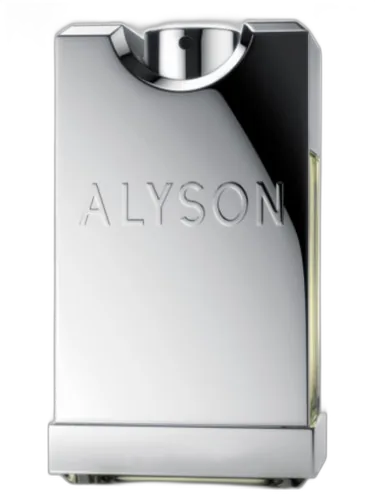
ALYSONOLDOINI
Bourbon Oud Alysonoldoini
Shared top notes: benzoin, musk, vanilla

SW19
9pm Sw19
Shared top notes: marshmallow
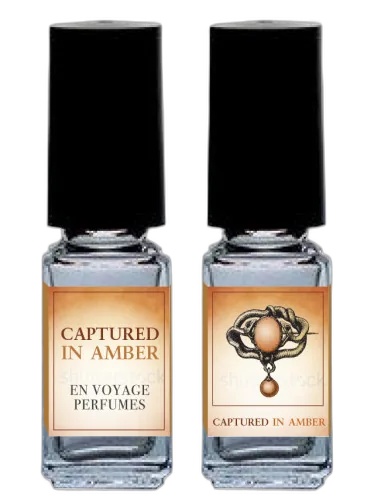
En Voyage Perfumes
Captured In Amber En Voyage Perfumes
Shared top notes: benzoin, olibanum, vanilla
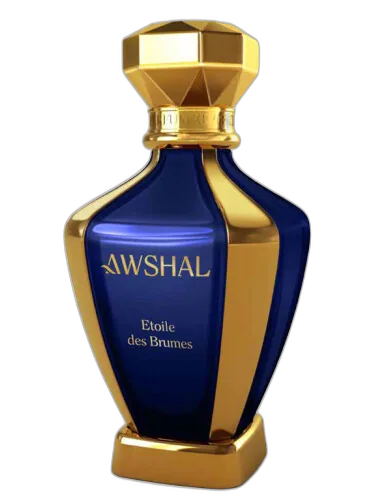
Awshal
Etoile Des Brumes Awshal
Shared accords: amber, balsamic, musky